Warm-Season Grasses: A Complete Overview and Comparison Guide
Walk through any neighborhood in Florida, Texas, Georgia, or the Carolinas during summer, and you’ll likely see lush, green lawns that thrive in heat and humidity that would stress cool-season grasses into dormancy. These are warm-season grasses — a group of turf species that peak in performance when temperatures are between 80°F and 95°F and that go dormant and turn brown when temperatures consistently drop below 50°F.
Choosing the right warm-season grass for your yard is one of the most important lawn decisions you’ll make. The wrong choice can mean years of fighting a grass that doesn’t match your climate, soil, or maintenance tolerance. This guide walks through all the major warm-season grass types, compares them side by side, and helps you figure out which one belongs in your yard.
What Makes a Grass “Warm-Season”?
Warm-season grasses use C4 photosynthesis, which allows them to fix carbon efficiently under high heat and intense sunlight. They grow most aggressively in late spring and summer, slow down in early fall, and go dormant with the arrival of cold — typically turning tan or brown after the first frost. Most recover and green up again the following spring as temperatures climb back into the 70s.
This dormancy pattern is the most important behavioral difference between warm-season and cool-season grasses. If you live in the North and want green grass year-round, a warm-season grass alone won’t deliver it. But in the South — where summers are brutally hot and cool-season grasses struggle — warm-season grasses are the right tool for the job.
For homeowners in the northern part of the country, our guide to cool-season grasses covers the alternatives that work better in colder climates.

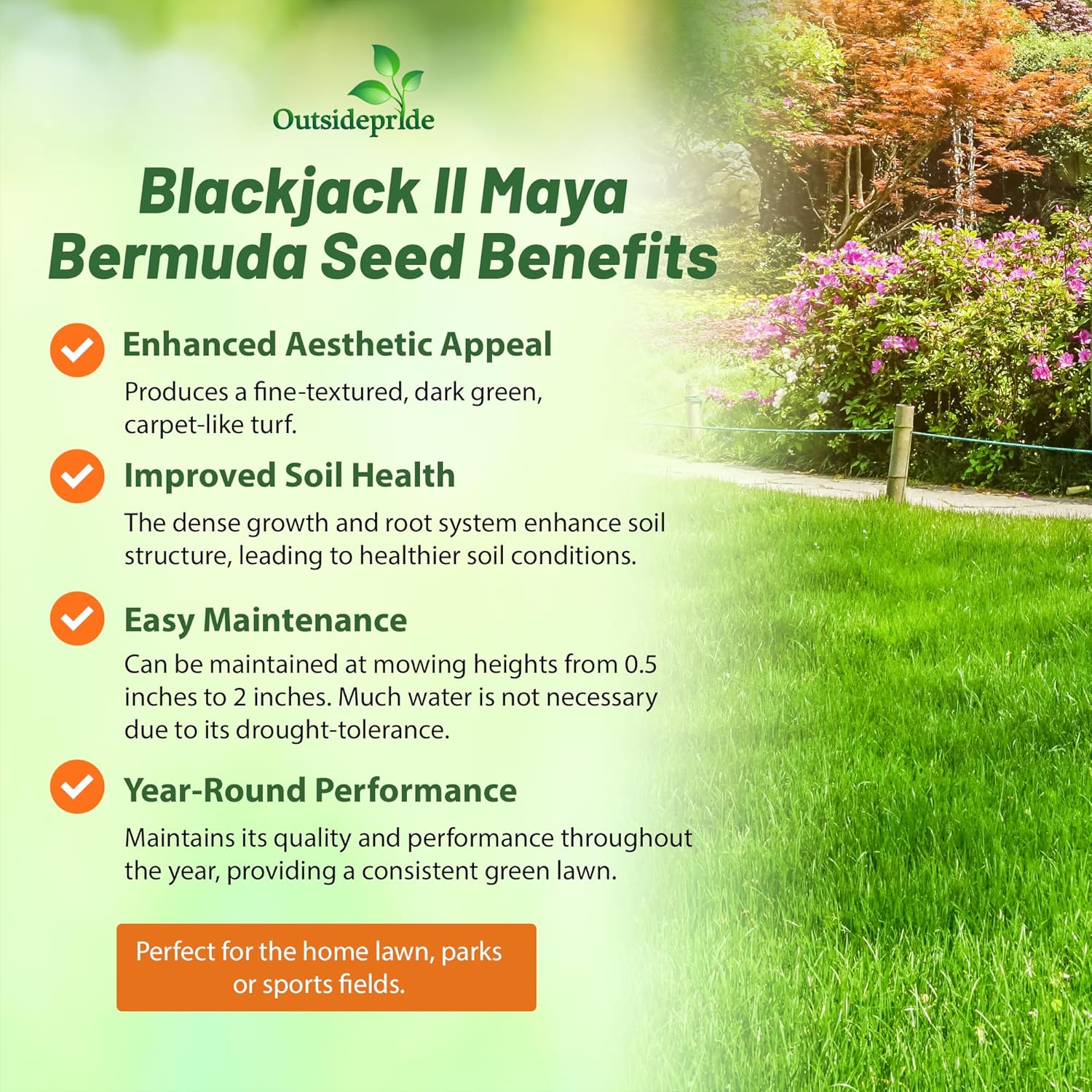
Click for our favorite warm season grass
The Major Warm-Season Grasses
Bermudagrass
Bermudagrass is the most widely grown warm-season grass in the United States. It’s found on golf courses, athletic fields, and millions of home lawns across the South and transition zone. It produces a dense, fine-to-medium textured turf that handles heavy traffic, recovers quickly from damage, and establishes readily from seed or sod.
Bermudagrass performs best in full sun — it tolerates almost no shade — and has excellent drought and heat tolerance. It spreads aggressively via both stolons and rhizomes, making it a persistent spreader (it will invade garden beds if not edged regularly). It grows in USDA Zones 7–10.
Best for: Full-sun lawns, high-traffic areas, homeowners who want a low-mowing, aggressive turf
Not ideal for: Shaded yards, cold climates, low-maintenance situations where frequent mowing isn’t desirable
Read the full deep dive in our complete Bermudagrass guide. If you’re planting from scratch, our post on how to grow Bermuda grass from seed walks through the full process.
St. Augustine Grass
St. Augustine is the dominant lawn grass across Florida and the Gulf Coast states, and it earns that position by offering something no other warm-season grass can match: genuine shade tolerance. It can grow in 4–6 hours of filtered sunlight where Bermuda would thin out and die. Its broad, blue-green blades produce a lush, carpet-like appearance that many homeowners find more visually appealing than finer-bladed types.
The tradeoff is that St. Augustine is one of the higher-maintenance warm-season grasses. It needs regular fertilization, consistent irrigation, and is susceptible to chinch bugs and certain fungal diseases. It also doesn’t grow from seed commercially — you’ll need sod or plugs to establish it.
Best for: Shaded or partially shaded yards, humid coastal climates, homeowners who want maximum density and color
Not ideal for: Cold regions, drought-prone areas without irrigation, low-budget establishments
Our complete St. Augustine grass guide covers varieties, establishment, fertilizing, and common problems in detail.
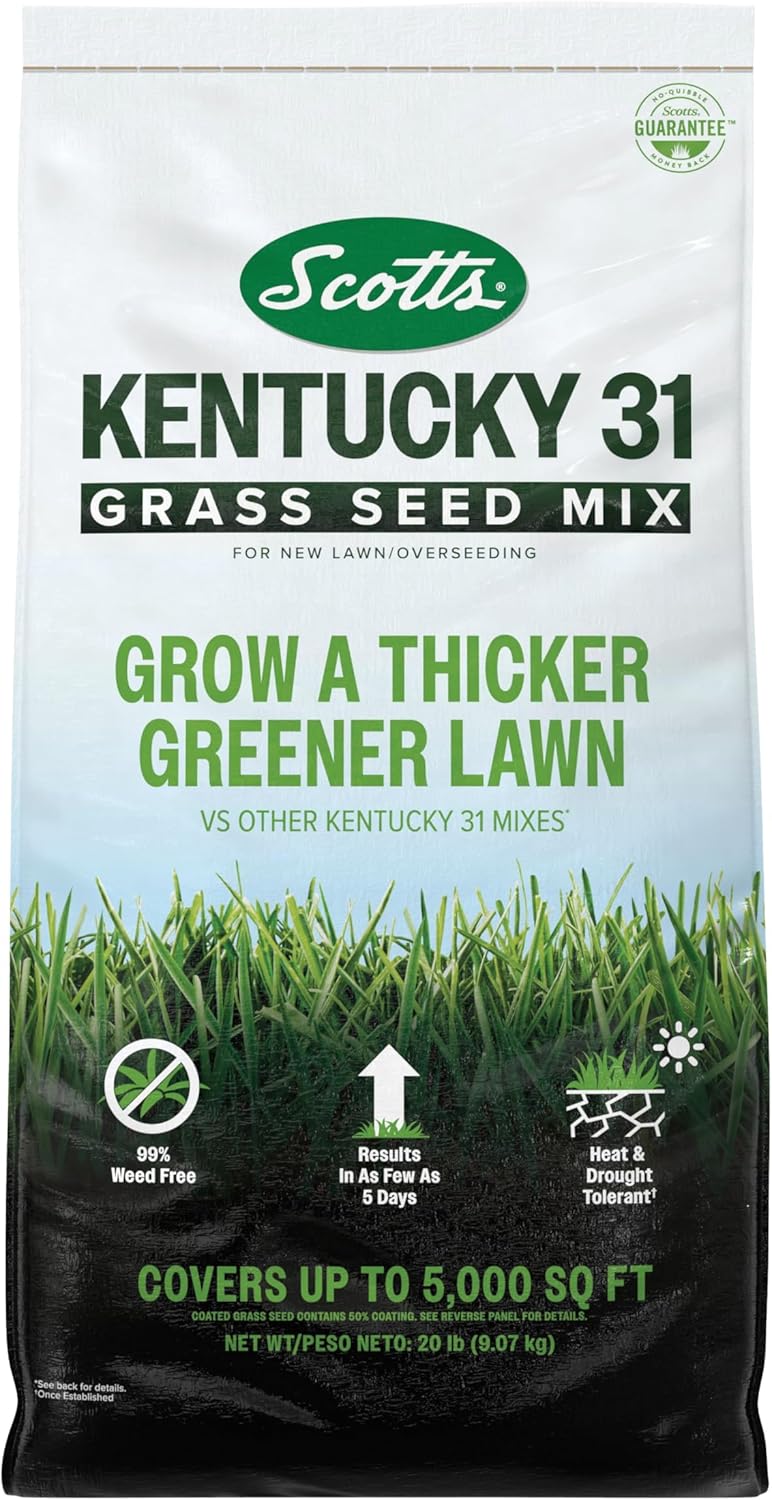
Our favorite seed mix
Zoysia Grass
Zoysia occupies a middle ground between Bermuda and St. Augustine. It produces a dense, fine-to-medium textured turf that handles moderate shade, tolerates drought once established, and wears a deep green color that holds late into fall. Zoysia’s defining trait — and its biggest limitation — is its slow growth rate. It’s one of the slowest-spreading warm-season grasses, which means establishment takes time but also means it crowds out weeds once fully established.
Zoysia is more cold-hardy than most warm-season grasses, extending its range into Zone 6 in some cases. It’s a particularly good fit for the transition zone — the mid-Atlantic and lower Midwest states where cool-season grasses struggle in summer but warm-season grasses face hard winters.
Best for: Transition zone lawns, homeowners who want low-maintenance once established, moderate shade situations
Not ideal for: Homeowners who need fast establishment, very shaded yards
See our complete Zoysiagrass guide for variety comparisons and a full care calendar.
Centipede Grass
Centipede grass earns the nickname “the lazy man’s grass” — and that’s entirely a compliment. It grows slowly, needs minimal fertilization (too much nitrogen actually harms it), requires infrequent mowing, and establishes well on poor, acidic soils where other grasses struggle. It’s the grass of choice across much of the Southeast for homeowners who want an attractive lawn without heavy investment in maintenance.
The main limitations: centipede doesn’t tolerate heavy traffic, has limited cold hardiness (Zones 7–9), and can turn yellow from iron deficiency or over-fertilization. It also dislikes drought and needs consistent moisture.
Best for: Low-maintenance lawns, acidic soils, Southeast homeowners who want minimal fertilizing
Not ideal for: High-traffic areas, drought-prone regions, alkaline soils
Full details in our centipede grass guide.
Fill Dead Spots + Regrow Centipede Grass
Bahia Grass
Bahia grass is the workhorse of the warm-season world — not the most beautiful grass, but one of the toughest and most drought-tolerant. It’s most common in Florida and along the Gulf Coast, where it’s used on roadsides, pastures, and low-maintenance home lawns. It spreads via stolons and rhizomes, tolerates poor sandy soils, and requires very little fertilization to survive.
Bahia Grass Seed
The coarse texture and tendency to produce seed heads frequently are Bahia’s main aesthetic drawbacks. It also doesn’t form the tight, dense carpet that St. Augustine or Bermuda produce.
Best for: Very low-maintenance lawns, sandy soils, areas without irrigation
Not ideal for: Homeowners who want a manicured, carpet-like appearance
See our complete Bahia grass guide, plus our tips on how to make Bahia grass thicker.
Buffalo Grass
Buffalo grass is native to the Great Plains and stands apart from all the other warm-season grasses in this list. It’s built for environments with low rainfall, hot summers, and cold winters — a combination that would stress most other warm-season types. It requires almost no irrigation once established, tolerates alkaline soils, and stays low enough in many varieties that mowing is infrequent or optional.
 Buffalograss Seed
Buffalo grass doesn’t suit the humid Southeast — it doesn’t compete well with weeds in moist climates. But for homeowners in the Great Plains, West Texas, Colorado, and similar low-humidity regions, it’s a uniquely sustainable lawn option.
Best for: Great Plains states, drought-prone regions, low-water landscaping
Not ideal for: Humid Southeast, heavy foot traffic, shade
Learn more in our complete Buffalo grass guide.
Warm-Season Grass Comparison: Side by Side
| Grass | Zones | Shade Tolerance | Drought Tolerance | Traffic Tolerance | Maintenance | Establish From |
|---|---|---|---|---|---|---|
| Bermudagrass | 7–10 | Poor | Excellent | Excellent | Medium-High | Seed, sod, sprigs |
| St. Augustine | 8–10 | Excellent | Moderate | Moderate | High | Sod, plugs only |
| Zoysiagrass | 6–10 | Moderate | Good | Good | Low-Medium | Sod, plugs, seed |
| Centipede | 7–9 | Moderate | Moderate | Low | Very Low | Seed, sod, plugs |
| Bahia | 7–10 | Low-Moderate | Excellent | Good | Very Low | Seed, sod |
| Buffalo Grass | 3–9 | Poor | Outstanding | Moderate | Very Low | Seed, plugs, sod |
How to Choose the Right Warm-Season Grass for Your Yard
Use these questions to narrow down your choice:
Do you have significant shade?
If yes, St. Augustine is your best option in the deep South and Gulf Coast. Zoysiagrass is a reasonable second choice, especially in the transition zone. All other warm-season grasses struggle in shade.
How much rain does your region get?
In humid, rainy climates (Southeast, Gulf Coast), almost any warm-season grass can survive without much irrigation. In drier climates (Plains states, West Texas, New Mexico), Buffalo grass and Bermudagrass are the best performers. St. Augustine and centipede will struggle without regular irrigation in dry conditions.
How much maintenance are you willing to do?
Bermudagrass and St. Augustine are high-maintenance options — they need regular mowing, fertilization, and pest management. Centipede, Buffalo grass, and Bahia are the low-maintenance side of the spectrum. Zoysia falls in between.
Will the lawn take heavy traffic?
Bermudagrass is the clear winner for traffic. Zoysia and Bahia are decent. Centipede and Buffalo grass are not suited for heavy foot traffic.
What’s your budget for establishment?
Bermudagrass, Bahia, and Buffalo grass can all be established from seed at lower cost. St. Augustine requires sod or plugs. Zoysia and centipede can be seeded but are often installed as plugs or sod for faster establishment.
Warm-Season Grass Care: Universal Principles
Regardless of which grass you choose, a few principles apply across all warm-season types:
- Don’t fertilize in fall: Late-season nitrogen pushes tender growth that’s vulnerable to cold damage. Stop feeding 6–8 weeks before your average first frost date.
- Let it go dormant naturally: Warm-season grasses turn brown in winter. This is healthy and expected — don’t over-water or over-fertilize trying to maintain color. Our post on what grass turns brown in winter explains what’s normal and what isn’t.
- Mow at the right height: Each grass type has an ideal mowing height. Cutting too short is one of the most common ways homeowners damage warm-season turf. See our mowing height guide for specifics by grass type.
- Water deeply, not frequently: Shallow, frequent watering keeps root systems shallow. Water less often but more deeply to encourage roots to follow moisture down into the soil profile. For timing guidance, our post on the best times to water grass is a helpful reference.
- Aerate as needed: Compacted soil limits root development. Core aeration in late spring (during active growth) is beneficial for most warm-season grasses. Our guide to aerating and dethatching explains the process.
Warm-season grasses are some of the most durable and heat-resilient turf options available. Match the right species to your climate and lifestyle, and you’ll have a lawn that handles summer beautifully while demanding far less from you than a cool-season alternative ever could.