Uncategorized
Best Lawn Aerator Shoes, Tools & Machines (Which Type Actually Works?)
Aeration is one of the most impactful things you can do for a compacted lawn. Punching holes in the soil lets air, water, and nutrients reach the root zone — and within a few weeks, you’ll see thicker growth, better color, and improved drainage. But the tool you use matters a lot more than most people think.
If you’ve been eyeing those spiked aerator shoes on Amazon, we need to have an honest conversation. Below, we compare every type of lawn aerator — from $15 spike shoes to $250 tow-behind plug aerators — and tell you which ones actually deliver results and which ones waste your time and money.
Spike Aeration vs. Core (Plug) Aeration: The Critical Difference
Spike aerators poke solid holes in the ground. This includes aerator shoes, rolling spike aerators, and pitchfork-style tools. The problem is that solid spikes push soil sideways and actually increase compaction around each hole. You’re displacing soil, not removing it. The holes close back up within days.
Core (plug) aerators use hollow tines to pull out small cylinders of soil — typically 2–3 inches deep and about the diameter of a finger. These plugs are deposited on the surface and break down naturally within 1–2 weeks. Because soil is physically removed, the surrounding soil can expand into the voids, genuinely relieving compaction. This is what turf professionals use, and it’s what university extension programs recommend.
The verdict: Core aeration works. Spike aeration mostly doesn’t. If you’re going to spend time and money aerating, use a tool that pulls plugs. For a deeper dive on the process itself, see our guide on how to aerate and dethatch a lawn.
Aerator Tools Ranked by Effectiveness
1. Agri-Fab 45-0544 48-Inch Tow-Behind Plug Aerator — Best for Large Lawns
Price: Around $180–$220 | Type: Tow-behind core aerator | Coverage: 48-inch width
If you own a riding mower or lawn tractor, this is the most efficient way to aerate a residential property. The 48-inch working width and 32 galvanized steel plug tines cover an enormous amount of ground per pass. You fill the weight tray with cinder blocks or sandbags to push the tines into the soil, hook it to your mower, and drive your normal pattern. A full acre takes about 30–45 minutes.
The plugs it pulls are legitimate — 2.5 to 3 inches deep, which is right in the sweet spot for reaching the root zone on most lawn grasses. The tines are replaceable and widely available. For anyone with a quarter acre or more and a riding mower, this is the clear winner. Our guide to the best riding mowers for 1 acre can help you find a machine to pull it.
Best for: Properties over 1/4 acre with a riding mower or ATV available.
2. Yard Butler Lawn Coring Aerator (ID-6C) — Best Manual Core Aerator
Price: Around $30–$40 | Type: Step-on manual core aerator | Tines: 2 hollow tines
The Yard Butler is a simple, effective tool: two hollow steel tines on a T-handle with a foot bar. You step on it, push the tines 3.5 inches into the soil, pull out two plugs, step forward, and repeat. It’s physical work — you’ll feel it in your legs after 1,000 sq ft — but it pulls real plugs that genuinely relieve compaction.
For small to medium lawns (under 5,000 sq ft), the Yard Butler is the most cost-effective way to do proper core aeration without renting equipment. It’s also useful for spot-aerating problem areas like high-traffic paths and compacted zones near driveways, even if you use a tow-behind for the rest of the yard.
Best for: Small lawns, spot aeration, or homeowners who want a core aerator without the expense of a machine.
3. Brinly PA-40BH Tow-Behind Plug Aerator — Premium Tow-Behind
Price: Around $250–$300 | Type: Tow-behind core aerator | Coverage: 40-inch width
The Brinly is a step up from the Agri-Fab in build quality, with heavier-gauge steel tines and a more durable frame. The 40-inch working width is slightly narrower but the penetration depth is excellent. If you plan to aerate annually for years, the Brinly will outlast the Agri-Fab. If you’re on a tighter budget, the Agri-Fab does the same job adequately.
Best for: Homeowners who want a premium tow-behind they won’t need to replace.
4. Spike Aerator Shoes — The Honest Truth
Price: Around $15–$30 | Type: Strap-on spike sandals
We include these because they’re one of the most-purchased “aerator” products on Amazon, and we want to be straight with you: they don’t work well for actual aeration. The solid spikes compact the soil around each hole rather than removing it. Walking in them is awkward and tiring. And the results are minimal compared to any core aerator.
If you already own a pair, they’re mildly useful for poking holes before overseeding to help seed-to-soil contact. But for genuine compaction relief, invest in a manual core aerator like the Yard Butler instead. The price difference is minimal and the results are dramatically better.
5. Rolling Spike Aerators
Price: Around $40–$70 | Type: Push-style rolling spike drum
Rolling spike aerators use a drum studded with solid spikes. You push or pull it across the lawn, and the spikes poke holes as the drum rolls. Same fundamental problem as aerator shoes — solid spikes don’t remove soil cores. These tools are better than shoes because you can add weight to the drum for deeper penetration, but they’re still a compromise. For the same money, you could buy a Yard Butler core aerator and get far better results.
When Should You Aerate?
Timing depends on your grass type. Cool-season grasses (Kentucky bluegrass, fescue, ryegrass) should be aerated in early fall — September through mid-October in most northern climates. Warm-season grasses (Bermudagrass, zoysiagrass, St. Augustine) should be aerated in late spring to early summer when they’re actively growing. For detailed timing guidance, see our article on the best time to aerate a lawn.
Aerate when the soil is moist but not soggy — typically a day or two after a good rain. Dry, hard soil is almost impossible to penetrate, and waterlogged soil will smear rather than core cleanly.
What to Do After Aerating
Aeration creates the perfect conditions for overseeding, fertilizing, and top-dressing. The open cores give seed direct contact with soil, and fertilizer reaches the root zone more efficiently. This is why fall aeration paired with overseeding is the single most effective lawn improvement you can make in a single weekend. Leave the soil plugs on the surface — they’ll break down within 1–2 weeks and return nutrients to the soil.
Bottom Line
Skip the spike shoes and rolling aerators. For small lawns, the Yard Butler manual core aerator ($30–$40) is all you need. For larger lawns with a riding mower, the Agri-Fab tow-behind plug aerator ($180–$220) is the most efficient and cost-effective option. Aerate once a year and your lawn will reward you with noticeably thicker, healthier growth.
Best Backpack Sprayers for Lawn Care (Weed Killer, Liquid Fertilizer & More)
If you’re doing any kind of DIY lawn care beyond basic mowing and granular fertilizer, you’re going to need a sprayer. Liquid weed killers, liquid fertilizers, soil surfactants, iron supplements, fungicides — they all go down through a sprayer. And while a cheap pump-up garden sprayer from the hardware store can technically get the job done, a quality backpack sprayer makes the process faster, more comfortable, and more precise.
A backpack sprayer sits on your back like a pack, holds 4 gallons of mixed solution, and lets you walk your lawn applying an even coat of whatever you’re spraying — all without stopping to re-pump every 30 seconds. Below, we review the best options for residential lawn care and explain what to look for.
What to Look for in a Lawn Care Backpack Sprayer
Capacity: 4 gallons is the standard for residential use. It’s enough to treat 1,000–4,000 sq ft per fill depending on the product’s dilution rate. Smaller 2-gallon sprayers exist but you’ll be refilling constantly.
Pump type: Manual piston pumps require you to pump a handle while walking to maintain pressure. Battery-powered sprayers maintain constant pressure automatically — a big comfort upgrade for larger lawns. The battery adds weight but eliminates arm fatigue entirely.
Nozzle quality: A good sprayer comes with interchangeable nozzle tips for different spray patterns — a flat fan for broad coverage, a cone for spot-treating, and an adjustable stream for reaching under shrubs. Brass nozzles last longer than plastic.
Chemical resistance: Make sure the seals, gaskets, and tank are rated for herbicides and fertilizers, not just water. Viton seals are the gold standard for chemical resistance.
Our Top Picks
1. Chapin 63985 4-Gallon Backpack Sprayer — Best Overall Value
Price: Around $55–$70 | Capacity: 4 gallons | Pump: Manual piston
The Chapin 63985 is the workhorse sprayer for DIY lawn care. It has a wide-mouth opening for easy filling, padded shoulder straps, a cushioned hand grip on the pump lever, and a 4-nozzle assortment that covers everything from broad fan spraying to targeted stream applications. The tank is translucent so you can see your fill level, and the internal filter prevents debris from clogging the nozzle.
This is a manual pump sprayer, so you’ll need to pump the handle periodically to maintain pressure. On a typical lawn application, that means a few pumps every minute or so — not exhausting, but noticeable over a large property. For lawns under 10,000 sq ft, most people find it perfectly manageable.
Best for: Most homeowners. Solid build quality at a price that doesn’t sting if you only use it a few times per season.
2. Field King Professional 190328 — Best Manual Sprayer for Durability
Price: Around $45–$60 | Capacity: 4 gallons | Pump: Manual piston (internal)
The Field King stands out for its internal piston pump design, which puts the pump mechanism inside the tank rather than on an external lever. This means fewer parts exposed to damage, no external pump handle sticking out, and the ability to pump with either hand using a top-mounted handle. The no-leak design with Viton seals makes it particularly well-suited for herbicide applications where you really don’t want drips on your skin or lawn.
Best for: Homeowners who prioritize durability and plan to spray herbicides regularly. The internal pump design is also more comfortable for some users.
3. PetraTools HD4000 Battery-Powered Backpack Sprayer — Best Battery Sprayer
Price: Around $75–$90 | Capacity: 4 gallons | Pump: Battery-powered (rechargeable)
If you have a larger lawn or simply don’t want to pump, the PetraTools HD4000 is the battery-powered upgrade. A rechargeable battery maintains consistent pressure automatically, so all you do is walk and aim. The battery lasts long enough to empty the full 4-gallon tank multiple times on a single charge.
Consistent pressure is a real advantage for even application. With a manual sprayer, pressure drops between pumps, causing the spray pattern to shrink and surge. A battery sprayer eliminates that variable entirely, giving you a uniform coat across the whole lawn. If you’re applying weed killer for dandelions or spot-treating clover patches, even coverage matters a lot.
Best for: Lawns over 10,000 sq ft, or anyone who values the comfort and consistency of constant pressure.
4. My 4 Sons M4 Battery Backpack Sprayer — Best Premium Option
Price: Around $120–$140 | Capacity: 4 gallons | Pump: Battery-powered (lithium-ion)
The My 4 Sons M4 is the sprayer you see in DIY lawn care YouTube videos and forums. It’s a step above the PetraTools in build quality, with a more powerful pump, longer battery life, and better included nozzle tips. The padded backpack straps and lumbar support make it comfortable enough for extended spraying sessions.
Is it worth the premium over the PetraTools? If you spray frequently — multiple products across multiple seasons — the better build quality and comfort justify the extra cost. If you spray 3–4 times a year, the PetraTools does the same job for less.
Best for: Dedicated lawn care enthusiasts who spray liquid fertilizer, herbicide, and other treatments regularly throughout the season.
What Can You Spray on Your Lawn?
A backpack sprayer opens up a whole category of lawn care products that granular spreaders can’t handle:
Liquid weed killers: Selective herbicides like 2,4-D, dicamba, and quinclorac target broadleaf weeds without harming grass. A sprayer lets you either blanket-spray the whole lawn or spot-treat individual weeds. See our guides on removing clover and dandelions for product-specific advice.
Liquid fertilizers: Products like Simple Lawn Solutions 16-4-8 or Scotts Liquid Turf Builder provide a quick-release nitrogen boost that greens up grass within days. They’re applied through a hose-end sprayer or backpack sprayer.
Iron supplements: Chelated iron sprays darken your grass color without pushing excessive growth. Great for getting a deep green look between fertilizer applications.
Fungicides: If your lawn develops red thread, brown patch, or dollar spot, liquid fungicides are applied with a sprayer for even coverage over the affected area.
Soil surfactants: These products help water penetrate compacted or hydrophobic soil — useful if you notice water pooling or running off instead of soaking in.
Sprayer Maintenance Tips
Rinse thoroughly after every use. Fill the tank with clean water and spray it through the wand until the water runs clear. Herbicide residue left in the tank can damage your grass the next time you spray fertilizer.
Store with the pressure released. Leaving the tank pressurized shortens the life of seals and gaskets.
Replace nozzle tips annually. Worn nozzles produce uneven spray patterns. Replacement tips are cheap ($5–$10 for a set) and make a noticeable difference in application quality.
Bottom Line
The Chapin 63985 is the best starting point for most homeowners — reliable, affordable, and capable of handling any liquid lawn care product. If you want the upgrade to battery power, the PetraTools HD4000 offers the best value, while the My 4 Sons M4 is the choice for frequent, serious use. Whichever you pick, a backpack sprayer unlocks a whole new tier of DIY lawn care that spreaders alone can’t reach.
Best Lawn Spreaders for Fertilizer & Seed (Broadcast vs. Drop Compared)
A good spreader is the most underrated tool in lawn care. You can buy the best fertilizer on the market, but if you’re applying it unevenly — heavy in some spots, light in others — you’ll end up with striped, patchy results that look worse than if you’d done nothing at all.
The right spreader distributes product evenly across your entire lawn in a single pass, saving you time, money, and frustration. But which type do you actually need? Below, we compare broadcast spreaders and drop spreaders, explain when to use each, and review the best models at every price point.
Broadcast vs. Drop Spreader: Which Do You Need?
Broadcast spreaders (also called rotary spreaders) fling product out in a wide fan pattern using a spinning disk at the bottom of the hopper. They cover ground quickly — most residential models throw a 6–12 foot swath — making them the best choice for medium to large lawns. The tradeoff is less precision along edges, garden beds, and sidewalks. If you need to keep fertilizer off your driveway or out of flower beds, you’ll need to use the edge guard (a deflector shield that blocks one side).
Drop spreaders release product straight down through a row of openings at the bottom of the hopper. The coverage width matches the hopper width exactly — usually 20–22 inches. This makes them extremely precise, but slow. You need to walk in perfectly overlapping rows to avoid visible stripes. Drop spreaders are best for small lawns, tight spaces, and situations where precision matters more than speed (like applying herbicide near sensitive plants).
Our recommendation for most homeowners: Start with a broadcast spreader. It handles 90% of lawn care tasks faster and more forgivingly than a drop spreader. Add a drop spreader later if you have specific precision needs.
Best Broadcast Spreaders
1. Scotts Turf Builder EdgeGuard DLX — Best for Most Homeowners
Price: Around $40–$50 | Hopper capacity: ~15,000 sq ft of Scotts fertilizer | Spread width: ~6 feet
The Scotts EdgeGuard DLX is the default recommendation for a reason: it works well, it’s affordable, and it’s pre-calibrated for every Scotts product (the settings are printed right on the bag). The EdgeGuard feature is a one-hand lever that blocks the left side of the spread pattern, so you can walk along driveways and garden beds without flinging granules where they don’t belong.
The hopper holds enough product to cover a typical suburban lawn in one fill. The pneumatic-style wheels roll easily over grass, and the frame is sturdy enough to last several seasons with basic care. It won’t win any awards for build quality — the plastic hopper will eventually degrade in UV — but at this price, replacing it every 4–5 years isn’t a hardship.
Best for: Lawns up to 15,000 sq ft. Homeowners who primarily use Scotts products and want a simple, reliable spreader without overthinking calibration.
2. Earthway 2600A-Plus — Best Mid-Range Broadcast Spreader
Price: Around $65–$80 | Hopper capacity: 40 lbs | Spread width: ~10 feet
If you want a step up from the Scotts without going commercial, the Earthway 2600A-Plus is the sweet spot. The 40-pound hopper holds significantly more product, the 10-foot spread width covers ground faster, and the rustproof poly construction is noticeably more durable than budget models. It also includes a side spread control — similar to the Scotts EdgeGuard but with finer adjustment.
The Earthway is the spreader most recommended in the DIY lawn care community (Lawn Care Nut fans will recognize it). It works with any brand of granular fertilizer or grass seed, and calibration charts are available for most popular products online. The gear-driven mechanism provides a more consistent spread pattern than the simpler designs in cheaper spreaders.
Best for: Lawns 10,000–30,000 sq ft. DIY lawn care enthusiasts who apply multiple products per season and want a spreader that will last 5+ years.
3. Chapin 8400C — Best for Large Properties
Price: Around $90–$110 | Hopper capacity: 100 lbs | Spread width: ~12 feet
The Chapin 8400C is built for larger properties and frequent use. The 100-pound stainless steel hopper is massive — you can load an entire bag of fertilizer without refilling — and the 12-foot spread width means fewer passes across your lawn. The stainless steel frame resists corrosion from fertilizer salts, which is the number one killer of cheaper spreaders.
This is overkill for a typical quarter-acre suburban lot, but if you’re maintaining an acre or more, or if you apply product frequently throughout the season, the Chapin pays for itself in time savings and longevity.
Best for: Properties over half an acre. Homeowners who apply fertilizer, pre-emergent, seed, and lime multiple times per year.
4. Agri-Fab 45-0462 Tow-Behind Broadcast Spreader — Best for Riding Mowers
Price: Around $100–$130 | Hopper capacity: 130 lbs | Spread width: ~12 feet
If you already own a riding mower or lawn tractor, a tow-behind spreader is the fastest way to fertilize a large property. The Agri-Fab 45-0462 hooks up to any riding mower with a standard hitch pin and is operated by a lever or pull rod from the driver’s seat. Fill the hopper, drive your normal mowing pattern, and you’re done in a fraction of the time it would take on foot.
The main consideration is that tow-behind spreaders don’t give you the edge precision of a walk-behind. You’ll still want a handheld spreader for borders and tight spots. But for open lawn areas on properties over half an acre, nothing beats the speed of a tow-behind. For help choosing a riding mower to pair it with, see our guide to the best riding mower for 1 acre.
Best for: Properties over 1 acre where you already use a riding mower.
Best Drop Spreaders
5. Scotts Turf Builder Classic Drop Spreader
Price: Around $50–$65 | Spread width: 22 inches
The Scotts Classic Drop Spreader is the most widely available drop spreader for residential use. The 22-inch spread width means you’ll need precise, overlapping passes to avoid leaving gaps — but that precision is exactly the point. It’s ideal for applying granular herbicide near vegetable gardens, putting down seed in narrow strips, or fertilizing a small front lawn where a broadcast spreader would throw product onto the sidewalk.
Best for: Small lawns under 5,000 sq ft. Precise application near sensitive areas.
Spreader Tips That Actually Matter
Calibrate every time. Spreader settings vary by product. Check the product bag for your spreader model’s setting. If your spreader isn’t listed, start at a lower setting and make two half-rate passes in perpendicular directions (north-south, then east-west). This is slower but produces the most even coverage.
Clean your spreader after every use. Fertilizer salts are corrosive. Rinse the hopper and mechanism with a hose after each application. This single habit will double the life of any spreader.
Don’t fill while parked on the lawn. If you spill concentrated fertilizer in one spot, it will burn the grass. Fill on the driveway or a tarp, then wheel onto the lawn.
Walk at a consistent pace. Speeding up or slowing down changes the application rate. Pick a comfortable walking speed and maintain it.
For more on getting your fertilizer program right, see our guide on how often you should fertilize your lawn and our breakdown of how grass spreads to understand why even coverage matters so much.
Bottom Line
For most homeowners, the Scotts EdgeGuard DLX is the best starting point — affordable, reliable, and easy to use. If you’re applying product more than 3–4 times per season or have a larger property, upgrade to the Earthway 2600A-Plus for better build quality and a wider spread pattern. And if you’ve got an acre or more with a riding mower, add a tow-behind like the Agri-Fab to cut your fertilizing time by 75%.
Best Soil Test Kits for Lawns (And How to Read Your Results)
Robotic Mower Price Tiers: Budget vs Mid-Range vs Premium — What You Actually Get for Your Money
The price range for robotic lawn mowers in 2026 spans from about $500 to over $6,000. That’s a massive spread, and the natural question is: what exactly are you paying for when you move up from a $600 unit to a $3,000 one?
The answer isn’t just “more lawn.” While coverage area is the most obvious variable, the real value jumps happen in navigation quality, slope handling, setup simplicity, and app intelligence. A cheap mower that frustrates you every week is no bargain. A premium mower on a small flat lawn is overkill.
This guide walks through each price tier with specific models, so you can match your actual lawn to the right investment.
If you haven’t already, our complete buyer’s guide gives you the full overview: Robotic Lawn Mowers: The Complete Buyer’s Guide.
Budget Tier: $500–$1,000
Who it’s for: Homeowners with small, relatively flat lawns (under 1/4 acre) who want to automate mowing without a huge financial commitment.
What you get at this price: Lawn coverage of 1/8 to 1/4 acre. Navigation via boundary wire (Worx Landroid Classic) or basic RTK (Segway Navimow i105N). Cutting width of 7-8 inches. Cutting height typically 0.8″ to 3.6″, manually adjustable. Slope handling up to 20-30%. Basic app control with scheduling, start/stop, and boundary setup on wire-free models. Obstacle avoidance via bump sensors or basic camera/ultrasonic.
Notable Models in This Tier
Worx Landroid S (WR165): Frequently found around $500-$600 on sale. Covers 1/8 acre. Uses boundary wire. The 20V PowerShare battery is interchangeable with other Worx tools, which is a nice bonus if you’re already in that ecosystem. Solid for very small, simple yards. Setup requires laying the wire, which takes a couple of hours, but after that it’s hands-off.
Worx Landroid M (WR150/WR155): Steps up to 1/4 acre coverage with the same boundary wire system. Runs about $600-$900 depending on sales. Adds Wi-Fi connectivity and the full Landroid app experience with weather-adjusted scheduling.
Segway Navimow i105N: Around $800-$1,000. This is where the budget tier gets interesting. Wire-free RTK navigation, AI-assisted mapping, VisionFence obstacle avoidance, and multi-zone management. Covers 1/8 acre. The setup is genuinely 5-10 minutes versus the hours it takes to lay boundary wire. If your lawn is small, this is arguably the best value in the entire robotic mower market right now.
What you’re giving up: Coverage area is limited — these won’t handle medium or large lawns. Cutting width is narrow (7-8″), so they take longer to cover ground. Slope handling is limited — steep hills will be a problem. Cheaper models with boundary wire require meaningful setup time. App features are more basic. No AWD — only rear-wheel drive.
The honest take: If your lawn is under 1/4 acre and reasonably flat, a budget model will keep it looking great. The Segway i105N specifically is a standout — wire-free navigation at under $1,000 was unthinkable two years ago. Where budget models fall short is durability and refinement. The cut quality, edge finishing, and all-weather reliability won’t match premium units. But for the price, the trade-off is fair.
For a deeper look at how the specs compare across all tiers, see: Robotic Lawn Mower Specs Explained.
Mid-Range Tier: $1,000–$2,500
Who it’s for: Homeowners with medium-sized lawns (1/4 to 3/4 acre), some complexity in the yard layout, or moderate slopes who want reliable daily performance.
What you get at this price: Lawn coverage of 1/4 to 3/4 acre. Wire-free RTK + Vision or dual LiDAR navigation. Cutting width of 7-13 inches (dual blade systems become common). Cutting height of 0.8″ to 3.6″, often app-adjustable. Slope handling of 30-50%. Full app control with scheduling, zone management, no-go areas, and cutting patterns. AI camera + ultrasonic/LiDAR obstacle avoidance detecting 150+ object types. Auto-charge and resume from where it left off.
Notable Models in This Tier
Segway Navimow i110N: Around $1,100-$1,300. Covers 1/4 acre with RTK + Vision navigation. This is essentially the i105N with a bigger battery and larger coverage. Still one of the best app experiences in the category. Noise level at just 58 dB makes it neighbor-friendly.
Mammotion LUBA Mini AWD 1500: About $1,200-$1,500. Covers up to 0.37 acre. The standout here is AWD with 80% slope capability, which is unheard of at this price point. RTK + AI Vision navigation, 20 mow zones, and Mammotion’s lawn printing patterns (checkerboard, diamond, etc.). If you have hills, this is the minimum you should spend.
Ecovacs GOAT A2500 RTK: Around $2,000. Covers up to 5/8 acre. LiDAR-enhanced RTK navigation, dual cutting blades with 13-inch width, and 45-minute fast charging. Adjustable cutting height from 1.2″ to 3.6″ via the app. 50% slope capability. This is where the Ecovacs GOAT line really shines — fast mowing, fast charging, and precise navigation.
Segway Navimow X3 Series (lower models): Starting around $2,300. Covers up to 0.5 acre. More robust build than the i Series, better suited for more complex lawns with multiple zones and tighter passages.
What you’re giving up vs. Premium: Maximum coverage caps around 3/4 acre. Cut quality and edge finishing aren’t as refined as Husqvarna. Battery capacity and run time are shorter. Some models still have manual cutting height adjustment. The most advanced obstacle avoidance features are reserved for premium.
The honest take: This is the sweet spot for most homeowners. If your lawn is between 1/4 and 3/4 acre, the mid-range delivers 90% of the premium experience at 40-60% of the price. The Ecovacs A2500 RTK and Mammotion LUBA Mini AWD 1500 are particularly strong picks. The A2500 wins on mowing speed and charging time. The LUBA Mini wins on slope handling and mowing patterns.
For detailed comparisons between these specific models, see: Best Robotic Lawn Mowers Compared.
Premium Tier: $2,500–$6,000+
Who it’s for: Homeowners with large properties (3/4 acre to 2.5+ acres), challenging terrain, steep hills, complex layouts, or anyone who wants the absolute best cut quality and most hands-off experience.
What you get at this price: Lawn coverage of 3/4 acre to 2.5+ acres. Multi-layered redundant navigation systems (RTK + LiDAR + Vision + AI). Cutting width of 9-16 inches with advanced blade systems. Cutting height of 0.8″ to 4″, app-adjustable with electric height adjustment on Husqvarna. Slope handling of 45-84%. Everything in mid-range app control plus stripe patterns, remote driving, detailed lawn maps, and fleet management. The most sophisticated AI obstacle avoidance detecting 200+ object types with pet-safe modes. Extras like ultra-silent motors, LED headlights, theft deterrents, and weather-adaptive scheduling.
Notable Models in This Tier
Mammotion LUBA 2 AWD 3000X: About $2,400-$2,600. Covers 3/4 acre. AWD for 80% slopes, 15.8-inch dual cutting disc, AI Vision + RTK. This is the entry point to the premium tier and delivers extraordinary terrain capability for the price. Adjustable cutting height from 1″ to 2.7″.
Mammotion LUBA 2 AWD 5000HX: Around $2,500-$3,000. Covers up to 1.75 acres with higher cutting heights (2.2″ to 4.0″), making it well-suited for cool-season grass types that need to stay taller. Ideal for large suburban lots with Fescue or Bluegrass.
Ecovacs GOAT A3000 LiDAR: About $2,500-$3,000. Covers 3/4 acre. Dual LiDAR navigation (360° top LiDAR + forward-facing 3D ToF LiDAR) combined with AI camera. 32V motor with dual blades at 13-inch cutting width. 45-minute fast charging is class-leading. TrueEdge technology gets as close as 2 inches to edges, reducing trimmer work.
Husqvarna Automower 450XH EPOS: $5,900. Covers up to 2.5 acres. Wire-free EPOS satellite navigation with centimeter accuracy. Electric height adjustment from 0.8″ to 2.4″. 200 minutes of mow time per charge. Ultra-silent drive with dual gearbox motors. 45% slope handling. Spiral and spot cutting modes. Compatible with Alexa, Google Home, and IFTTT. This is the benchmark that other premium mowers are measured against.
What justifies the premium: Significantly larger coverage area per charge. Redundant navigation means the mower almost never gets lost or stuck. Electric cutting height adjustment from the app. Husqvarna’s refined cut quality is noticeably superior — finer mulch, more consistent height. Ultra-quiet operation allows 24/7 mowing without disturbing neighbors. Better build quality and longer expected lifespan (5-7+ years with maintenance). Advanced features like straight-line cutting patterns and lawn striping.
The honest take: If you have a large or complex property, premium is the way to go — budget and mid-range mowers simply can’t cover the area or handle the terrain. The LUBA 2 AWD series offers the best pure terrain capability. The Ecovacs A3000 LiDAR has the best navigation-to-price ratio. The Husqvarna 450XH EPOS delivers the most refined overall experience but at a significant price premium.
So Which Tier Should You Choose?
Lawn under 1/4 acre, flat: Budget tier. Start with the Segway Navimow i105N or i110N. Wire-free, great app, gets the job done.
Lawn 1/4 to 3/4 acre, some slopes: Mid-range tier. The Ecovacs GOAT A2500 RTK or Mammotion LUBA Mini AWD 1500 will handle it well. Choose GOAT for speed and precision, LUBA for hills.
Lawn 3/4 to 2+ acres, or complex terrain: Premium tier. The Mammotion LUBA 2 AWD 5000HX for hills and large area, or the Husqvarna 450XH EPOS for the best overall experience on large properties.
Have more questions about specific features and how they compare? Check out: Robotic Lawn Mower Specs Explained and our FAQ: Do Robotic Mowers Charge Themselves? 15 Questions Answered.
Related Posts on Finest Lawns
Robotic Lawn Mowers: The Complete Buyer’s Guide
Robotic Lawn Mower Specs Explained: Battery Life, Cutting Height, Mow Zones & More
Best Robotic Lawn Mowers Compared: Husqvarna vs Segway vs Ecovacs vs Mammotion vs Worx
Robotic Lawn Mowers: The Complete Buyer’s Guide
If you’re tired of spending your weekends pushing a mower around the yard — or paying someone $40+ a week to do it — a robotic lawn mower might be the smartest investment you make for your lawn this year.
The technology has matured rapidly. Boundary wires are almost extinct, prices have dropped to under $600 for entry-level models, and the navigation systems on today’s robotic mowers rival what you’d find in self-driving cars. RTK satellite positioning, LiDAR mapping, AI-powered obstacle avoidance — these aren’t buzzwords anymore. They’re standard features.
But with dozens of models from brands like Husqvarna, Segway Navimow, Ecovacs, Mammotion, and Worx all competing for your attention, choosing the right one can feel overwhelming. That’s what this guide is for.
We’ll walk you through everything that matters: how much they cost, what specs actually impact your experience, which features justify the price jump from a $600 mower to a $3,000+ unit, and which models we think deliver the best value at each price point.
How Robotic Lawn Mowers Work
At its core, a robotic mower is a battery-powered machine that drives itself around your lawn, cutting grass continuously in small amounts. Instead of waiting until your lawn is overgrown and hacking it down once a week, the robot trims a tiny bit every day or two. The result is a consistently manicured lawn that actually looks healthier — the fine clippings fall back into the soil and act as natural fertilizer.
Here’s the basic cycle: the mower leaves its charging dock, navigates your lawn using its positioning system, cuts grass at your chosen height, and when the battery gets low, it drives itself back to the dock to recharge. Once charged, it heads back out to finish the job. No intervention needed.
Navigation is where the real differences between models show up. Older models (and some cheaper current ones) still use boundary wires — physical cables you bury or peg around your lawn’s perimeter. Newer wire-free models use a combination of RTK satellite positioning, cameras, LiDAR, and AI to know exactly where they are and where your lawn ends.
For a deep dive into how the navigation systems, battery specs, cutting heights, mow zones, and app features actually work, check out our full specs breakdown: Robotic Lawn Mower Specs Explained: Battery Life, Cutting Height, Mow Zones & More.
What Does a Robotic Mower Cost?
Robotic mower prices in 2026 range from roughly $500 to $6,000+ for residential models. The price you pay depends primarily on three things: how much lawn it can handle, how it navigates, and what premium features it includes.
Budget Tier ($500–$1,000): Models like the Worx Landroid S and M series, and the Segway Navimow i105N. These handle smaller lawns (up to about 1/4 acre), usually have basic navigation, and get the core job done without a lot of bells and whistles.
Mid-Range Tier ($1,000–$2,500): This is where the sweet spot lives. Models like the Segway Navimow i110N, Ecovacs GOAT A2500 RTK, and Mammotion LUBA Mini AWD. Wire-free navigation, solid app control, multi-zone management, and reliable obstacle avoidance. Good for medium-sized yards up to about 3/4 acre.
Premium Tier ($2,500–$6,000+): The Husqvarna Automower 450XH EPOS, Ecovacs GOAT A3000 LiDAR, Mammotion LUBA 2 AWD 5000, and Segway Navimow X3 series. These cover large properties (1+ acres), feature the most advanced navigation systems, handle steep slopes, and offer professional-grade cut quality.
We break down exactly what you get at each price point — and whether the upgrades are worth it — in our dedicated comparison: Robotic Mower Price Tiers: Budget vs Mid-Range vs Premium.
Key Features to Look For
Not all robotic mowers are created equal. Here are the features that make the biggest difference in your day-to-day experience:
Wire-Free Navigation: The single biggest convenience upgrade. Wire-free models use RTK, LiDAR, cameras, or a combination to map and navigate your lawn without buried boundary cables. Setup goes from a full afternoon to minutes.
Cutting Height Range: Most robotic mowers adjust between roughly 0.8 inches and 4 inches. If you have warm-season grasses like Bermuda that you keep short, you need a mower that can go low. If you have cool-season grasses like Kentucky Bluegrass or Fescue, you want one that can cut at 3+ inches. Some models adjust cutting height through the app, while cheaper ones require manual adjustment on the mower itself.
Lawn Coverage Area: Manufacturers rate their mowers for specific lawn sizes. Budget models typically cover 1/8 to 1/4 acre. Mid-range covers up to 3/4 acre. Premium models handle 1 to 2.5+ acres. Always buy slightly above your actual lawn size to account for overlap and recharging time.
Slope Handling: If your yard has hills, this matters a lot. Budget models handle slopes up to about 20%. Mid-range models reach 30-50%. Premium AWD models like the Mammotion LUBA 2 can climb slopes up to 80% (38 degrees). For context, most ride-on mowers become unsafe beyond about 15 degrees.
Auto-Charging and Resume: Every modern robotic mower returns to its dock when the battery gets low. The better ones remember where they left off and resume from that exact spot after recharging.
Multi-Zone Management: If you have separate lawn areas (front yard, backyard, side strips), you want a mower that can manage multiple zones with different schedules and cutting heights. Most mid-range and premium models offer this, usually manageable through the app.
App Quality: This is the one spec that’s hardest to judge from a spec sheet but has an outsized impact on your satisfaction. A good app lets you set schedules, draw zones and no-go areas, adjust cutting height, monitor the mower’s status, and receive alerts. A bad app makes everything frustrating.
Obstacle Avoidance: Modern mowers use ultrasonic sensors, cameras, and AI to detect and avoid obstacles like garden furniture, toys, hoses, and even pets. The quality varies enormously between models.
For detailed explanations of how each of these specs works and what to look for, read: Robotic Lawn Mower Specs Explained.
Top Brands Compared
The robotic mower market in 2026 is dominated by five major players:
Husqvarna has been making robotic mowers longer than anyone — over 25 years. Their Automower line is the gold standard for reliability and cut quality. The trade-off is premium pricing and the fact that some models still use boundary wires, though their EPOS (satellite-based) models are wire-free.
Segway Navimow has exploded onto the scene and was the top-selling wire-free robotic mower brand globally in 2024. Their i Series offers incredible value for smaller lawns, and the new X4 Series (announced at CES 2026) promises 4WD capability and 84% slope handling.
Ecovacs, known for their robot vacuums, brought their sensor expertise to the lawn with the GOAT series. The A3000 LiDAR stands out with dual-LiDAR navigation and 45-minute fast charging. Their obstacle avoidance is among the best in the industry.
Mammotion built the LUBA series specifically for challenging terrain. If you have steep hills, rough ground, or large properties, Mammotion’s AWD system and aggressive tire design are hard to beat. Their app also supports lawn printing — custom mowing patterns like checkerboard and diamond grids.
Worx offers the most budget-friendly entry point with their Landroid series. The Landroid S can be found for under $500 on sale. Their newer Vision models use camera-based navigation (no wires, no RTK antenna) for a genuinely plug-and-play experience.
For a detailed head-to-head comparison of the top models from each brand, see: Best Robotic Lawn Mowers Compared: Husqvarna vs Segway vs Ecovacs vs Mammotion vs Worx.
How to Choose the Right Robotic Mower for Your Lawn
Start with your lawn. Everything else flows from there.
Measure your lawn area first. You can use Google Maps or a measuring app to get a rough figure. Round up, because you’ll want overhead. A mower rated for 1/4 acre on a 1/4 acre lawn will run almost constantly and wear out faster.
Assess your terrain. If your yard is flat and simple, you don’t need to pay for AWD or advanced slope handling. If you have hills, you need to check the slope percentage rating carefully. If your yard has lots of trees that might block satellite signals, prioritize mowers with LiDAR or vision-based backup navigation.
Count your separate lawn areas. If you have a front and back yard separated by a driveway or path, you need either multi-zone management or potentially two mowers. Most mid-range models handle multiple zones through the app.
Consider your grass type. Warm-season grasses (Bermuda, Zoysia, St. Augustine) often need to be cut shorter (0.5-2 inches). Cool-season grasses (Fescue, Bluegrass, Ryegrass) stay healthier at 2.5-4 inches. Make sure the mower’s cutting height range matches your grass type’s ideal height.
Set your budget, then ask whether a bump up makes sense. There’s a huge jump in capability between the $500-$1,000 range and the $1,000-$2,000 range. The jump from $2,000 to $3,000+ is about covering more area and handling tougher terrain. If your lawn is under 1/4 acre and flat, spending more than $1,500 is overkill.
Read our full tier breakdown to see exactly where your money goes: Robotic Mower Price Tiers: Budget vs Mid-Range vs Premium.
Common Concerns and Misconceptions
“Will it cut my lawn as well as a regular mower?” — In many cases, better. Because robotic mowers cut small amounts frequently, the grass stays at a consistent height. The fine clippings decompose quickly and feed the soil. Many owners report their lawns look healthier after switching to a robot.
“Is it safe around kids and pets?” — Modern robotic mowers have lift sensors that stop the blades instantly if the mower is picked up. Premium models use cameras and AI to detect and avoid moving objects, including animals. That said, no one should rely on the mower as a babysitter. Supervise young children when the mower is running.
“What about theft?” — Most models include PIN protection, GPS tracking, and alarm systems. Some have geofencing that alerts you if the mower leaves its designated area. The better models are essentially bricks without the owner’s phone authorization.
“Can it handle rain?” — Most robotic mowers are weather-resistant (IPX5 or IPX6 rated) and can technically mow in the rain. However, cutting wet grass isn’t ideal — it clumps and doesn’t mulch well. Smart models use weather sensors or pull forecast data to avoid mowing during rain.
We answer these questions and many more in detail: Do Robotic Mowers Charge Themselves? 15 Questions Answered.
Our Top Picks by Lawn Size
For small lawns (under 1/4 acre): The Segway Navimow i105N offers wire-free RTK navigation, AI mapping, and a solid app — all for around $800-$1,000. It’s the best value in its class.
For medium lawns (1/4 to 3/4 acre): The Ecovacs GOAT A2500 RTK delivers dual-blade cutting, 45-minute fast charging, 50% slope capability, and LiDAR-enhanced RTK navigation for about $2,000. Excellent balance of price and performance.
For large lawns (3/4 to 1.5 acres): The Mammotion LUBA 2 AWD 5000 handles up to 1.25 acres daily, features AWD for 80% slopes, AI vision + RTK navigation, and a 15.8-inch dual cutting width. Priced around $2,500-$3,000.
For premium/complex lawns: The Husqvarna Automower 450XH EPOS covers 2.5 acres with 200 minutes of mow time per charge, wire-free EPOS navigation, 45% slope handling, and the most refined cut quality on the market. It’s $5,900 — but for large, complex properties, it’s the standard others are measured against.
For the full comparison with specs side by side, read: Best Robotic Lawn Mowers Compared.
Is a Robotic Mower Worth It?
Here’s the math. If you’re paying a lawn service $40/week for 24 weeks (roughly April through September), that’s $960/year. A $2,000 robotic mower pays for itself in just over two seasons. And unlike a lawn service, it runs as often as you want, keeps the grass at a consistent height, and doesn’t cancel when it rains.
If you’re currently mowing yourself with a push or ride-on mower, the value is harder to quantify — but think about what your weekends are worth to you. Most owners report getting 1-2 hours back every week during mowing season.
The technology is mature enough that robotic mowers aren’t an experiment anymore. They’re a practical tool that millions of homeowners around the world rely on daily. The only real question is which one is right for your lawn.
Related Posts on Finest Lawns
Robotic Lawn Mower Specs Explained: Battery Life, Cutting Height, Mow Zones & More
Robotic Mower Price Tiers: Budget vs Mid-Range vs Premium
Best Robotic Lawn Mowers Compared: Husqvarna vs Segway vs Ecovacs vs Mammotion vs Worx
Robotic Lawn Mower Specs Explained: Battery Life, Cutting Height, Mow Zones
Spec sheets for robotic mowers are packed with numbers — battery capacity in amp-hours, cutting width in inches, slope percentages, RTK acronyms, and coverage area in square feet. But what do these specs actually mean for your day-to-day experience?
This guide translates the specs that matter into practical terms. We’ll explain what each number means, what range you should look for, and how different specs interact with each other. Because a mower with a huge battery but narrow cutting width might not actually be faster than one with a smaller battery and dual blades.
For the full overview of which mowers fit which situation, see our main guide: Robotic Lawn Mowers: The Complete Buyer’s Guide.
Battery Life and Charging
What the specs say: Battery capacity is measured in amp-hours (Ah) or milliamp-hours (mAh). Run time is typically listed in minutes per charge. Charging time tells you how long the mower sits on the dock between runs.
What it means in practice: Battery life determines how much ground the mower covers before it needs to go back to the dock. But raw runtime doesn’t tell the whole story — cutting width matters too. A mower that runs 60 minutes with a 13-inch cutting width will cover more ground than one running 90 minutes with a 7-inch width.
Here’s how the major models compare:
Worx Landroid M: 20V, 5.0 Ah battery. Runtime varies by model, roughly 60-90 minutes. Charges in about 90 minutes.
Segway Navimow i110N: 5.2 Ah. Approximately 120 minutes of mowing per charge. Charges in about 240 minutes.
Ecovacs GOAT A3000 LiDAR: 5 Ah, 32V platform. 75 minutes runtime per charge, but charges in just 45 minutes. Because of the fast charge and dual 13-inch blades, it covers about 5,400 sq ft every two hours including recharging — one of the fastest effective coverage rates in the market.
Ecovacs GOAT A2500 RTK: 3 Ah battery. About 47-64 minutes per charge (depending on terrain), with a 45-minute charge time. Slightly shorter runtime but the same ultrafast charging.
Mammotion LUBA 2 AWD 5000: Covers up to 10,700 sq ft per charge with its 15.8-inch dual cutting disc. The AWD system draws more power on slopes, so runtime decreases on hilly terrain.
Husqvarna 450XH EPOS: 10 Ah battery. 200 minutes of mowing per charge — one of the longest in the market. Charges in about 60 minutes. Covers up to 2.5 acres.
The key insight: Don’t just compare runtime. Compare effective coverage per cycle (including recharge time). The Ecovacs GOAT series wins here with its 45-minute fast charging — even though its battery is smaller, the minimal downtime means it covers more ground over a full day. The Husqvarna wins on runtime per charge, which means fewer dock trips and more continuous cutting for very large areas.
Auto-charge and resume is standard on virtually all current models. The mower returns to the dock when battery is low, charges, then goes back to where it left off. You don’t need to intervene.
Cutting Height Range
What the specs say: Listed as a range, e.g., “0.8 inches to 3.6 inches” or “1.2 inches to 3.6 inches” with a number of adjustment increments.
What it means in practice: This is one of the most important specs to match to your grass type, and it’s the one people most often overlook.
Warm-season grasses thrive when kept short: Bermuda grass at 0.5–2 inches, Zoysia grass at 1–2.5 inches, St. Augustine at 2–4 inches, Centipede grass at 1–2 inches, and Buffalo grass at 2–3 inches.
Cool-season grasses need to stay taller: Kentucky Bluegrass at 2.5–3.5 inches, Tall Fescue at 2–4 inches, Perennial Ryegrass at 1.5–2.5 inches, and Fine Fescue at 1.5–3 inches.
If you have Bermuda grass and want to keep it tight at 1 inch, you need a mower that goes down to at least 0.8-1.0 inches. The Mammotion LUBA 2 AWD X series (1.0″-2.7″) and Ecovacs GOAT series (1.2″-3.6″) both handle this well.
If you have Tall Fescue or Kentucky Bluegrass and want the recommended 3+ inches, you need a mower that reaches that high. The Mammotion LUBA 2 AWD HX series specifically targets this with a 2.2″-4.0″ range. The Segway Navimow i Series goes up to 3.6 inches. The standard Husqvarna 430X caps at 2.4 inches, which is too low for cool-season grasses cut at recommended heights.
Electric vs. manual height adjustment: Premium models (Husqvarna X-line, Ecovacs GOAT A series) let you adjust cutting height from the app. Budget models require you to physically turn a dial on the mower. If you change heights seasonally (cutting higher in summer heat, lower in spring and fall), app-based adjustment is a meaningful convenience.
Cutting Width and Blade System
What the specs say: Cutting width in inches, and sometimes blade type (single disc vs. dual disc).
What it means in practice: Cutting width directly affects mowing speed. A mower with a 13-inch dual-blade cutting deck covers ground nearly twice as fast as one with a 7-inch single disc. This matters more than you might think — on a medium lawn, the difference can be hours per week of mowing time.
Budget (7-8 inches): Worx Landroid S/M (7-8″), Segway Navimow i Series (7.1″). These use a single small spinning disc with three replaceable razor blades.
Mid-Range to Premium (9-13 inches): Ecovacs GOAT A2500/A3000 (13″), Husqvarna 430X/450XH (9.4″). The Ecovacs models use staggered dual blade discs, which is a significant mowing efficiency advantage.
Premium/Large Area (15-16 inches): Mammotion LUBA 2 AWD (15.8″). Dual cutting discs positioned on the sides of the mower, providing the widest effective cut of any residential robotic mower.
Blade quality matters too. The small razor-style blades used by most robots are designed to slice grass cleanly rather than tear it, which promotes healthier regrowth. They’re cheap to replace (typically $10-20 for a set) and should be swapped every 1-3 months depending on use.
Navigation Systems
What the specs say: RTK, GNSS, LiDAR, VSLAM, Vision, EPOS, EFLS — the acronym soup is thick.
What it means in practice: Navigation determines how accurately the mower knows where it is, how efficiently it cuts (straight lines vs. random paths), and how well it handles complex layouts. Here’s what each technology actually does:
Boundary Wire: The oldest method. A physical wire buried or pegged around your lawn perimeter carries a signal that tells the mower where to stop. Reliable but tedious to install (2-6 hours). Used by Worx Landroid Classic and older Husqvarna models.
RTK (Real-Time Kinematic): Satellite-based positioning accurate to 1-3 centimeters. The mower knows its exact position and can cut in systematic patterns (straight lines, parallel rows). Requires a base station/antenna, usually included. Used by Segway Navimow, Ecovacs GOAT A2500, Mammotion LUBA.
LiDAR (Light Detection and Ranging): Uses laser pulses to create a detailed 3D map of the environment. Works in any lighting condition, including total darkness. Not affected by satellite signal loss under trees. Used by Ecovacs GOAT A3000 LiDAR and the new Segway Navimow i2 LiDAR series.
Vision/Camera: Uses onboard cameras and AI to identify grass, obstacles, and boundaries. Works without satellites or external antennas. Used by Worx Landroid Vision and as a backup system on many RTK mowers.
EPOS (Husqvarna): Husqvarna’s proprietary satellite-based system. Similar to RTK in principle — uses a reference station for centimeter-level accuracy. The 450XH EPOS and newer Husqvarna models use this for wire-free operation.
Multi-layered (RTK + Vision, LiDAR + Camera): Most 2026 models use two or more systems simultaneously. If the satellite signal drops under a tree, the vision system takes over. If it’s dark, LiDAR handles navigation. This redundancy is what separates mid-range mowers from premium — the mower almost never gets confused about where it is.
Which matters most: If your yard is open with good sky visibility, basic RTK works great. If you have lots of trees, tall structures, or covered areas, you need either LiDAR or a redundant RTK + Vision system. If you want the simplest possible setup (no antenna, no wire), the Worx Landroid Vision or LiDAR-based models are the way to go.
For specific model recommendations based on your yard’s navigation needs, see: Best Robotic Lawn Mowers Compared.
Slope Handling
What the specs say: Maximum slope percentage or degrees.
What it means in practice: A 20% slope means a 20-foot rise over 100 feet of horizontal distance — a gentle incline. A 45% slope is noticeably steep. An 80% slope is aggressive enough that you’d have trouble standing on it.
Up to 20%: Flat to gentle. Any robotic mower handles this. Worx Landroid, Husqvarna 115H.
20-35%: Moderate slopes. Most mid-range mowers handle this fine. Segway Navimow i Series (30%), Husqvarna 430X (45%).
35-50%: Serious hills. You need a mower specifically rated for slopes. Ecovacs GOAT A2500/A3000 (50%), Husqvarna 450XH (45%).
50-80%+: Extreme terrain. AWD is essential. Mammotion LUBA 2 AWD (80%), Segway Navimow X4 (up to 84% claimed). These are the only consumer models that can handle this kind of terrain.
Important caveat: Manufacturer slope ratings are tested under ideal conditions (dry grass, mowed height, firm soil). Real-world performance on wet grass, thick growth, or soft soil will be lower. If your steepest slope is 30%, buy a mower rated for at least 40%.
AWD vs. RWD: All-wheel drive mowers power all four wheels independently, giving them dramatically better traction on slopes and uneven ground. Rear-wheel drive is fine for flat and mildly sloped lawns. If you have significant hills, AWD is worth the premium.
Mow Zones and Multi-Zone Management
What the specs say: Number of supported zones, no-go zones, scheduling per zone.
What it means in practice: If your lawn is a single, connected rectangle, zones might not matter much. But most real lawns aren’t that simple.
Multi-zone management lets you define separate areas (front yard, backyard, side strip) with different schedules, set different cutting heights for different zones, create no-go zones around pools, flower beds, playgrounds, or garden features, and draw channels that connect separate lawn areas so the mower can travel between them automatically.
The number of zones varies by model. The Mammotion LUBA Mini supports 20 zones. The LUBA 2 supports up to 60 zones. The Ecovacs GOAT A3000 supports multiple zones with customizable speed and cutting height per zone. The Segway Navimow i Series supports multiple zones connected by channels.
Zone setup is typically done through the app — you draw boundaries on a satellite or LiDAR-generated map of your lawn. The better apps let you drag corners, merge zones, split zones, and adjust on the fly. Some apps (Mammotion particularly) also support custom mowing patterns per zone — parallel lines in the front, checkerboard in the back.
App Quality and Smart Home Integration
The app is your primary interface with the mower. A bad app can make an otherwise great mower feel frustrating. Here’s what to look for:
Essential app features (all decent apps have these): Schedule management, start/stop/dock commands, boundary/zone editing, mowing status and history, cutting height adjustment (on supported models), and firmware updates.
Advanced app features (mid-range and premium): Real-time GPS tracking of the mower on a map, custom mowing patterns (parallel, checkerboard, diamond), weather-adaptive scheduling, detailed lawn maps with coverage overlay, remote control/manual driving, and multi-mower management.
Smart home integration: Most mid-range and premium mowers work with Amazon Alexa and Google Home, allowing voice commands like “start mowing” or “send the mower home.” Husqvarna models also support IFTTT for custom automation. Some models connect to smart irrigation systems like the Gardena Smart System.
App ratings by brand (general consensus from user reviews): Husqvarna Automower Connect — polished, reliable, smooth interface. Segway Navimow — clean, intuitive, good mapping tools. Ecovacs HOME — feature-rich, occasional connectivity hiccups. Mammotion — powerful features (lawn printing is unique), interface can feel complex for beginners. Worx Landroid — straightforward and user-friendly, fewer advanced features.
Noise Levels
What the specs say: Decibel level, typically 54-65 dB(A).
What it means in practice: For reference, a normal conversation is about 60 dB, a refrigerator hum is about 40 dB, and a gas push mower is about 90-100 dB.
Robotic mowers are dramatically quieter than any conventional mower. The Segway Navimow i Series operates at 58 dB — quiet enough to run while you’re having a conversation on the patio. Husqvarna’s ultra-silent drive models are among the quietest, enabling night mowing without disturbing anyone.
This matters because the ideal use case for a robotic mower is to run it daily (or almost daily). If it’s loud enough to be annoying, you’ll restrict it to certain hours and lose one of its biggest advantages.
Obstacle Avoidance and Safety
What the specs say: Number of object types detected, sensor types, stopping distance.
What it means in practice: Older and cheaper models use bump sensors — they run into something, stop, and turn around. This works but can damage delicate plants or garden features over time.
Modern mid-range and premium models use a combination of ultrasonic sensors, 3D Time-of-Flight (ToF) sensors, cameras, and AI algorithms. The Ecovacs GOAT A3000 claims to detect over 200 obstacle types. Segway’s VisionFence identifies 150+ objects. These systems actively detect obstacles before contact and steer around them.
Safety features worth checking: Lift sensors that instantly stop the blades if the mower is picked up. Tilt sensors that stop blades if the mower tips over. Blade braking time (how quickly the disc stops). PIN lock to prevent unauthorized use. The Segway Navimow has a dedicated Animal Friendly Mode that creates a one-meter buffer around detected pets.
For more answers to safety and practical questions, see: Do Robotic Mowers Charge Themselves? 15 Questions Answered.
Weather Resistance
What the specs say: IP rating (typically IPX5 or IPX6).
What it means in practice: IPX5 means the mower can withstand water jets from any direction. IPX6 means it can handle powerful water jets. Both are adequate for rain. The Ecovacs GOAT A3000 LiDAR is rated IPX6. Most Husqvarna models are explicitly designed to mow in rain.
However, “can mow in rain” and “should mow in rain” are different things. Wet grass clumps, doesn’t mulch well, and can clog the cutting disc. Smart models with weather awareness (either built-in sensors or pulling forecast data) will automatically delay mowing when rain is expected and resume when conditions improve.
Anti-Theft Features
What the specs say: GPS tracking, PIN protection, geofencing, alarm.
What it means in practice: A robotic mower sitting on your lawn unattended is a theft target. Most mid-range and premium models address this with multiple layers: a PIN code that must be entered to operate the mower, GPS tracking visible in the app, a loud alarm if the mower is lifted, and geofencing that alerts you if the mower leaves its designated area.
Some brands (Mammotion, Segway) go further with “lost mode” features that brick the mower for anyone except the registered owner. Husqvarna’s built-in GPS tracking has been effective enough that stolen units have been recovered through the app.
Putting It All Together: What Specs Matter Most
If we had to rank the specs by impact on your actual satisfaction: navigation quality comes first (determines if the mower gets stuck, lost, or misses areas), followed by coverage area vs. your actual lawn size, cutting height range (must match your grass type), app quality, slope handling (if relevant to your terrain), charging time + cutting width (affects total daily coverage efficiency), noise level (if running daily/nightly), and obstacle avoidance quality (saves you from trim work and plant damage).
For recommendations on which specific models deliver the best value at each price point: Robotic Mower Price Tiers: Budget vs Mid-Range vs Premium.
Related Posts on Finest Lawns
Robotic Lawn Mowers: The Complete Buyer’s Guide
Robotic Mower Price Tiers: Budget vs Mid-Range vs Premium
Best Robotic Lawn Mowers Compared: Husqvarna vs Segway vs Ecovacs vs Mammotion vs Worx
Do Robotic Mowers Charge Themselves?
If you’re considering a robotic lawn mower, you probably have a lot of practical questions that spec sheets don’t answer. Can it really just… do its thing? What happens when it rains? Will it eat your garden hose? Can your dog be outside while it’s running?
We get these questions constantly, so here are straightforward answers to the 15 most common ones.
For a full overview of the category, start with: Robotic Lawn Mowers: The Complete Buyer’s Guide.
1. Do robotic mowers charge themselves?
Yes. Every modern robotic lawn mower returns to its charging dock automatically when the battery gets low. It docks, charges, and — on most models — heads back out to finish the job without any input from you.
The charging dock is a small base station that stays in your yard, plugged into an outdoor power outlet. When the mower detects low battery, it navigates to the dock using its positioning system, drives onto the charging contacts, and begins recharging. Once charged, it resumes mowing from where it left off.
Charging times vary significantly by model. The Ecovacs GOAT A3000 charges in about 45 minutes. The Husqvarna 450XH EPOS takes about 60 minutes. The Segway Navimow i110N takes about 4 hours. Faster charging means less downtime and more mowing coverage per day.
2. How long does a robotic mower battery last per charge?
Runtime per charge typically ranges from 60 to 200 minutes depending on the model and conditions. The Husqvarna 450XH EPOS runs up to 200 minutes — one of the longest in the market. The Ecovacs GOAT A3000 LiDAR runs about 75 minutes but recharges in 45 minutes, making its effective daily coverage very competitive. The Segway Navimow i110N runs about 120 minutes per charge.
Factors that reduce runtime include mowing on slopes (AWD mowers draw more power climbing), cutting through thick or tall grass, and cold weather. If your lawn hasn’t been mowed in a while, expect the first run to use more battery than subsequent maintenance runs.
For detailed battery comparisons across all major models: Robotic Lawn Mower Specs Explained.
3. What cutting heights can robotic mowers achieve?
Most robotic mowers adjust between 0.8 inches and 4 inches, though the exact range varies by model.
If you have warm-season grasses like Bermuda (which thrives when cut short at 0.5-2 inches), look for mowers with a low minimum — the Mammotion LUBA 2 AWD X series goes down to 1 inch, and the Ecovacs GOAT starts at 1.2 inches.
If you have cool-season grasses like Tall Fescue or Kentucky Bluegrass (which should be kept at 2.5-4 inches), make sure the mower goes high enough. The Mammotion LUBA 2 AWD HX series reaches 4 inches. The Segway Navimow i Series goes to 3.6 inches. Some Husqvarna models cap at 2.4 inches, which is too low for many cool-season grasses.
On premium models, cutting height is adjustable through the app. On budget models, you adjust a physical dial on the mower itself.
4. Can I set different mow zones?
Yes, most mid-range and premium models support multi-zone management. This means you can define separate areas (front yard, backyard, side strips) with independent schedules, cutting heights, and mowing patterns.
The Mammotion LUBA 2 supports up to 60 zones. The Mammotion LUBA Mini supports 20. The Ecovacs GOAT series and Segway Navimow both support multiple zones with customizable settings per zone. You can also create no-go zones around pools, flower beds, playgrounds, or garden features.
Zone setup is done through the companion app. You draw boundaries on a map, and the mower treats each zone independently. Some models (like Mammotion) let you set different mowing patterns per zone — parallel stripes in the front, checkerboard in the back.
If your front and back yards are separated by a driveway, most wire-free models let you draw a “channel” or pathway connecting the zones, so the mower can travel between them automatically.
5. Can robotic mowers handle hills and slopes?
It depends on the model and the slope.
Gentle slopes (under 20%): Any robotic mower handles these without issue.
Moderate slopes (20-35%): Most mid-range mowers manage these well. The Worx Landroid handles up to 35%, the Segway Navimow i Series handles 30%.
Steep slopes (35-50%): You need a mower rated for it. The Ecovacs GOAT A3000 handles 50%. The Husqvarna 450XH handles 45%.
Very steep slopes (50-80%+): Only AWD (All-Wheel Drive) models can manage this. The Mammotion LUBA 2 AWD handles 80% slopes. The upcoming Segway Navimow X4 claims 84%.
If your yard has significant hills, AWD is worth the investment. Rear-wheel drive mowers will struggle, slip, or get stuck on steep wet grass even if they’re technically rated for the slope percentage.
We break down slope handling by model in: Best Robotic Lawn Mowers Compared.
6. How good are the apps for robotic mowers?
This varies considerably by brand, and it matters more than most people realize since the app is your primary interface with the mower.
Husqvarna Automower Connect is the most polished — clean interface, reliable connectivity, smooth operation. It also has the broadest smart home integration (Alexa, Google Home, IFTTT, Gardena Smart System).
Segway Navimow’s app is intuitive and clean, with excellent mapping tools and AI-assisted boundary setup. Zone management is straightforward.
Ecovacs HOME is feature-rich with detailed customization options, though some users report occasional connectivity hiccups.
Mammotion’s app is the most powerful in terms of features — lawn printing, 60-zone management, custom patterns — but it has a steeper learning curve. The initial mapping process (driving the mower around like an RC car) is fun but takes more time than AI-assisted mapping.
Worx Landroid’s app is the simplest to use but has fewer advanced features. Good for basic scheduling and monitoring.
All five brands offer both iOS and Android apps. All support firmware updates over the air. Most support scheduling, zone editing, and real-time mower tracking.
7. Can robotic mowers work in the rain?
Most robotic mowers are weather-resistant (rated IPX5 or IPX6) and can technically operate in rain. They won’t break or malfunction from getting wet.
However, mowing wet grass isn’t ideal. Wet clippings clump together instead of mulching into the soil, and they can stick to the cutting deck. The cut quality is also worse — grass bends when wet instead of standing upright for a clean slice.
Smart models handle this automatically. Husqvarna’s weather timer adjusts mowing frequency based on conditions. Many models pull local weather forecast data and will delay mowing when rain is expected, resuming when the lawn has dried. Worx Landroid models have a built-in rain sensor that sends the mower back to the dock when it detects rain.
8. Are robotic mowers safe around kids and pets?
Modern robotic mowers include several safety features. Lift sensors instantly stop the blades if someone picks up the mower. Tilt sensors stop the blades if the mower tips over. Premium models use cameras and AI to detect and avoid moving objects, including people and animals, before contact.
The Segway Navimow’s Animal Friendly Mode detects cats, dogs, and hedgehogs within a five-meter range and creates a one-meter buffer zone. The Ecovacs GOAT’s AIVI 3D detects over 200 obstacle types including pets. The cutting blades on most models are small, recessed under the chassis, and positioned far enough from the edge that accidental contact is very unlikely.
That said, no one should rely on the mower as a substitute for supervision around small children. The blades are sharp and spinning. Keep young children indoors or at a safe distance when the mower is operating. Most owners schedule mowing during hours when the yard isn’t in use — overnight is popular, given how quiet these machines are.
9. How loud are robotic mowers?
Dramatically quieter than any conventional mower. Gas push mowers run at 90-100 dB. Even electric push mowers are 75-85 dB. Robotic mowers typically operate at 54-65 dB — about the volume of a normal conversation or a running dishwasher.
The Segway Navimow i Series operates at 58 dB. Husqvarna’s ultra-silent drive models are among the quietest available. The Ecovacs GOAT runs slightly louder due to its more powerful 32V motor but is still far quieter than any push or ride-on mower.
This quiet operation is one of the biggest practical advantages of robotic mowers. You can run them at 6 AM or 10 PM without disturbing anyone. Many owners run their mowers overnight, waking up to a freshly cut lawn.
10. What about theft? Can someone just walk off with it?
Robotic mower manufacturers take theft seriously, and most models include multiple layers of protection.
PIN codes prevent unauthorized operation — without the code, the mower is a useless brick. GPS tracking lets you see the mower’s location in real time through the app. Geofencing alerts you if the mower leaves its designated area. Loud alarms sound if the mower is lifted. Mammotion and Segway both offer “lost mode” features that completely disable the mower for anyone except the registered owner.
Husqvarna has a particularly effective anti-theft system, and there are documented cases of stolen Automowers being recovered using the app’s GPS tracking.
The reality is that robotic mowers are difficult to steal and nearly impossible to use once stolen. They’re not a high-value target for thieves compared to, say, traditional ride-on mowers.
11. Do I still need to trim edges?
Yes, but less than you’d think. Robotic mowers can’t physically get the blade to the very edge of your lawn where it meets a wall, fence, or flower bed. There’s always some gap.
The size of that gap varies by model. The Ecovacs GOAT A3000’s TrueEdge technology gets within about 2 inches of edges. Ride-on boundary modes on several brands get the mower even closer by straddling the boundary. The Mammotion LUBA 2, with its side-mounted cutting discs, gets closer to edges than center-disc designs.
The GOAT A3000 LiDAR PRO takes this further with an integrated trimmer that automates edge finishing — the first consumer model to do so.
For most owners, the edge trimming requirement drops from a weekly chore to an occasional touch-up. Many report needing to trim edges every 2-3 weeks rather than weekly.
12. How long does setup take?
Boundary wire models (Worx Landroid Classic, older Husqvarna): Plan for 2-6 hours. You need to lay wire around your entire lawn perimeter, secure it with pegs, and connect it to the charging station. It’s a one-time job but it’s tedious.
RTK models with antenna (Segway Navimow i Series, Mammotion LUBA, Ecovacs GOAT A2500 RTK): About 15-30 minutes. Install the charging dock, set up the RTK antenna, and map your lawn via the app. AI-assisted mapping on Segway and Mammotion models speeds this up — the mower does most of the mapping work automatically.
LiDAR models (Ecovacs GOAT A3000 LiDAR, Segway Navimow i2 LiDAR): Under 10 minutes. No wire, no antenna. Place the dock, power it on, and the mower maps the lawn automatically on its first run.
Camera/Vision models (Worx Landroid Vision): Nearly instant. Place the dock, set the mower on the grass, and press start. The camera identifies grass automatically.
13. How much does a robotic mower cost to run?
Electricity costs for a robotic mower are minimal. Most models draw 20-50 watts while mowing and a similar amount while charging. Over a full mowing season (roughly April to September), the electricity cost works out to approximately $10-$30 per year, depending on your local rates and how often the mower runs.
Ongoing maintenance costs include replacement blades ($10-$20 per set, replaced every 1-3 months) and occasionally a new battery ($100-$300, typically every 3-5 years). Total annual operating cost for most models is under $100.
Compare that to a lawn service at $40/week for 24 weeks ($960/year), or the gas, oil, maintenance, and time costs of a conventional mower, and robotic mowers are significantly cheaper to operate over their lifetime.
14. How long do robotic mowers last?
With proper maintenance, most robotic mowers last 5-7+ years. Husqvarna models have a reputation for longevity, with many owners reporting 8+ years of reliable operation. Battery degradation is the main limiting factor — after 3-5 years, you may need to replace the battery to maintain full runtime.
Regular maintenance is minimal: clean the chassis and sensors monthly, replace blades every 1-3 months, and store the mower properly over winter (most manufacturers recommend a cool, dry indoor space with the battery at about 50% charge).
15. Is a robotic mower actually worth it?
Here’s the honest math:
If you pay for lawn service ($40/week for 24 weeks = $960/year), a $2,000 robotic mower pays for itself in about two seasons. A $1,000 mower pays for itself in one season.
If you mow yourself, the financial case is less clear-cut — but the time savings are substantial. Most owners report getting 1-2 hours back every week during mowing season. Over 24 weeks, that’s 24-48 hours per year. What’s your time worth?
Beyond the math, there’s the lawn quality argument. Because robotic mowers cut small amounts frequently (daily or every other day), the grass stays at a consistent height. The fine clippings decompose quickly and feed the soil, reducing the need for fertilizer. Many owners report their lawns look noticeably healthier after switching to a robot.
The technology in 2026 is mature and reliable. These aren’t experimental gadgets anymore. Millions of units are in use worldwide, the navigation systems work, and the prices have come down to accessible levels. The real question isn’t whether robotic mowers are worth it — it’s which one is right for your specific lawn.
For help answering that question: Robotic Mower Price Tiers: Budget vs Mid-Range vs Premium.
Related Posts on Finest Lawns
Robotic Lawn Mowers: The Complete Buyer’s Guide
Robotic Lawn Mower Specs Explained: Battery Life, Cutting Height, Mow Zones & More
Robotic Mower Price Tiers: Budget vs Mid-Range vs Premium
Best Robotic Lawn Mowers Compared: Husqvarna vs Segway vs Ecovacs vs Mammotion vs Worx
Best Robotic Lawn Mowers Compared: Husqvarna vs Segway vs Ecovacs vs Mammotion vs Worx
Five brands dominate the robotic lawn mower market in 2026. Each one has a distinct philosophy and targets a different type of buyer. Husqvarna is the heritage pick. Segway Navimow is the value king. Ecovacs brings sensor technology from the robot vacuum world. Mammotion built for extreme terrain. Worx makes robotics accessible at any budget.
In this comparison, we’ll break down the top models from each brand, compare their specs side by side, and tell you which is the best pick for specific use cases.
For the broader picture of how to choose between these, start with: Robotic Lawn Mowers: The Complete Buyer’s Guide.
Husqvarna Automower: The Established Standard
Background: Husqvarna has been making robotic mowers for over 25 years — longer than any other consumer brand. The Automower line ranges from the entry-level 115H 4G (~$620) to the commercial 580L EPOS (~$7,400). They offer both boundary wire models and wire-free EPOS models.
Strengths: Cut quality is where Husqvarna separates itself. The combination of blade geometry, disc speed, and mowing pattern refinement produces the most consistent, even cut of any robot mower on the market. The ultra-silent drive is genuinely quiet — you can run it at night without neighbors noticing. The Automower Connect app is polished and reliable. Smart home integration (Alexa, Google Home, IFTTT, Gardena Smart System) is the most comprehensive available. Husqvarna’s dealer network provides professional installation and local service.
Weaknesses: Price is the elephant in the room. The wire-free EPOS models cost significantly more than comparable wire-free mowers from other brands. The 450XH EPOS at $5,900 covers 2.5 acres, but the Mammotion LUBA 2 AWD 5000HX covers 1.75 acres at $2,500-$3,000 with better slope handling. The standard Husqvarna cutting height tops out at 2.4 inches on most models, which is too low for cool-season grasses at recommended heights. Slope handling at 45% is good but below the 80% of AWD competitors.
Best for: Homeowners who want the most refined experience, are willing to pay for it, have large properties with good sky visibility, and prioritize cut quality and quiet operation above all else.
Key models: Husqvarna 115H 4G at $620 for 0.4 acre with boundary wire. Husqvarna 430XH at ~$2,800 for 0.8 acre with boundary wire and premium features. Husqvarna 450XH EPOS at $5,900 for 2.5 acres, wire-free, the flagship. Husqvarna 435X AWD at ~$3,500 with AWD for slopes and boundary wire.
Segway Navimow: Best Value in Wire-Free
Background: Segway Navimow launched in 2021 as a subsidiary of the Segway-Ninebot Group and quickly became the top-selling wire-free robotic mower brand globally by 2024. Their lineup spans from the i105N (~$800-$1,000) to the X3 series (~$2,300+), with the new i2 LiDAR and X4 AWD series announced at CES 2026.
Strengths: The i Series delivers wire-free RTK + Vision navigation at prices that were previously only achievable with boundary wire models. Setup is genuinely fast — AI-assisted mapping means you walk the mower around your perimeter once, and it builds the map itself. The app is intuitive with good multi-zone management. VisionFence identifies 150+ obstacle types. The Animal Friendly Mode (one-meter buffer around detected pets) is a thoughtful touch. At 58 dB, these are among the quietest mowers available. The upcoming i2 LiDAR series replaces the RTK antenna with solid-state LiDAR for even simpler setup.
Weaknesses: Coverage area is limited on the i Series — the i110N tops out at 1/4 acre, which pushes medium and large lawn owners to the more expensive X3 or upcoming X4 series. Cutting width at 7.1 inches is narrow, meaning slower coverage per pass. Charging time at about 4 hours is the longest of the major brands compared here. No AWD available yet on the i Series. Cutting height adjustment is manual on the i Series.
Best for: Budget-conscious buyers who want wire-free convenience on small to medium lawns. The i105N and i110N are the no-brainer picks for lawns under 1/4 acre.
Key models: Navimow i105N at $800-$1,000 for 1/8 acre. Navimow i110N at $1,100-$1,300 for 1/4 acre. Navimow H3000N at ~$1,900+ for 3/4 acre. Navimow X3 Series at $2,300+ for up to 2.5 acres. Navimow i2 LiDAR (2026) with solid-state LiDAR and no antenna needed. Navimow X4 AWD (2026) with 4WD and 84% slope claim.
Ecovacs GOAT: Fastest Mowing Cycle
Background: Ecovacs is a heavyweight in robot vacuums, and they brought that sensor expertise to lawn care with the GOAT series. The lineup includes the O1000 RTK (~$1,000), the A2500 RTK (~$2,000), the A3000 LiDAR (~$2,500-$3,000), and the new A3000 LiDAR PRO with integrated trimmer.
Strengths: The 45-minute fast charging is a game-changer. While other mowers sit on the dock for hours, the GOAT A3000 recharges and gets back to work in less than an hour. The 32V motor with dual blade discs provides a 13-inch cutting width that’s nearly double what budget models offer. Dual LiDAR navigation (360° top LiDAR + forward-facing 3D ToF LiDAR) works flawlessly under trees and at night — no satellite dependency. AIVI 3D obstacle avoidance detects over 200 object types. TrueEdge technology gets the mower within 2 inches of edges, reducing trimmer work. The newer A3000 LiDAR PRO is the first consumer mower with an integrated trimmer for automated edge finishing. 50% slope handling is strong for a non-AWD unit.
Weaknesses: The A3000 tops out at 3/4 acre, so very large properties need to look elsewhere. The A2500 RTK requires an external antenna for satellite positioning. The Ecovacs HOME app, while feature-rich, has occasional connectivity issues reported by users. No AWD option currently, so extreme slopes aren’t in its wheelhouse.
Best for: Medium-sized lawns where mowing speed and efficiency matter. If you want the mower to finish the job quickly and get back on the dock, the GOAT’s fast charge + wide cut width combination is hard to beat. Also excellent for yards with heavy tree cover where satellite-based navigation struggles.
Key models: GOAT O1000 RTK at ~$1,000 for 1/4 acre. GOAT A2500 RTK at ~$2,000 for 5/8 acre. GOAT A3000 LiDAR at ~$2,500-$3,000 for 3/4 acre. GOAT A3000 LiDAR PRO at ~$3,500 for 3/4 acre with integrated trimmer.
Mammotion LUBA: King of Terrain
Background: Mammotion designed the LUBA series from the ground up for challenging terrain. Where other brands optimize for flat suburban lawns, Mammotion built what amounts to a miniature off-road vehicle with a cutting deck. The lineup includes the LUBA Mini AWD 800 (~$1,000), LUBA Mini AWD 1500 (~$1,200-$1,500), and the LUBA 2 AWD series up to the 5000HX (~$2,500-$3,000).
Strengths: The 80% slope handling is unmatched in the consumer market. Four independently powered wheels with aggressive tread provide genuine all-terrain capability. The 15.8-inch dual cutting disc is the widest residential cutting width available, meaning faster mowing over large areas. The LUBA 2 AWD HX variants with 2.2″-4.0″ cutting height are specifically designed for cool-season grasses — a gap that Husqvarna doesn’t adequately address on most models. UltraSense AI Vision + RTK navigation works under trees where pure RTK mowers lose signal. Up to 60 zone management. Lawn printing (checkerboard, diamond, parallel stripes) is a unique feature. Pricing is aggressive for the capability delivered.
Weaknesses: The mowers are large and heavy — the LUBA 2 looks more like a piece of industrial equipment than a sleek home appliance. The app is powerful but has a learning curve; initial mapping requires driving the mower around your perimeter like an RC car, which some users find tedious. Some owners report occasional RTK signal loss issues requiring reconnection. Cut quality, while good, doesn’t match Husqvarna’s refinement. Edge finishing leaves more to trim manually than the Ecovacs GOAT.
Best for: Large properties with serious terrain challenges — steep hills, uneven ground, multiple elevation changes. Also excellent for cool-season grass owners who need cutting heights above 3 inches. If your yard makes your ride-on mower nervous, the LUBA 2 AWD is probably your only robotic option.
Key models: LUBA Mini AWD 800 at ~$1,000 for 0.2 acre. LUBA Mini AWD 1500 at ~$1,200-$1,500 for 0.37 acre. LUBA 2 AWD 3000X at ~$2,400 for 0.75 acre with 1-2.7″ cut. LUBA 2 AWD 3000HX at ~$2,600 for 0.75 acre with 2.2-4.0″ cut. LUBA 2 AWD 5000HX at ~$2,500-$3,000 for 1.75 acres with 2.2-4.0″ cut.
Worx Landroid: Most Accessible Entry Point
Background: Worx has been making the Landroid series for years, positioning it as the everyman’s robotic mower. They offer both traditional boundary wire models (Landroid Classic/S/M/L) and the newer Landroid Vision series with camera-based navigation.
Strengths: Price is the headline — the Landroid S can be found under $500 on sale, making it the cheapest way to try robotic mowing. The PowerShare battery ecosystem means the mower’s battery works with 150+ other Worx 20V tools. The Landroid app is straightforward and easy to use. AIA (Artificial Intelligence Algorithm) navigation handles narrow passages better than most boundary wire competitors. Cloud-based auto-scheduling adjusts mowing frequency based on weather, season, and grass growth. The Landroid Vision series adds wire-free capability using cameras — no RTK antenna, no boundary wire, just place it on the lawn and go.
Weaknesses: The boundary wire models require significant setup time (2-4 hours). Cutting width at 7-8 inches is narrow. Slope handling on basic models tops out at 20-35%, and real-world performance on hills is a common user complaint. The Vision series is more expensive ($1,500-$2,000+) and loses the budget advantage. Build quality feels less robust than premium competitors. Limited multi-zone capability on the wire models.
Best for: First-time robotic mower buyers who want to try the technology without a major financial commitment. Especially good for small, flat, simple lawns. The Landroid Vision is a good option for those who want wire-free simplicity without the complexity of RTK antennas.
Key models: Landroid S (WR165) at $500-$700 for 1/8 acre with boundary wire. Landroid M (WR155) at $600-$900 for 1/4 acre with boundary wire. Landroid L at $750-$1,100 for 1/2 acre with boundary wire. Landroid Vision (WR230/WR235) at $1,500-$2,000 for up to 1 acre, camera-based and wire-free.
Best Pick by Use Case
Best overall value: Segway Navimow i105N or i110N. Wire-free RTK at budget prices. Hard to beat.
Best for medium lawns: Ecovacs GOAT A2500 RTK. Fast charging, wide cut, solid navigation. Best daily efficiency in its class.
Best for large flat lawns: Husqvarna 450XH EPOS. Longest runtime, largest coverage area, best cut quality. Worth the premium if you have the budget and the acreage.
Best for hills and tough terrain: Mammotion LUBA 2 AWD 5000HX. Nothing else handles 80% slopes at this price.
Best for heavy tree cover: Ecovacs GOAT A3000 LiDAR. Dual LiDAR navigation doesn’t rely on satellite signals, so trees aren’t a problem.
Best budget pick: Worx Landroid S (WR165). Under $500 on sale. Gets the job done on small, flat lawns.
Best for cool-season tall grass: Mammotion LUBA 2 AWD HX series. Cutting height up to 4.0 inches — critical for Fescue and Bluegrass.
Best app experience: Husqvarna Automower Connect or Segway Navimow app. Both are polished, reliable, and intuitive.
Best for set-and-forget: Ecovacs GOAT A3000 LiDAR. Setup takes minutes (no antenna needed), fast charge cycles mean minimal downtime, and dual LiDAR handles navigation autonomously.
For a breakdown of what each price tier gets you, see: Robotic Mower Price Tiers: Budget vs Mid-Range vs Premium.
What’s Coming in 2026
CES 2026 previewed the next wave. A few trends worth watching:
The Segway Navimow X4 Series promises 4WD with 84% slope handling and Network RTK (no physical reference antenna). If the pricing is competitive, this could challenge Mammotion’s terrain dominance.
Ecovacs is pushing integrated trimming with the GOAT A3000 LiDAR PRO, which automates edge finishing — the last manual task in the robotic mowing workflow.
Solid-state LiDAR is replacing RTK antennas. Segway’s i2 LiDAR series and Ecovacs’ LiDAR-first approach both signal a future where setup is literally unbox-and-mow.
New entrants like Roborock (from the robot vacuum space), Lymow, and GOKO are launching ambitious models. Competition is driving prices down and features up across the board.
For answers to common questions about how all these features work in practice, check out: Do Robotic Mowers Charge Themselves? 15 Questions Answered.
Related Posts on Finest Lawns
Robotic Lawn Mowers: The Complete Buyer’s Guide
Robotic Lawn Mower Specs Explained: Battery Life, Cutting Height, Mow Zones & More
Mammotion LUBA Robotic Lawn Mower Pricing Guide
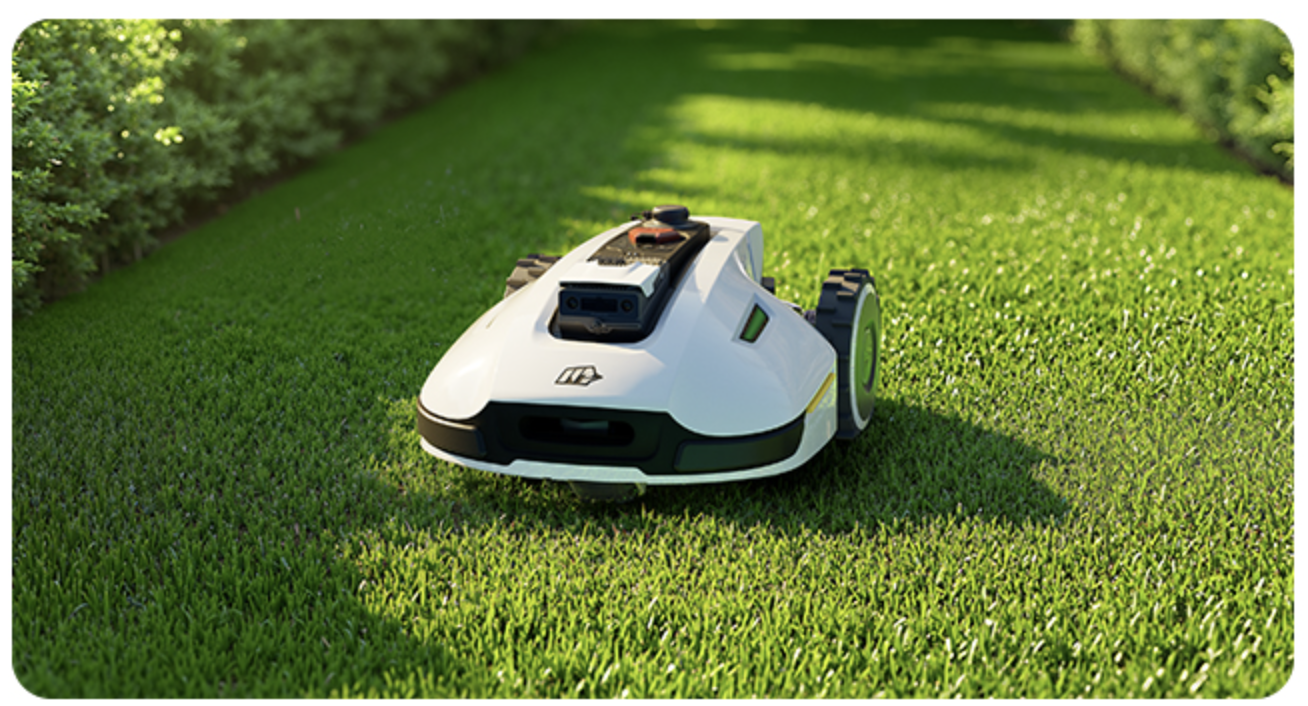
This page breaks down current Mammotion LUBA pricing by model, lawn size, and feature tier, so buyers can quickly understand what each version costs and which one fits their property. If you want to learn about the best robot lawn mowers click here.
What Is the Mammotion LUBA?
Mammotion’s LUBA series is a line of wire-free robotic lawn mowers known for:
- All-wheel drive (AWD) traction
- RTK GPS + AI vision navigation
- No perimeter wire installation
- Strong slope handling and rough-terrain performance
LUBA models are sold primarily by coverage size, not cosmetic trims, which makes pricing easier to compare once you understand the tiers.
LUBA 2 AWD Pricing (Most Popular Line)
The LUBA 2 AWD series is the current mainstream lineup and the one most buyers compare prices on.
LUBA 2 AWD Price by Yard Size
| Model | Max Lawn Size | Typical U.S. Price | Who It’s For |
|---|---|---|---|
| LUBA 2 AWD 3000X / 3000HX | ~0.75 acres | ~$2,599 | Medium yards with slopes |
| LUBA 2 AWD 5000X / 5000HX | ~1.25 acres | ~$2,999 | Larger suburban lots |
| LUBA 2 AWD 10000X / 10000HX | ~2.5 acres | ~$4,499 | Large properties and estates |
Notes on X vs HX models
- Cutting height range differs slightly
- Pricing is usually the same within the same size tier
- Performance and navigation are otherwise identical
LUBA 3 AWD Pricing (Newest Generation)
The LUBA 3 AWD line is the newer, more advanced series that adds LiDAR to the existing RTK + vision system.
LUBA 3 AWD Price Tiers
| Model | Max Lawn Size | Typical Price |
|---|---|---|
| LUBA 3 AWD 1500 / 1500H | ~0.37 acres | ~$2,399 |
| LUBA 3 AWD 3000 / 3000H | ~0.75 acres | ~$2,799 |
| LUBA 3 AWD 5000 / 5000H | ~1.25 acres | ~$3,299 |
Why LUBA 3 costs more
- LiDAR-assisted navigation
- Improved obstacle detection
- Better performance in complex or cluttered yards
For simpler lawns, many buyers still choose LUBA 2 to save money.
LUBA Mini AWD Pricing (Small Yards)
The LUBA Mini AWD is designed for smaller properties that don’t need a full-size mower.
LUBA Mini AWD Prices
| Model | Max Lawn Size | Typical Price |
|---|---|---|
| LUBA Mini AWD 800 / 800H | ~0.2 acres | ~$1,599 |
| LUBA Mini AWD 1500 / 1500H | ~0.37 acres | ~$1,649–$1,999 |
These models still include AWD and wire-free navigation, just scaled down in battery and runtime.

What’s Included vs Extra Cost
Usually included
- Robot mower
- RTK reference station
- Charging base
- Standard blades
Possible add-on costs
- Garage / weather cover: ~$100–$140
- Replacement blade kits: ~$30–$60
- Replacement wheels or accessories: varies
- Cellular connectivity subscription (varies by promotion)
How to Choose the Right LUBA Based on Price
Under 0.5 acres
LUBA Mini AWD
Lowest entry price with full AWD and wire-free setup
0.5 to 1.25 acres
LUBA 2 AWD 3000 or 5000
Best value for most homeowners
Over 1.25 acres or very steep terrain
LUBA 2 AWD 10000 or LUBA 3 AWD 5000
Higher upfront cost, fewer interruptions and recharges
Is LUBA Worth the Price?
LUBA mowers are priced higher than basic robotic mowers, but buyers are paying for:
-
No perimeter wire installation
-
AWD slope performance
-
Advanced navigation and mapping
-
Lower long-term frustration on uneven yards
For flat, simple lawns, cheaper wired robots may be enough. For hills, irregular layouts, or large properties, LUBA pricing is competitive for what it replaces.