Best Plants and Shrubs to Screen a Generator
Planting around a generator isn’t like planting anywhere else in your yard. You need species that stay within bounds, tolerate heat and exhaust fumes, won’t send roots into underground utility lines, and provide coverage year-round — not just in summer when everything looks good.
Get the plant selection wrong and you’ll end up with overgrown shrubs blocking airflow, deep roots cracking your gas line, or deciduous plants that drop their leaves in winter and expose the generator exactly when it’s most likely to run.
This guide covers the best plants and shrubs for screening a home generator, organized by type, with specific variety recommendations and planting guidance for each.
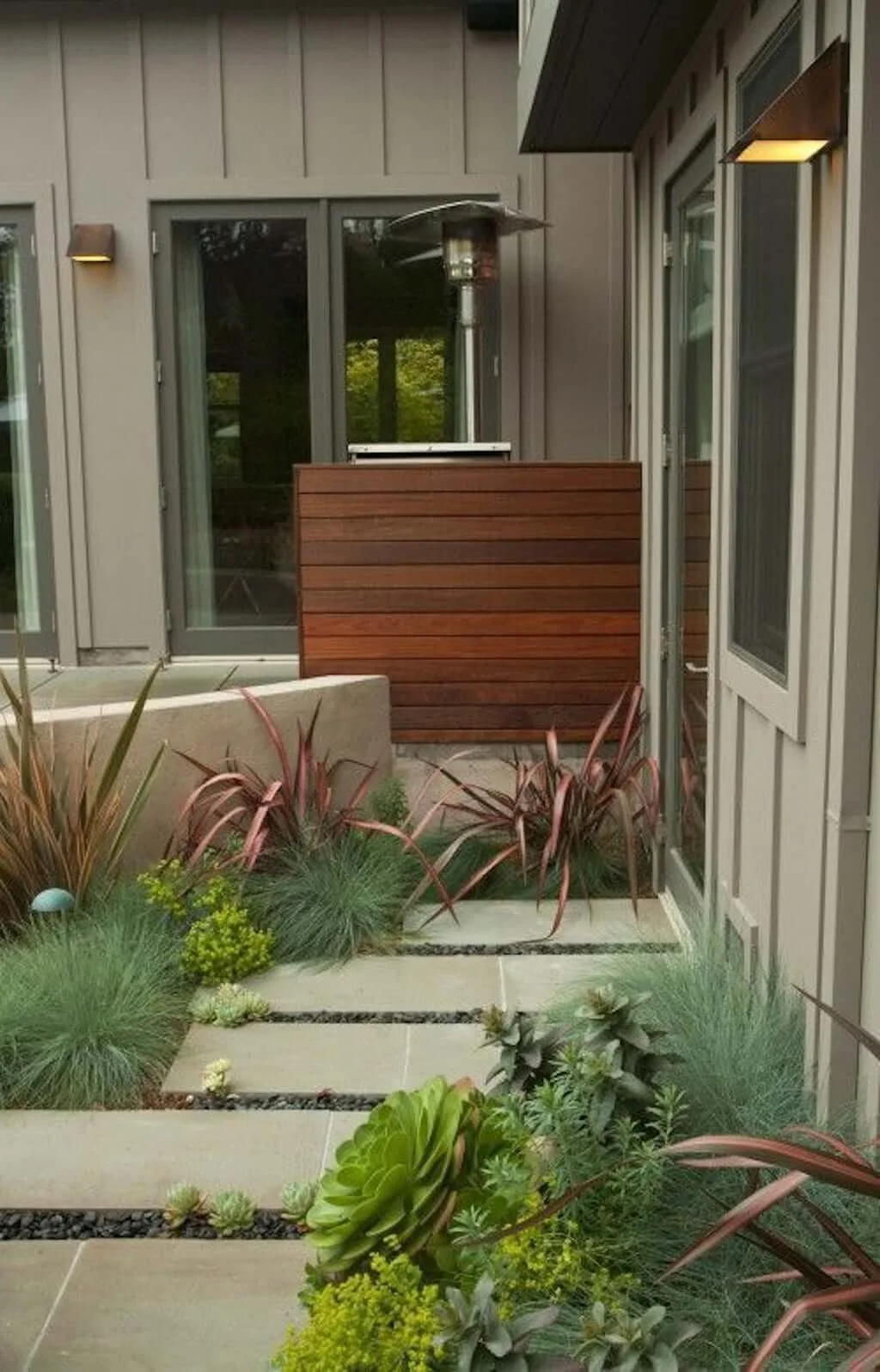
What to Look for in Generator Screening Plants
Before diving into specific plants, here are the qualities that make a species a good (or bad) choice for generator screening:
Good qualities:
— Evergreen foliage (provides year-round coverage)
— Compact, upright growth habit (screens effectively without sprawling)
— Shallow, non-invasive root system (won’t damage underground lines or the generator pad)
— Heat tolerance (can handle radiant heat from the generator housing and warm exhaust air)
— Low to moderate mature height (3 to 8 feet is the sweet spot for most generators)
— Low maintenance (doesn’t require constant pruning to stay in bounds)
Red flags:
— Deep, aggressive root systems (maples, willows, most large shade trees)
— Deciduous plants as the only screening (bare in winter when you need them most)
— Fast-spreading groundcovers or vines that can climb into the generator housing
— Thorny plants that make maintenance access painful
— Heavy fruit or flower drop that clogs ventilation openings
Critical spacing rule: All plants must be set back at least 3 feet from every side of the generator. NFPA code prohibits vegetation taller than 12 inches within 3 feet of the unit. This means your shrubs need to be planted with their mature spread at least 3 feet from the generator housing — not 3 feet from where they are as small nursery plants. Plan for the full-grown size.
Evergreen Shrubs
Evergreen shrubs are the foundation of any generator screening plan. They provide the dense, year-round coverage that keeps the generator hidden in every season.
Boxwood
Best for: Formal, manicured screening in full sun to partial shade
Boxwood is the most popular screening shrub in American landscaping for good reason — it’s dense, compact, easy to shape, and stays green year-round. For generator screening, the best varieties are:
Green Velvet — Grows 3 to 4 feet tall and wide. Extremely dense, naturally rounded shape requires minimal pruning. Hardy to Zone 4. This is the best all-around choice for generator screening in northern climates.
Winter Gem — Similar size to Green Velvet but slightly faster-growing. Holds its dark green color well through winter. Hardy to Zone 5.
North Star — A dwarf variety that tops out at 2 to 3 feet. Good for smaller generators or tight spaces where a larger shrub would crowd the clearance zone.
Planting guide: Space boxwood 3 feet apart for a solid hedge, 4 feet apart for individual specimen plants. Plant the row at least 4 to 5 feet from the generator to account for the mature spread. Boxwood has a shallow, fibrous root system that won’t interfere with underground utilities.
Arborvitae
Best for: Tall, narrow screening in tight side-yard spaces
Arborvitae grows in a naturally columnar shape that’s ideal for screening in narrow spaces — like the typical side yard where generators often sit.
Emerald Green (Smaragd) — The classic choice. Grows 12 to 15 feet tall but stays only 3 to 4 feet wide. Dark green foliage year-round. Hardy to Zone 3. Space them 2 to 3 feet apart for a solid wall of green. Plant at least 4 feet from the generator.
North Pole — A more compact columnar arborvitae that reaches 10 to 15 feet tall and just 3 to 5 feet wide. Good for tighter spaces.
Little Giant — A globe-shaped dwarf variety that stays under 4 feet. Works well as a low screen when you don’t need full height coverage.
Important note: Arborvitae are deer magnets. If deer are a problem in your area, choose a different species or protect the plants with deer netting through the first few winters.
Holly
Best for: Shade-tolerant screening with year-round berries for visual interest
Holly thrives in the partial shade conditions that are common on the side of a house where generators typically sit. Several varieties make excellent generator screens:
Inkberry Holly (Ilex glabra) — A native evergreen that grows 5 to 8 feet tall with a dense, rounded habit. Unlike most hollies, inkberry has smooth, spineless leaves — making maintenance access much more comfortable. Tolerates wet soil, partial shade, and is deer-resistant. Hardy to Zone 4.
Gem Box Inkberry — A compact cultivar that stays 2 to 3 feet tall and wide. Excellent for low screening around smaller generators.
Winterberry Holly (Ilex verticillata) — A deciduous holly (it drops its leaves in winter) prized for its stunning red berries. Not ideal as a standalone screen because of the leaf drop, but beautiful as an accent mixed with evergreen shrubs. The berries persist well into winter and provide outstanding visual interest.
Blue Princess Holly — A broadleaf evergreen that grows 10 to 15 feet tall with dense, spiny foliage. Provides heavy coverage but the thorny leaves make it less comfortable for maintenance access. Plant it on sides where you won’t need to reach through.
Yew (Taxus)
Best for: Shade-tolerant, extremely dense screening
Yews are among the most shade-tolerant evergreen shrubs and produce exceptionally dense foliage. They’re slow-growing but incredibly long-lived and respond beautifully to shearing.
Hicks Yew — An upright columnar form that grows 10 to 12 feet tall and 3 to 4 feet wide. One of the best tall, narrow evergreen screens available. Hardy to Zone 4.
Dense Yew (Taxus x media ‘Densiformis’) — A wider, spreading form that grows 3 to 4 feet tall and 4 to 6 feet wide. Works well as a medium-height screen.
Caution: All parts of yew are toxic to pets and livestock. If you have dogs that might chew on landscape plants, choose a different species.
Ornamental Grasses
Ornamental grasses complement evergreen shrubs beautifully and bring movement, texture, and a relaxed feel to generator screening. Their open structure allows excellent airflow — a major advantage over dense shrubs.
Feather Reed Grass (Calamagrostis x acutiflora ‘Karl Foerster’)
Height: 4 to 5 feet · Spread: 2 feet · Zones: 4 to 9
The most popular ornamental grass for screening. Grows in tight, upright clumps that hold their shape well — even through winter. The feathery seed heads emerge in midsummer and persist into late fall, adding height and visual interest. Plant in a row of 3 to 5 clumps, spaced 2 feet apart and at least 3 feet from the generator.
Zebra Grass (Miscanthus sinensis ‘Zebrinus’)
Height: 5 to 7 feet · Spread: 3 to 5 feet · Zones: 5 to 9
Wider and more dramatic than feather reed grass, with distinctive horizontal gold bands on the leaves. Zebra grass creates a bold focal point that draws attention away from whatever’s behind it. Allow more space from the generator (at least 4 to 5 feet) to account for the wider spread.
Switchgrass (Panicum virgatum)
Height: 4 to 6 feet · Spread: 2 to 3 feet · Zones: 4 to 9
Native to North America and extremely low-maintenance. Varieties like ‘Heavy Metal’ (upright, blue-gray) and ‘Shenandoah’ (upright, red-tipped) offer different colors while maintaining the same screening function. Switchgrass handles heat exceptionally well, making it a strong choice near generators.
Little Bluestem (Schizachyrium scoparium)
Height: 2 to 4 feet · Spread: 1 to 2 feet · Zones: 3 to 9
A shorter native grass with outstanding blue-green summer color and coppery-orange fall color. Use it as a low screen for smaller generators or as a companion to taller shrubs.
For more on how grasses grow and spread, including the difference between clump-forming and spreading types, see our guide on how grass spreads.
Climbing Plants (For Lattice and Trellis Screens)
If you’ve installed a lattice panel or trellis near your generator, climbing plants can transform it into a living wall. The key is choosing climbers that stay manageable and won’t send runners into the generator housing.
Clematis — One of the best behaved climbers. Grows 6 to 12 feet on a trellis, produces stunning flowers from late spring through fall, and is easy to control with annual pruning. Most varieties are deciduous, so pair with an evergreen layer for winter coverage.
Climbing Hydrangea (Hydrangea anomala petiolaris) — A self-clinging vine that produces large white flower clusters in summer. Excellent for shade — perfect for the north side of a house. Slow to establish (2 to 3 years) but vigorous once mature.
Star Jasmine (Trachelospermum jasminoides) — Evergreen in Zones 8 to 10, with intensely fragrant white flowers in spring. One of the few climbing options that provides year-round foliage in warm climates.
Climbing Roses — Beautiful on a lattice screen but thorny, which complicates maintenance access. Best for sides of the generator where you don’t need to reach through.
Plants to avoid on trellises near generators: Wisteria (too aggressive, massive root system), English ivy (invasive, grows into everything), trumpet vine (very aggressive spreading). These will cause more problems than they solve.
Planting Layout: How to Arrange Screening Plants
The best generator screening uses a layered approach with plants at different heights, rather than a single row of identical shrubs.
The three-layer approach:
Back layer (tallest, farthest from generator): Columnar arborvitae or tall ornamental grasses (5 to 8 feet). These provide the primary height screen. Plant 5 to 6 feet from the generator to allow for mature spread.
Middle layer: Medium evergreen shrubs like boxwood or inkberry holly (3 to 5 feet). These fill the gap between the tall background plants and the ground. Plant 4 to 5 feet from the generator.
Front layer (shortest, nearest the viewer): Low ornamental grasses, dwarf shrubs, or flowering perennials (1 to 3 feet). These add color and texture at eye level and hide the bases of the taller plants behind them.
Leave access gaps: Don’t plant a complete ring. Leave the side closest to the driveway or service path completely open, or at minimum, use only easily movable potted plants on that side. Service technicians need clear access to all sides of the generator for maintenance.
For complete landscaping plans that combine plants with hardscaping, fencing, and accessories, see our full guide on landscaping ideas to hide a generator.
Maintenance Tips for Generator Screening Plants
Pruning: Keep all plantings trimmed so they don’t encroach into the 3-foot clearance zone around the generator. Most evergreen shrubs benefit from one shaping session per year in late spring or early summer. Ornamental grasses should be cut back to 4 to 6 inches in late winter before new growth emerges.
Watering: Newly planted shrubs and grasses need regular watering for the first year to establish roots. Once established, most of the species recommended here are low-water once mature. Avoid overhead sprinklers that spray directly on the generator housing — they can cause premature corrosion of the enclosure and electrical components.
Fertilizing: Feed screening shrubs once in early spring with a balanced slow-release granular fertilizer. Ornamental grasses generally don’t need fertilizer in average soil. Don’t apply fertilizer within 12 inches of the generator pad — runoff and granule accumulation around the base can cause issues.
Leaf and debris cleanup: During fall cleanup, pay special attention to clearing fallen leaves from around and inside the screening plantings. Leaves that pile up against the generator housing block ventilation and create habitat for rodents, which can damage wiring and control boards inside the unit.
Winter care: In heavy snow regions, gently brush snow off arborvitae and upright shrubs to prevent branch breakage. Snow and ice that accumulate around the generator must be cleared to keep vents and exhaust ports open during winter operation. If your generator runs on propane, also clear a path to the propane tank.
Quick Reference: Best Plants by Situation
Best overall screen: Boxwood (Green Velvet or Winter Gem) — compact, dense, low-maintenance, year-round green.
Best for narrow spaces: Emerald Green Arborvitae — tall and narrow, fits tight side yards.
Best for shade: Inkberry Holly or Hicks Yew — thrive in the partial shade common on house sides.
Best for airflow: Feather Reed Grass — open structure allows air to pass through freely.
Best for warm climates: Star Jasmine on a trellis with low ornamental grasses — evergreen coverage with good heat tolerance.
Best low-maintenance: Switchgrass or Little Bluestem — native, drought-tolerant, virtually maintenance-free.
Best for fast results: Arborvitae (grows 6 to 12 inches per year) combined with a no-dig privacy screen for immediate coverage while the plants grow in.
This post contains affiliate links, which means Finest Lawns may earn a small commission if you purchase through our links — at no extra cost to you. We only recommend products we’d use in our own yards.