
Matt
Robotic Lawn Mower Specs Explained: Battery Life, Cutting Height, Mow Zones
Spec sheets for robotic mowers are packed with numbers — battery capacity in amp-hours, cutting width in inches, slope percentages, RTK acronyms, and coverage area in square feet. But what do these specs actually mean for your day-to-day experience?
This guide translates the specs that matter into practical terms. We’ll explain what each number means, what range you should look for, and how different specs interact with each other. Because a mower with a huge battery but narrow cutting width might not actually be faster than one with a smaller battery and dual blades.
For the full overview of which mowers fit which situation, see our main guide: Robotic Lawn Mowers: The Complete Buyer’s Guide.
Battery Life and Charging
What the specs say: Battery capacity is measured in amp-hours (Ah) or milliamp-hours (mAh). Run time is typically listed in minutes per charge. Charging time tells you how long the mower sits on the dock between runs.
What it means in practice: Battery life determines how much ground the mower covers before it needs to go back to the dock. But raw runtime doesn’t tell the whole story — cutting width matters too. A mower that runs 60 minutes with a 13-inch cutting width will cover more ground than one running 90 minutes with a 7-inch width.
Here’s how the major models compare:
Worx Landroid M: 20V, 5.0 Ah battery. Runtime varies by model, roughly 60-90 minutes. Charges in about 90 minutes.
Segway Navimow i110N: 5.2 Ah. Approximately 120 minutes of mowing per charge. Charges in about 240 minutes.
Ecovacs GOAT A3000 LiDAR: 5 Ah, 32V platform. 75 minutes runtime per charge, but charges in just 45 minutes. Because of the fast charge and dual 13-inch blades, it covers about 5,400 sq ft every two hours including recharging — one of the fastest effective coverage rates in the market.
Ecovacs GOAT A2500 RTK: 3 Ah battery. About 47-64 minutes per charge (depending on terrain), with a 45-minute charge time. Slightly shorter runtime but the same ultrafast charging.
Mammotion LUBA 2 AWD 5000: Covers up to 10,700 sq ft per charge with its 15.8-inch dual cutting disc. The AWD system draws more power on slopes, so runtime decreases on hilly terrain.
Husqvarna 450XH EPOS: 10 Ah battery. 200 minutes of mowing per charge — one of the longest in the market. Charges in about 60 minutes. Covers up to 2.5 acres.
The key insight: Don’t just compare runtime. Compare effective coverage per cycle (including recharge time). The Ecovacs GOAT series wins here with its 45-minute fast charging — even though its battery is smaller, the minimal downtime means it covers more ground over a full day. The Husqvarna wins on runtime per charge, which means fewer dock trips and more continuous cutting for very large areas.
Auto-charge and resume is standard on virtually all current models. The mower returns to the dock when battery is low, charges, then goes back to where it left off. You don’t need to intervene.
Cutting Height Range
What the specs say: Listed as a range, e.g., “0.8 inches to 3.6 inches” or “1.2 inches to 3.6 inches” with a number of adjustment increments.
What it means in practice: This is one of the most important specs to match to your grass type, and it’s the one people most often overlook.
Warm-season grasses thrive when kept short: Bermuda grass at 0.5–2 inches, Zoysia grass at 1–2.5 inches, St. Augustine at 2–4 inches, Centipede grass at 1–2 inches, and Buffalo grass at 2–3 inches.
Cool-season grasses need to stay taller: Kentucky Bluegrass at 2.5–3.5 inches, Tall Fescue at 2–4 inches, Perennial Ryegrass at 1.5–2.5 inches, and Fine Fescue at 1.5–3 inches.
If you have Bermuda grass and want to keep it tight at 1 inch, you need a mower that goes down to at least 0.8-1.0 inches. The Mammotion LUBA 2 AWD X series (1.0″-2.7″) and Ecovacs GOAT series (1.2″-3.6″) both handle this well.
If you have Tall Fescue or Kentucky Bluegrass and want the recommended 3+ inches, you need a mower that reaches that high. The Mammotion LUBA 2 AWD HX series specifically targets this with a 2.2″-4.0″ range. The Segway Navimow i Series goes up to 3.6 inches. The standard Husqvarna 430X caps at 2.4 inches, which is too low for cool-season grasses cut at recommended heights.
Electric vs. manual height adjustment: Premium models (Husqvarna X-line, Ecovacs GOAT A series) let you adjust cutting height from the app. Budget models require you to physically turn a dial on the mower. If you change heights seasonally (cutting higher in summer heat, lower in spring and fall), app-based adjustment is a meaningful convenience.
Cutting Width and Blade System
What the specs say: Cutting width in inches, and sometimes blade type (single disc vs. dual disc).
What it means in practice: Cutting width directly affects mowing speed. A mower with a 13-inch dual-blade cutting deck covers ground nearly twice as fast as one with a 7-inch single disc. This matters more than you might think — on a medium lawn, the difference can be hours per week of mowing time.
Budget (7-8 inches): Worx Landroid S/M (7-8″), Segway Navimow i Series (7.1″). These use a single small spinning disc with three replaceable razor blades.
Mid-Range to Premium (9-13 inches): Ecovacs GOAT A2500/A3000 (13″), Husqvarna 430X/450XH (9.4″). The Ecovacs models use staggered dual blade discs, which is a significant mowing efficiency advantage.
Premium/Large Area (15-16 inches): Mammotion LUBA 2 AWD (15.8″). Dual cutting discs positioned on the sides of the mower, providing the widest effective cut of any residential robotic mower.
Blade quality matters too. The small razor-style blades used by most robots are designed to slice grass cleanly rather than tear it, which promotes healthier regrowth. They’re cheap to replace (typically $10-20 for a set) and should be swapped every 1-3 months depending on use.
Navigation Systems
What the specs say: RTK, GNSS, LiDAR, VSLAM, Vision, EPOS, EFLS — the acronym soup is thick.
What it means in practice: Navigation determines how accurately the mower knows where it is, how efficiently it cuts (straight lines vs. random paths), and how well it handles complex layouts. Here’s what each technology actually does:
Boundary Wire: The oldest method. A physical wire buried or pegged around your lawn perimeter carries a signal that tells the mower where to stop. Reliable but tedious to install (2-6 hours). Used by Worx Landroid Classic and older Husqvarna models.
RTK (Real-Time Kinematic): Satellite-based positioning accurate to 1-3 centimeters. The mower knows its exact position and can cut in systematic patterns (straight lines, parallel rows). Requires a base station/antenna, usually included. Used by Segway Navimow, Ecovacs GOAT A2500, Mammotion LUBA.
LiDAR (Light Detection and Ranging): Uses laser pulses to create a detailed 3D map of the environment. Works in any lighting condition, including total darkness. Not affected by satellite signal loss under trees. Used by Ecovacs GOAT A3000 LiDAR and the new Segway Navimow i2 LiDAR series.
Vision/Camera: Uses onboard cameras and AI to identify grass, obstacles, and boundaries. Works without satellites or external antennas. Used by Worx Landroid Vision and as a backup system on many RTK mowers.
EPOS (Husqvarna): Husqvarna’s proprietary satellite-based system. Similar to RTK in principle — uses a reference station for centimeter-level accuracy. The 450XH EPOS and newer Husqvarna models use this for wire-free operation.
Multi-layered (RTK + Vision, LiDAR + Camera): Most 2026 models use two or more systems simultaneously. If the satellite signal drops under a tree, the vision system takes over. If it’s dark, LiDAR handles navigation. This redundancy is what separates mid-range mowers from premium — the mower almost never gets confused about where it is.
Which matters most: If your yard is open with good sky visibility, basic RTK works great. If you have lots of trees, tall structures, or covered areas, you need either LiDAR or a redundant RTK + Vision system. If you want the simplest possible setup (no antenna, no wire), the Worx Landroid Vision or LiDAR-based models are the way to go.
For specific model recommendations based on your yard’s navigation needs, see: Best Robotic Lawn Mowers Compared.
Slope Handling
What the specs say: Maximum slope percentage or degrees.
What it means in practice: A 20% slope means a 20-foot rise over 100 feet of horizontal distance — a gentle incline. A 45% slope is noticeably steep. An 80% slope is aggressive enough that you’d have trouble standing on it.
Up to 20%: Flat to gentle. Any robotic mower handles this. Worx Landroid, Husqvarna 115H.
20-35%: Moderate slopes. Most mid-range mowers handle this fine. Segway Navimow i Series (30%), Husqvarna 430X (45%).
35-50%: Serious hills. You need a mower specifically rated for slopes. Ecovacs GOAT A2500/A3000 (50%), Husqvarna 450XH (45%).
50-80%+: Extreme terrain. AWD is essential. Mammotion LUBA 2 AWD (80%), Segway Navimow X4 (up to 84% claimed). These are the only consumer models that can handle this kind of terrain.
Important caveat: Manufacturer slope ratings are tested under ideal conditions (dry grass, mowed height, firm soil). Real-world performance on wet grass, thick growth, or soft soil will be lower. If your steepest slope is 30%, buy a mower rated for at least 40%.
AWD vs. RWD: All-wheel drive mowers power all four wheels independently, giving them dramatically better traction on slopes and uneven ground. Rear-wheel drive is fine for flat and mildly sloped lawns. If you have significant hills, AWD is worth the premium.
Mow Zones and Multi-Zone Management
What the specs say: Number of supported zones, no-go zones, scheduling per zone.
What it means in practice: If your lawn is a single, connected rectangle, zones might not matter much. But most real lawns aren’t that simple.
Multi-zone management lets you define separate areas (front yard, backyard, side strip) with different schedules, set different cutting heights for different zones, create no-go zones around pools, flower beds, playgrounds, or garden features, and draw channels that connect separate lawn areas so the mower can travel between them automatically.
The number of zones varies by model. The Mammotion LUBA Mini supports 20 zones. The LUBA 2 supports up to 60 zones. The Ecovacs GOAT A3000 supports multiple zones with customizable speed and cutting height per zone. The Segway Navimow i Series supports multiple zones connected by channels.
Zone setup is typically done through the app — you draw boundaries on a satellite or LiDAR-generated map of your lawn. The better apps let you drag corners, merge zones, split zones, and adjust on the fly. Some apps (Mammotion particularly) also support custom mowing patterns per zone — parallel lines in the front, checkerboard in the back.
App Quality and Smart Home Integration
The app is your primary interface with the mower. A bad app can make an otherwise great mower feel frustrating. Here’s what to look for:
Essential app features (all decent apps have these): Schedule management, start/stop/dock commands, boundary/zone editing, mowing status and history, cutting height adjustment (on supported models), and firmware updates.
Advanced app features (mid-range and premium): Real-time GPS tracking of the mower on a map, custom mowing patterns (parallel, checkerboard, diamond), weather-adaptive scheduling, detailed lawn maps with coverage overlay, remote control/manual driving, and multi-mower management.
Smart home integration: Most mid-range and premium mowers work with Amazon Alexa and Google Home, allowing voice commands like “start mowing” or “send the mower home.” Husqvarna models also support IFTTT for custom automation. Some models connect to smart irrigation systems like the Gardena Smart System.
App ratings by brand (general consensus from user reviews): Husqvarna Automower Connect — polished, reliable, smooth interface. Segway Navimow — clean, intuitive, good mapping tools. Ecovacs HOME — feature-rich, occasional connectivity hiccups. Mammotion — powerful features (lawn printing is unique), interface can feel complex for beginners. Worx Landroid — straightforward and user-friendly, fewer advanced features.
Noise Levels
What the specs say: Decibel level, typically 54-65 dB(A).
What it means in practice: For reference, a normal conversation is about 60 dB, a refrigerator hum is about 40 dB, and a gas push mower is about 90-100 dB.
Robotic mowers are dramatically quieter than any conventional mower. The Segway Navimow i Series operates at 58 dB — quiet enough to run while you’re having a conversation on the patio. Husqvarna’s ultra-silent drive models are among the quietest, enabling night mowing without disturbing anyone.
This matters because the ideal use case for a robotic mower is to run it daily (or almost daily). If it’s loud enough to be annoying, you’ll restrict it to certain hours and lose one of its biggest advantages.
Obstacle Avoidance and Safety
What the specs say: Number of object types detected, sensor types, stopping distance.
What it means in practice: Older and cheaper models use bump sensors — they run into something, stop, and turn around. This works but can damage delicate plants or garden features over time.
Modern mid-range and premium models use a combination of ultrasonic sensors, 3D Time-of-Flight (ToF) sensors, cameras, and AI algorithms. The Ecovacs GOAT A3000 claims to detect over 200 obstacle types. Segway’s VisionFence identifies 150+ objects. These systems actively detect obstacles before contact and steer around them.
Safety features worth checking: Lift sensors that instantly stop the blades if the mower is picked up. Tilt sensors that stop blades if the mower tips over. Blade braking time (how quickly the disc stops). PIN lock to prevent unauthorized use. The Segway Navimow has a dedicated Animal Friendly Mode that creates a one-meter buffer around detected pets.
For more answers to safety and practical questions, see: Do Robotic Mowers Charge Themselves? 15 Questions Answered.
Weather Resistance
What the specs say: IP rating (typically IPX5 or IPX6).
What it means in practice: IPX5 means the mower can withstand water jets from any direction. IPX6 means it can handle powerful water jets. Both are adequate for rain. The Ecovacs GOAT A3000 LiDAR is rated IPX6. Most Husqvarna models are explicitly designed to mow in rain.
However, “can mow in rain” and “should mow in rain” are different things. Wet grass clumps, doesn’t mulch well, and can clog the cutting disc. Smart models with weather awareness (either built-in sensors or pulling forecast data) will automatically delay mowing when rain is expected and resume when conditions improve.
Anti-Theft Features
What the specs say: GPS tracking, PIN protection, geofencing, alarm.
What it means in practice: A robotic mower sitting on your lawn unattended is a theft target. Most mid-range and premium models address this with multiple layers: a PIN code that must be entered to operate the mower, GPS tracking visible in the app, a loud alarm if the mower is lifted, and geofencing that alerts you if the mower leaves its designated area.
Some brands (Mammotion, Segway) go further with “lost mode” features that brick the mower for anyone except the registered owner. Husqvarna’s built-in GPS tracking has been effective enough that stolen units have been recovered through the app.
Putting It All Together: What Specs Matter Most
If we had to rank the specs by impact on your actual satisfaction: navigation quality comes first (determines if the mower gets stuck, lost, or misses areas), followed by coverage area vs. your actual lawn size, cutting height range (must match your grass type), app quality, slope handling (if relevant to your terrain), charging time + cutting width (affects total daily coverage efficiency), noise level (if running daily/nightly), and obstacle avoidance quality (saves you from trim work and plant damage).
For recommendations on which specific models deliver the best value at each price point: Robotic Mower Price Tiers: Budget vs Mid-Range vs Premium.
Related Posts on Finest Lawns
Robotic Lawn Mowers: The Complete Buyer’s Guide
Robotic Mower Price Tiers: Budget vs Mid-Range vs Premium
Best Robotic Lawn Mowers Compared: Husqvarna vs Segway vs Ecovacs vs Mammotion vs Worx
Do Robotic Mowers Charge Themselves?
If you’re considering a robotic lawn mower, you probably have a lot of practical questions that spec sheets don’t answer. Can it really just… do its thing? What happens when it rains? Will it eat your garden hose? Can your dog be outside while it’s running?
We get these questions constantly, so here are straightforward answers to the 15 most common ones.
For a full overview of the category, start with: Robotic Lawn Mowers: The Complete Buyer’s Guide.
1. Do robotic mowers charge themselves?
Yes. Every modern robotic lawn mower returns to its charging dock automatically when the battery gets low. It docks, charges, and — on most models — heads back out to finish the job without any input from you.
The charging dock is a small base station that stays in your yard, plugged into an outdoor power outlet. When the mower detects low battery, it navigates to the dock using its positioning system, drives onto the charging contacts, and begins recharging. Once charged, it resumes mowing from where it left off.
Charging times vary significantly by model. The Ecovacs GOAT A3000 charges in about 45 minutes. The Husqvarna 450XH EPOS takes about 60 minutes. The Segway Navimow i110N takes about 4 hours. Faster charging means less downtime and more mowing coverage per day.
2. How long does a robotic mower battery last per charge?
Runtime per charge typically ranges from 60 to 200 minutes depending on the model and conditions. The Husqvarna 450XH EPOS runs up to 200 minutes — one of the longest in the market. The Ecovacs GOAT A3000 LiDAR runs about 75 minutes but recharges in 45 minutes, making its effective daily coverage very competitive. The Segway Navimow i110N runs about 120 minutes per charge.
Factors that reduce runtime include mowing on slopes (AWD mowers draw more power climbing), cutting through thick or tall grass, and cold weather. If your lawn hasn’t been mowed in a while, expect the first run to use more battery than subsequent maintenance runs.
For detailed battery comparisons across all major models: Robotic Lawn Mower Specs Explained.
3. What cutting heights can robotic mowers achieve?
Most robotic mowers adjust between 0.8 inches and 4 inches, though the exact range varies by model.
If you have warm-season grasses like Bermuda (which thrives when cut short at 0.5-2 inches), look for mowers with a low minimum — the Mammotion LUBA 2 AWD X series goes down to 1 inch, and the Ecovacs GOAT starts at 1.2 inches.
If you have cool-season grasses like Tall Fescue or Kentucky Bluegrass (which should be kept at 2.5-4 inches), make sure the mower goes high enough. The Mammotion LUBA 2 AWD HX series reaches 4 inches. The Segway Navimow i Series goes to 3.6 inches. Some Husqvarna models cap at 2.4 inches, which is too low for many cool-season grasses.
On premium models, cutting height is adjustable through the app. On budget models, you adjust a physical dial on the mower itself.
4. Can I set different mow zones?
Yes, most mid-range and premium models support multi-zone management. This means you can define separate areas (front yard, backyard, side strips) with independent schedules, cutting heights, and mowing patterns.
The Mammotion LUBA 2 supports up to 60 zones. The Mammotion LUBA Mini supports 20. The Ecovacs GOAT series and Segway Navimow both support multiple zones with customizable settings per zone. You can also create no-go zones around pools, flower beds, playgrounds, or garden features.
Zone setup is done through the companion app. You draw boundaries on a map, and the mower treats each zone independently. Some models (like Mammotion) let you set different mowing patterns per zone — parallel stripes in the front, checkerboard in the back.
If your front and back yards are separated by a driveway, most wire-free models let you draw a “channel” or pathway connecting the zones, so the mower can travel between them automatically.
5. Can robotic mowers handle hills and slopes?
It depends on the model and the slope.
Gentle slopes (under 20%): Any robotic mower handles these without issue.
Moderate slopes (20-35%): Most mid-range mowers manage these well. The Worx Landroid handles up to 35%, the Segway Navimow i Series handles 30%.
Steep slopes (35-50%): You need a mower rated for it. The Ecovacs GOAT A3000 handles 50%. The Husqvarna 450XH handles 45%.
Very steep slopes (50-80%+): Only AWD (All-Wheel Drive) models can manage this. The Mammotion LUBA 2 AWD handles 80% slopes. The upcoming Segway Navimow X4 claims 84%.
If your yard has significant hills, AWD is worth the investment. Rear-wheel drive mowers will struggle, slip, or get stuck on steep wet grass even if they’re technically rated for the slope percentage.
We break down slope handling by model in: Best Robotic Lawn Mowers Compared.
6. How good are the apps for robotic mowers?
This varies considerably by brand, and it matters more than most people realize since the app is your primary interface with the mower.
Husqvarna Automower Connect is the most polished — clean interface, reliable connectivity, smooth operation. It also has the broadest smart home integration (Alexa, Google Home, IFTTT, Gardena Smart System).
Segway Navimow’s app is intuitive and clean, with excellent mapping tools and AI-assisted boundary setup. Zone management is straightforward.
Ecovacs HOME is feature-rich with detailed customization options, though some users report occasional connectivity hiccups.
Mammotion’s app is the most powerful in terms of features — lawn printing, 60-zone management, custom patterns — but it has a steeper learning curve. The initial mapping process (driving the mower around like an RC car) is fun but takes more time than AI-assisted mapping.
Worx Landroid’s app is the simplest to use but has fewer advanced features. Good for basic scheduling and monitoring.
All five brands offer both iOS and Android apps. All support firmware updates over the air. Most support scheduling, zone editing, and real-time mower tracking.
7. Can robotic mowers work in the rain?
Most robotic mowers are weather-resistant (rated IPX5 or IPX6) and can technically operate in rain. They won’t break or malfunction from getting wet.
However, mowing wet grass isn’t ideal. Wet clippings clump together instead of mulching into the soil, and they can stick to the cutting deck. The cut quality is also worse — grass bends when wet instead of standing upright for a clean slice.
Smart models handle this automatically. Husqvarna’s weather timer adjusts mowing frequency based on conditions. Many models pull local weather forecast data and will delay mowing when rain is expected, resuming when the lawn has dried. Worx Landroid models have a built-in rain sensor that sends the mower back to the dock when it detects rain.
8. Are robotic mowers safe around kids and pets?
Modern robotic mowers include several safety features. Lift sensors instantly stop the blades if someone picks up the mower. Tilt sensors stop the blades if the mower tips over. Premium models use cameras and AI to detect and avoid moving objects, including people and animals, before contact.
The Segway Navimow’s Animal Friendly Mode detects cats, dogs, and hedgehogs within a five-meter range and creates a one-meter buffer zone. The Ecovacs GOAT’s AIVI 3D detects over 200 obstacle types including pets. The cutting blades on most models are small, recessed under the chassis, and positioned far enough from the edge that accidental contact is very unlikely.
That said, no one should rely on the mower as a substitute for supervision around small children. The blades are sharp and spinning. Keep young children indoors or at a safe distance when the mower is operating. Most owners schedule mowing during hours when the yard isn’t in use — overnight is popular, given how quiet these machines are.
9. How loud are robotic mowers?
Dramatically quieter than any conventional mower. Gas push mowers run at 90-100 dB. Even electric push mowers are 75-85 dB. Robotic mowers typically operate at 54-65 dB — about the volume of a normal conversation or a running dishwasher.
The Segway Navimow i Series operates at 58 dB. Husqvarna’s ultra-silent drive models are among the quietest available. The Ecovacs GOAT runs slightly louder due to its more powerful 32V motor but is still far quieter than any push or ride-on mower.
This quiet operation is one of the biggest practical advantages of robotic mowers. You can run them at 6 AM or 10 PM without disturbing anyone. Many owners run their mowers overnight, waking up to a freshly cut lawn.
10. What about theft? Can someone just walk off with it?
Robotic mower manufacturers take theft seriously, and most models include multiple layers of protection.
PIN codes prevent unauthorized operation — without the code, the mower is a useless brick. GPS tracking lets you see the mower’s location in real time through the app. Geofencing alerts you if the mower leaves its designated area. Loud alarms sound if the mower is lifted. Mammotion and Segway both offer “lost mode” features that completely disable the mower for anyone except the registered owner.
Husqvarna has a particularly effective anti-theft system, and there are documented cases of stolen Automowers being recovered using the app’s GPS tracking.
The reality is that robotic mowers are difficult to steal and nearly impossible to use once stolen. They’re not a high-value target for thieves compared to, say, traditional ride-on mowers.
11. Do I still need to trim edges?
Yes, but less than you’d think. Robotic mowers can’t physically get the blade to the very edge of your lawn where it meets a wall, fence, or flower bed. There’s always some gap.
The size of that gap varies by model. The Ecovacs GOAT A3000’s TrueEdge technology gets within about 2 inches of edges. Ride-on boundary modes on several brands get the mower even closer by straddling the boundary. The Mammotion LUBA 2, with its side-mounted cutting discs, gets closer to edges than center-disc designs.
The GOAT A3000 LiDAR PRO takes this further with an integrated trimmer that automates edge finishing — the first consumer model to do so.
For most owners, the edge trimming requirement drops from a weekly chore to an occasional touch-up. Many report needing to trim edges every 2-3 weeks rather than weekly.
12. How long does setup take?
Boundary wire models (Worx Landroid Classic, older Husqvarna): Plan for 2-6 hours. You need to lay wire around your entire lawn perimeter, secure it with pegs, and connect it to the charging station. It’s a one-time job but it’s tedious.
RTK models with antenna (Segway Navimow i Series, Mammotion LUBA, Ecovacs GOAT A2500 RTK): About 15-30 minutes. Install the charging dock, set up the RTK antenna, and map your lawn via the app. AI-assisted mapping on Segway and Mammotion models speeds this up — the mower does most of the mapping work automatically.
LiDAR models (Ecovacs GOAT A3000 LiDAR, Segway Navimow i2 LiDAR): Under 10 minutes. No wire, no antenna. Place the dock, power it on, and the mower maps the lawn automatically on its first run.
Camera/Vision models (Worx Landroid Vision): Nearly instant. Place the dock, set the mower on the grass, and press start. The camera identifies grass automatically.
13. How much does a robotic mower cost to run?
Electricity costs for a robotic mower are minimal. Most models draw 20-50 watts while mowing and a similar amount while charging. Over a full mowing season (roughly April to September), the electricity cost works out to approximately $10-$30 per year, depending on your local rates and how often the mower runs.
Ongoing maintenance costs include replacement blades ($10-$20 per set, replaced every 1-3 months) and occasionally a new battery ($100-$300, typically every 3-5 years). Total annual operating cost for most models is under $100.
Compare that to a lawn service at $40/week for 24 weeks ($960/year), or the gas, oil, maintenance, and time costs of a conventional mower, and robotic mowers are significantly cheaper to operate over their lifetime.
14. How long do robotic mowers last?
With proper maintenance, most robotic mowers last 5-7+ years. Husqvarna models have a reputation for longevity, with many owners reporting 8+ years of reliable operation. Battery degradation is the main limiting factor — after 3-5 years, you may need to replace the battery to maintain full runtime.
Regular maintenance is minimal: clean the chassis and sensors monthly, replace blades every 1-3 months, and store the mower properly over winter (most manufacturers recommend a cool, dry indoor space with the battery at about 50% charge).
15. Is a robotic mower actually worth it?
Here’s the honest math:
If you pay for lawn service ($40/week for 24 weeks = $960/year), a $2,000 robotic mower pays for itself in about two seasons. A $1,000 mower pays for itself in one season.
If you mow yourself, the financial case is less clear-cut — but the time savings are substantial. Most owners report getting 1-2 hours back every week during mowing season. Over 24 weeks, that’s 24-48 hours per year. What’s your time worth?
Beyond the math, there’s the lawn quality argument. Because robotic mowers cut small amounts frequently (daily or every other day), the grass stays at a consistent height. The fine clippings decompose quickly and feed the soil, reducing the need for fertilizer. Many owners report their lawns look noticeably healthier after switching to a robot.
The technology in 2026 is mature and reliable. These aren’t experimental gadgets anymore. Millions of units are in use worldwide, the navigation systems work, and the prices have come down to accessible levels. The real question isn’t whether robotic mowers are worth it — it’s which one is right for your specific lawn.
For help answering that question: Robotic Mower Price Tiers: Budget vs Mid-Range vs Premium.
Related Posts on Finest Lawns
Robotic Lawn Mowers: The Complete Buyer’s Guide
Robotic Lawn Mower Specs Explained: Battery Life, Cutting Height, Mow Zones & More
Robotic Mower Price Tiers: Budget vs Mid-Range vs Premium
Best Robotic Lawn Mowers Compared: Husqvarna vs Segway vs Ecovacs vs Mammotion vs Worx
Best Robotic Lawn Mowers Compared: Husqvarna vs Segway vs Ecovacs vs Mammotion vs Worx
Five brands dominate the robotic lawn mower market in 2026. Each one has a distinct philosophy and targets a different type of buyer. Husqvarna is the heritage pick. Segway Navimow is the value king. Ecovacs brings sensor technology from the robot vacuum world. Mammotion built for extreme terrain. Worx makes robotics accessible at any budget.
In this comparison, we’ll break down the top models from each brand, compare their specs side by side, and tell you which is the best pick for specific use cases.
For the broader picture of how to choose between these, start with: Robotic Lawn Mowers: The Complete Buyer’s Guide.
Husqvarna Automower: The Established Standard
Background: Husqvarna has been making robotic mowers for over 25 years — longer than any other consumer brand. The Automower line ranges from the entry-level 115H 4G (~$620) to the commercial 580L EPOS (~$7,400). They offer both boundary wire models and wire-free EPOS models.
Strengths: Cut quality is where Husqvarna separates itself. The combination of blade geometry, disc speed, and mowing pattern refinement produces the most consistent, even cut of any robot mower on the market. The ultra-silent drive is genuinely quiet — you can run it at night without neighbors noticing. The Automower Connect app is polished and reliable. Smart home integration (Alexa, Google Home, IFTTT, Gardena Smart System) is the most comprehensive available. Husqvarna’s dealer network provides professional installation and local service.
Weaknesses: Price is the elephant in the room. The wire-free EPOS models cost significantly more than comparable wire-free mowers from other brands. The 450XH EPOS at $5,900 covers 2.5 acres, but the Mammotion LUBA 2 AWD 5000HX covers 1.75 acres at $2,500-$3,000 with better slope handling. The standard Husqvarna cutting height tops out at 2.4 inches on most models, which is too low for cool-season grasses at recommended heights. Slope handling at 45% is good but below the 80% of AWD competitors.
Best for: Homeowners who want the most refined experience, are willing to pay for it, have large properties with good sky visibility, and prioritize cut quality and quiet operation above all else.
Key models: Husqvarna 115H 4G at $620 for 0.4 acre with boundary wire. Husqvarna 430XH at ~$2,800 for 0.8 acre with boundary wire and premium features. Husqvarna 450XH EPOS at $5,900 for 2.5 acres, wire-free, the flagship. Husqvarna 435X AWD at ~$3,500 with AWD for slopes and boundary wire.
Segway Navimow: Best Value in Wire-Free
Background: Segway Navimow launched in 2021 as a subsidiary of the Segway-Ninebot Group and quickly became the top-selling wire-free robotic mower brand globally by 2024. Their lineup spans from the i105N (~$800-$1,000) to the X3 series (~$2,300+), with the new i2 LiDAR and X4 AWD series announced at CES 2026.
Strengths: The i Series delivers wire-free RTK + Vision navigation at prices that were previously only achievable with boundary wire models. Setup is genuinely fast — AI-assisted mapping means you walk the mower around your perimeter once, and it builds the map itself. The app is intuitive with good multi-zone management. VisionFence identifies 150+ obstacle types. The Animal Friendly Mode (one-meter buffer around detected pets) is a thoughtful touch. At 58 dB, these are among the quietest mowers available. The upcoming i2 LiDAR series replaces the RTK antenna with solid-state LiDAR for even simpler setup.
Weaknesses: Coverage area is limited on the i Series — the i110N tops out at 1/4 acre, which pushes medium and large lawn owners to the more expensive X3 or upcoming X4 series. Cutting width at 7.1 inches is narrow, meaning slower coverage per pass. Charging time at about 4 hours is the longest of the major brands compared here. No AWD available yet on the i Series. Cutting height adjustment is manual on the i Series.
Best for: Budget-conscious buyers who want wire-free convenience on small to medium lawns. The i105N and i110N are the no-brainer picks for lawns under 1/4 acre.
Key models: Navimow i105N at $800-$1,000 for 1/8 acre. Navimow i110N at $1,100-$1,300 for 1/4 acre. Navimow H3000N at ~$1,900+ for 3/4 acre. Navimow X3 Series at $2,300+ for up to 2.5 acres. Navimow i2 LiDAR (2026) with solid-state LiDAR and no antenna needed. Navimow X4 AWD (2026) with 4WD and 84% slope claim.
Ecovacs GOAT: Fastest Mowing Cycle
Background: Ecovacs is a heavyweight in robot vacuums, and they brought that sensor expertise to lawn care with the GOAT series. The lineup includes the O1000 RTK (~$1,000), the A2500 RTK (~$2,000), the A3000 LiDAR (~$2,500-$3,000), and the new A3000 LiDAR PRO with integrated trimmer.
Strengths: The 45-minute fast charging is a game-changer. While other mowers sit on the dock for hours, the GOAT A3000 recharges and gets back to work in less than an hour. The 32V motor with dual blade discs provides a 13-inch cutting width that’s nearly double what budget models offer. Dual LiDAR navigation (360° top LiDAR + forward-facing 3D ToF LiDAR) works flawlessly under trees and at night — no satellite dependency. AIVI 3D obstacle avoidance detects over 200 object types. TrueEdge technology gets the mower within 2 inches of edges, reducing trimmer work. The newer A3000 LiDAR PRO is the first consumer mower with an integrated trimmer for automated edge finishing. 50% slope handling is strong for a non-AWD unit.
Weaknesses: The A3000 tops out at 3/4 acre, so very large properties need to look elsewhere. The A2500 RTK requires an external antenna for satellite positioning. The Ecovacs HOME app, while feature-rich, has occasional connectivity issues reported by users. No AWD option currently, so extreme slopes aren’t in its wheelhouse.
Best for: Medium-sized lawns where mowing speed and efficiency matter. If you want the mower to finish the job quickly and get back on the dock, the GOAT’s fast charge + wide cut width combination is hard to beat. Also excellent for yards with heavy tree cover where satellite-based navigation struggles.
Key models: GOAT O1000 RTK at ~$1,000 for 1/4 acre. GOAT A2500 RTK at ~$2,000 for 5/8 acre. GOAT A3000 LiDAR at ~$2,500-$3,000 for 3/4 acre. GOAT A3000 LiDAR PRO at ~$3,500 for 3/4 acre with integrated trimmer.
Mammotion LUBA: King of Terrain
Background: Mammotion designed the LUBA series from the ground up for challenging terrain. Where other brands optimize for flat suburban lawns, Mammotion built what amounts to a miniature off-road vehicle with a cutting deck. The lineup includes the LUBA Mini AWD 800 (~$1,000), LUBA Mini AWD 1500 (~$1,200-$1,500), and the LUBA 2 AWD series up to the 5000HX (~$2,500-$3,000).
Strengths: The 80% slope handling is unmatched in the consumer market. Four independently powered wheels with aggressive tread provide genuine all-terrain capability. The 15.8-inch dual cutting disc is the widest residential cutting width available, meaning faster mowing over large areas. The LUBA 2 AWD HX variants with 2.2″-4.0″ cutting height are specifically designed for cool-season grasses — a gap that Husqvarna doesn’t adequately address on most models. UltraSense AI Vision + RTK navigation works under trees where pure RTK mowers lose signal. Up to 60 zone management. Lawn printing (checkerboard, diamond, parallel stripes) is a unique feature. Pricing is aggressive for the capability delivered.
Weaknesses: The mowers are large and heavy — the LUBA 2 looks more like a piece of industrial equipment than a sleek home appliance. The app is powerful but has a learning curve; initial mapping requires driving the mower around your perimeter like an RC car, which some users find tedious. Some owners report occasional RTK signal loss issues requiring reconnection. Cut quality, while good, doesn’t match Husqvarna’s refinement. Edge finishing leaves more to trim manually than the Ecovacs GOAT.
Best for: Large properties with serious terrain challenges — steep hills, uneven ground, multiple elevation changes. Also excellent for cool-season grass owners who need cutting heights above 3 inches. If your yard makes your ride-on mower nervous, the LUBA 2 AWD is probably your only robotic option.
Key models: LUBA Mini AWD 800 at ~$1,000 for 0.2 acre. LUBA Mini AWD 1500 at ~$1,200-$1,500 for 0.37 acre. LUBA 2 AWD 3000X at ~$2,400 for 0.75 acre with 1-2.7″ cut. LUBA 2 AWD 3000HX at ~$2,600 for 0.75 acre with 2.2-4.0″ cut. LUBA 2 AWD 5000HX at ~$2,500-$3,000 for 1.75 acres with 2.2-4.0″ cut.
Worx Landroid: Most Accessible Entry Point
Background: Worx has been making the Landroid series for years, positioning it as the everyman’s robotic mower. They offer both traditional boundary wire models (Landroid Classic/S/M/L) and the newer Landroid Vision series with camera-based navigation.
Strengths: Price is the headline — the Landroid S can be found under $500 on sale, making it the cheapest way to try robotic mowing. The PowerShare battery ecosystem means the mower’s battery works with 150+ other Worx 20V tools. The Landroid app is straightforward and easy to use. AIA (Artificial Intelligence Algorithm) navigation handles narrow passages better than most boundary wire competitors. Cloud-based auto-scheduling adjusts mowing frequency based on weather, season, and grass growth. The Landroid Vision series adds wire-free capability using cameras — no RTK antenna, no boundary wire, just place it on the lawn and go.
Weaknesses: The boundary wire models require significant setup time (2-4 hours). Cutting width at 7-8 inches is narrow. Slope handling on basic models tops out at 20-35%, and real-world performance on hills is a common user complaint. The Vision series is more expensive ($1,500-$2,000+) and loses the budget advantage. Build quality feels less robust than premium competitors. Limited multi-zone capability on the wire models.
Best for: First-time robotic mower buyers who want to try the technology without a major financial commitment. Especially good for small, flat, simple lawns. The Landroid Vision is a good option for those who want wire-free simplicity without the complexity of RTK antennas.
Key models: Landroid S (WR165) at $500-$700 for 1/8 acre with boundary wire. Landroid M (WR155) at $600-$900 for 1/4 acre with boundary wire. Landroid L at $750-$1,100 for 1/2 acre with boundary wire. Landroid Vision (WR230/WR235) at $1,500-$2,000 for up to 1 acre, camera-based and wire-free.
Best Pick by Use Case
Best overall value: Segway Navimow i105N or i110N. Wire-free RTK at budget prices. Hard to beat.
Best for medium lawns: Ecovacs GOAT A2500 RTK. Fast charging, wide cut, solid navigation. Best daily efficiency in its class.
Best for large flat lawns: Husqvarna 450XH EPOS. Longest runtime, largest coverage area, best cut quality. Worth the premium if you have the budget and the acreage.
Best for hills and tough terrain: Mammotion LUBA 2 AWD 5000HX. Nothing else handles 80% slopes at this price.
Best for heavy tree cover: Ecovacs GOAT A3000 LiDAR. Dual LiDAR navigation doesn’t rely on satellite signals, so trees aren’t a problem.
Best budget pick: Worx Landroid S (WR165). Under $500 on sale. Gets the job done on small, flat lawns.
Best for cool-season tall grass: Mammotion LUBA 2 AWD HX series. Cutting height up to 4.0 inches — critical for Fescue and Bluegrass.
Best app experience: Husqvarna Automower Connect or Segway Navimow app. Both are polished, reliable, and intuitive.
Best for set-and-forget: Ecovacs GOAT A3000 LiDAR. Setup takes minutes (no antenna needed), fast charge cycles mean minimal downtime, and dual LiDAR handles navigation autonomously.
For a breakdown of what each price tier gets you, see: Robotic Mower Price Tiers: Budget vs Mid-Range vs Premium.
What’s Coming in 2026
CES 2026 previewed the next wave. A few trends worth watching:
The Segway Navimow X4 Series promises 4WD with 84% slope handling and Network RTK (no physical reference antenna). If the pricing is competitive, this could challenge Mammotion’s terrain dominance.
Ecovacs is pushing integrated trimming with the GOAT A3000 LiDAR PRO, which automates edge finishing — the last manual task in the robotic mowing workflow.
Solid-state LiDAR is replacing RTK antennas. Segway’s i2 LiDAR series and Ecovacs’ LiDAR-first approach both signal a future where setup is literally unbox-and-mow.
New entrants like Roborock (from the robot vacuum space), Lymow, and GOKO are launching ambitious models. Competition is driving prices down and features up across the board.
For answers to common questions about how all these features work in practice, check out: Do Robotic Mowers Charge Themselves? 15 Questions Answered.
Related Posts on Finest Lawns
Robotic Lawn Mowers: The Complete Buyer’s Guide
Robotic Lawn Mower Specs Explained: Battery Life, Cutting Height, Mow Zones & More
Mammotion LUBA Robotic Lawn Mower Pricing Guide
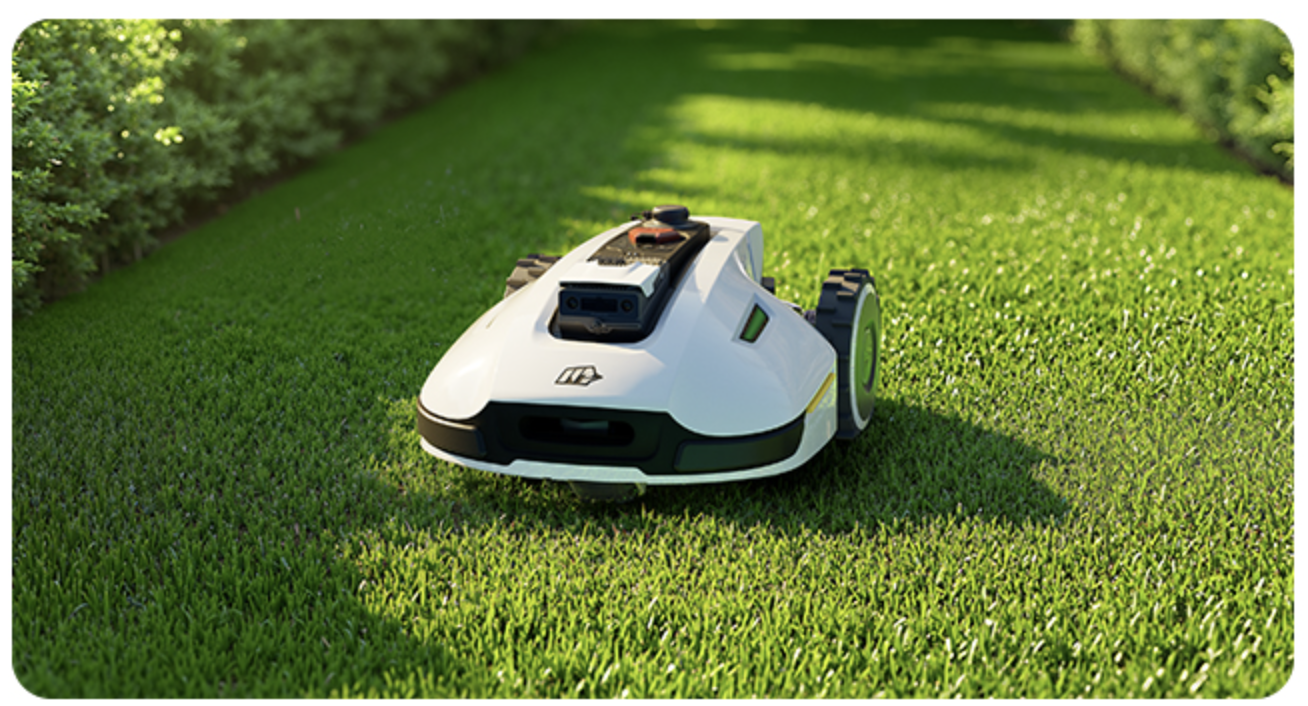
This page breaks down current Mammotion LUBA pricing by model, lawn size, and feature tier, so buyers can quickly understand what each version costs and which one fits their property. If you want to learn about the best robot lawn mowers click here.
What Is the Mammotion LUBA?
Mammotion’s LUBA series is a line of wire-free robotic lawn mowers known for:
-
All-wheel drive (AWD) traction
-
RTK GPS + AI vision navigation
-
No perimeter wire installation
-
Strong slope handling and rough-terrain performance
LUBA models are sold primarily by coverage size, not cosmetic trims, which makes pricing easier to compare once you understand the tiers.
LUBA 2 AWD Pricing (Most Popular Line)
The LUBA 2 AWD series is the current mainstream lineup and the one most buyers compare prices on.
LUBA 2 AWD Price by Yard Size
| Model | Max Lawn Size | Typical U.S. Price | Who It’s For |
|---|---|---|---|
| LUBA 2 AWD 3000X / 3000HX | ~0.75 acres | ~$2,599 | Medium yards with slopes |
| LUBA 2 AWD 5000X / 5000HX | ~1.25 acres | ~$2,999 | Larger suburban lots |
| LUBA 2 AWD 10000X / 10000HX | ~2.5 acres | ~$4,499 | Large properties and estates |
Notes on X vs HX models
-
Cutting height range differs slightly
-
Pricing is usually the same within the same size tier
-
Performance and navigation are otherwise identical
LUBA 3 AWD Pricing (Newest Generation)
The LUBA 3 AWD line is the newer, more advanced series that adds LiDAR to the existing RTK + vision system.
LUBA 3 AWD Price Tiers
| Model | Max Lawn Size | Typical Price |
|---|---|---|
| LUBA 3 AWD 1500 / 1500H | ~0.37 acres | ~$2,399 |
| LUBA 3 AWD 3000 / 3000H | ~0.75 acres | ~$2,799 |
| LUBA 3 AWD 5000 / 5000H | ~1.25 acres | ~$3,299 |
Why LUBA 3 costs more
-
LiDAR-assisted navigation
-
Improved obstacle detection
-
Better performance in complex or cluttered yards
For simpler lawns, many buyers still choose LUBA 2 to save money.
LUBA Mini AWD Pricing (Small Yards)
The LUBA Mini AWD is designed for smaller properties that don’t need a full-size mower.
LUBA Mini AWD Prices
| Model | Max Lawn Size | Typical Price |
|---|---|---|
| LUBA Mini AWD 800 / 800H | ~0.2 acres | ~$1,599 |
| LUBA Mini AWD 1500 / 1500H | ~0.37 acres | ~$1,649–$1,999 |
These models still include AWD and wire-free navigation, just scaled down in battery and runtime.
What’s Included vs Extra Cost
Usually included
-
Robot mower
-
RTK reference station
-
Charging base
-
Standard blades
Possible add-on costs
-
Garage / weather cover: ~$100–$140
-
Replacement blade kits: ~$30–$60
-
Replacement wheels or accessories: varies
-
Cellular connectivity subscription (varies by promotion)
How to Choose the Right LUBA Based on Price
Under 0.5 acres
-
LUBA Mini AWD
-
Lowest entry price with full AWD and wire-free setup
0.5 to 1.25 acres
-
LUBA 2 AWD 3000 or 5000
-
Best value for most homeowners
Over 1.25 acres or very steep terrain
-
LUBA 2 AWD 10000 or LUBA 3 AWD 5000
-
Higher upfront cost, fewer interruptions and recharges
Is LUBA Worth the Price?
LUBA mowers are priced higher than basic robotic mowers, but buyers are paying for:
-
No perimeter wire installation
-
AWD slope performance
-
Advanced navigation and mapping
-
Lower long-term frustration on uneven yards
For flat, simple lawns, cheaper wired robots may be enough. For hills, irregular layouts, or large properties, LUBA pricing is competitive for what it replaces.
How to Prepare Your Backyard for a Trampoline (Without Ruining Your Grass)
Installing a trampoline sounds simple—put it on the lawn and let the kids jump.
In reality, that’s how you end up with dead grass, muddy patches, and an uneven trampoline within a few weeks.
If you want your trampoline to stay level, safe, and not destroy your yard, the ground prep matters. Below is the grass-smart way to do it, based on real homeowner experiences and basic landscaping principles.
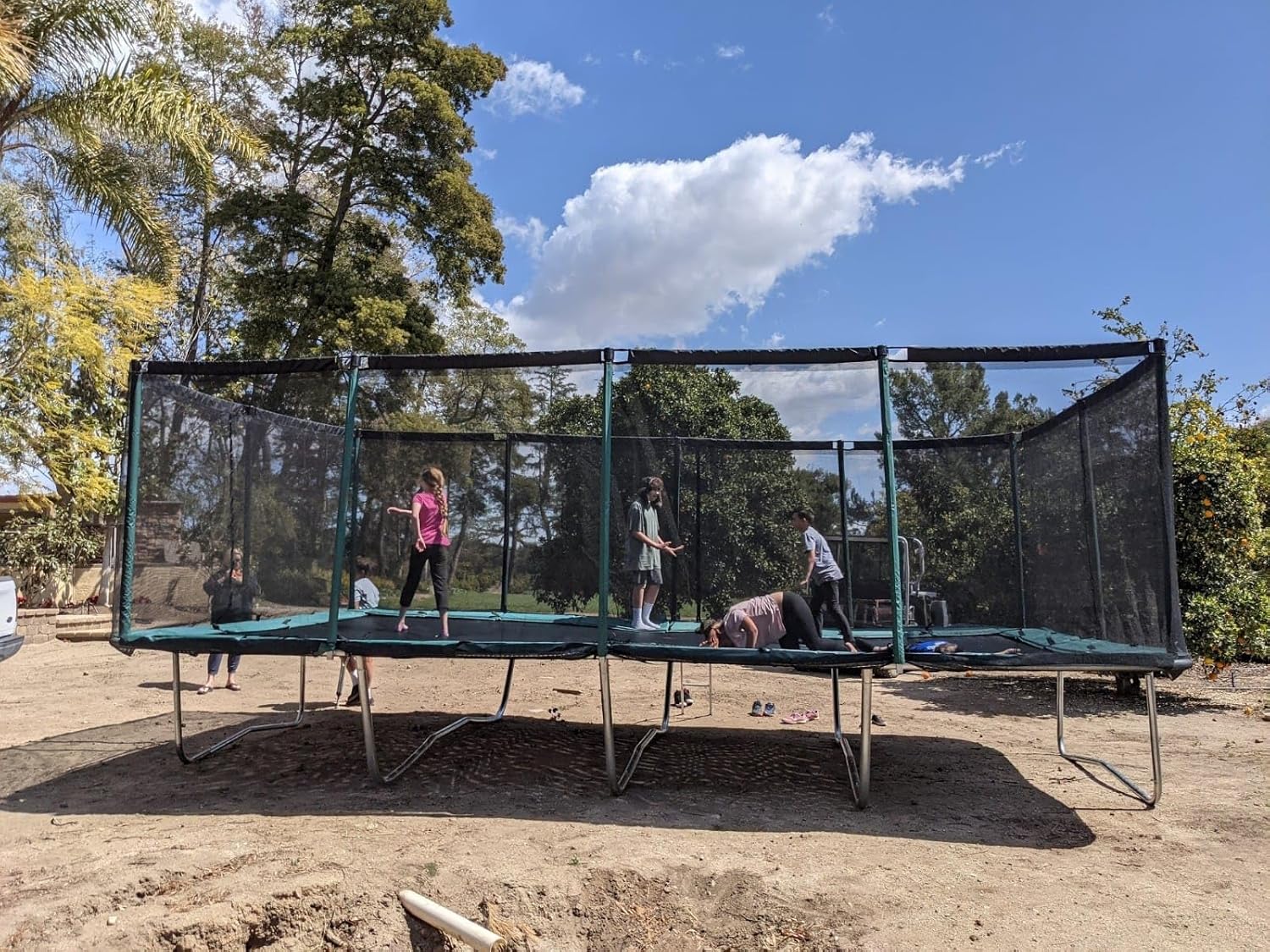
Step 1: Choose the Right Spot First
Before touching the grass, choose the location carefully.
Look for:
-
A flat or nearly flat area
-
6–8 feet of clearance on all sides
-
No overhead branches, fences, or wires
-
No low spots where water collects after rain
👉 If the area already puddles, putting a trampoline there will make it worse.
Step 2: Understand What Happens to Grass Under a Trampoline
Here’s the honest truth most people learn the hard way:
-
Grass under a stationary trampoline almost always dies
-
Shade + foot traffic + compacted soil = bare dirt
-
Once the grass is gone, rain turns it into mud
Some people move their trampoline regularly to keep grass alive—but for most families, that becomes unrealistic fast.
The smarter move: plan for the grass underneath to not survive and prepare accordingly.
Step 3: Remove the Grass (Don’t Just Flatten It)
Instead of letting the grass die slowly, remove it intentionally.
How:
-
Strip 2–4 inches of grass and topsoil
-
Make the cleared area slightly larger than the trampoline frame
Why this works:
-
Prevents muddy buildup
-
Stops weeds from pushing through later
-
Creates a stable base instead of soft, sinking turf
Step 4: Level the Ground Properly
A trampoline exaggerates even small slopes.
To level correctly:
-
Use a long straight board (2×4) with a level
-
Dig down high spots instead of filling low spots
-
Aim for fully level—not “close enough”
⚠️ Avoid building up low areas with loose soil. It will compact unevenly and cause the frame to tilt.
Step 5: Install a Weed Barrier (This Is Key)
Lay down landscape fabric over the cleared soil.
Benefits:
-
Blocks weeds and grass regrowth
-
Keeps soil from mixing into your base
-
Reduces mud and erosion
Secure it tightly with landscape staples.
Step 6: Choose the Best Surface Under the Trampoline
You have a few solid options depending on budget and aesthetics.
Option A: Crushed Stone (Best Overall)
-
2–3 inches of ¼” crushed stone or stone screenings
-
Lightly compacted
Pros: Excellent drainage, clean look, low maintenance
Cons: Slightly more labor upfront
Option B: Rubber Mulch
-
Soft and kid-friendly
-
Drains well
Pros: Clean appearance, no splinters
Cons: More expensive than stone
Option C: Landscape Fabric Only (Temporary)
-
Works short term
Cons: Dusty, wears quickly, not ideal long-term
Step 7: Install the Trampoline and Re-Check Level
Once assembled:
-
Make sure all legs sit firmly
-
No rocking or sinking
-
Re-check level after the frame is fully loaded
Optional but smart:
-
Place pavers or flat stones under each leg
-
Helps prevent sinking during wet seasons
Common Mistakes to Avoid
❌ Leaving the trampoline directly on grass
❌ Ignoring drainage issues
❌ Filling low spots instead of digging high spots
❌ Skipping weed barrier fabric
These mistakes lead to:
-
Mud pits
-
Rusted legs
-
Uneven bounce
-
Re-doing the entire setup later
Optional Upgrades That Make Life Easier
-
Edging around the base to contain stone or mulch
-
Stepping stones from the yard to the trampoline
-
Ground anchors for wind safety
Quick Rule of Thumb
If you want your trampoline to:
-
Stay level
-
Avoid mud
-
Look intentional in your yard
👉 Grass out → fabric down → draining base in.
Final Thought
A trampoline doesn’t have to wreck your lawn—but it will if you treat it like temporary yard furniture. A little prep upfront saves you months of mess and frustration later. By the way, here are some of the best backyard trampolines.
If you want help dialing this in further (yard slope, soil type, trampoline size), you can tailor this setup easily with a few small adjustments.
The Ultimate Turf Upgrade for Golfers Who Practice at Home
If you golf at home, you already understand something most homeowners don’t:
your grass isn’t just a lawn — it’s a playing surface.
Putting greens, fairway strips, and practice turf demand consistency, precision,
and repeatability. And that’s exactly where robotic lawn mowers shine.
This guide explains why robotic mowers are becoming the ultimate turf upgrade
for golfers — and where they fit naturally into a serious home practice setup.
How Golfers Actually Think About Grass
Most homeowners think mowing is about cutting grass shorter.
Golfers think in terms of:
- Consistent cut height
- Smooth, predictable ball roll
- Dense turf with no scalping
- Repeatable results week after week
This is why golf courses don’t mow once a week.
They mow frequently, lightly, and consistently.
Robotic mowers follow the same turf management principle:
they remove a small amount of grass often, instead of shocking the turf.
That single difference changes everything.
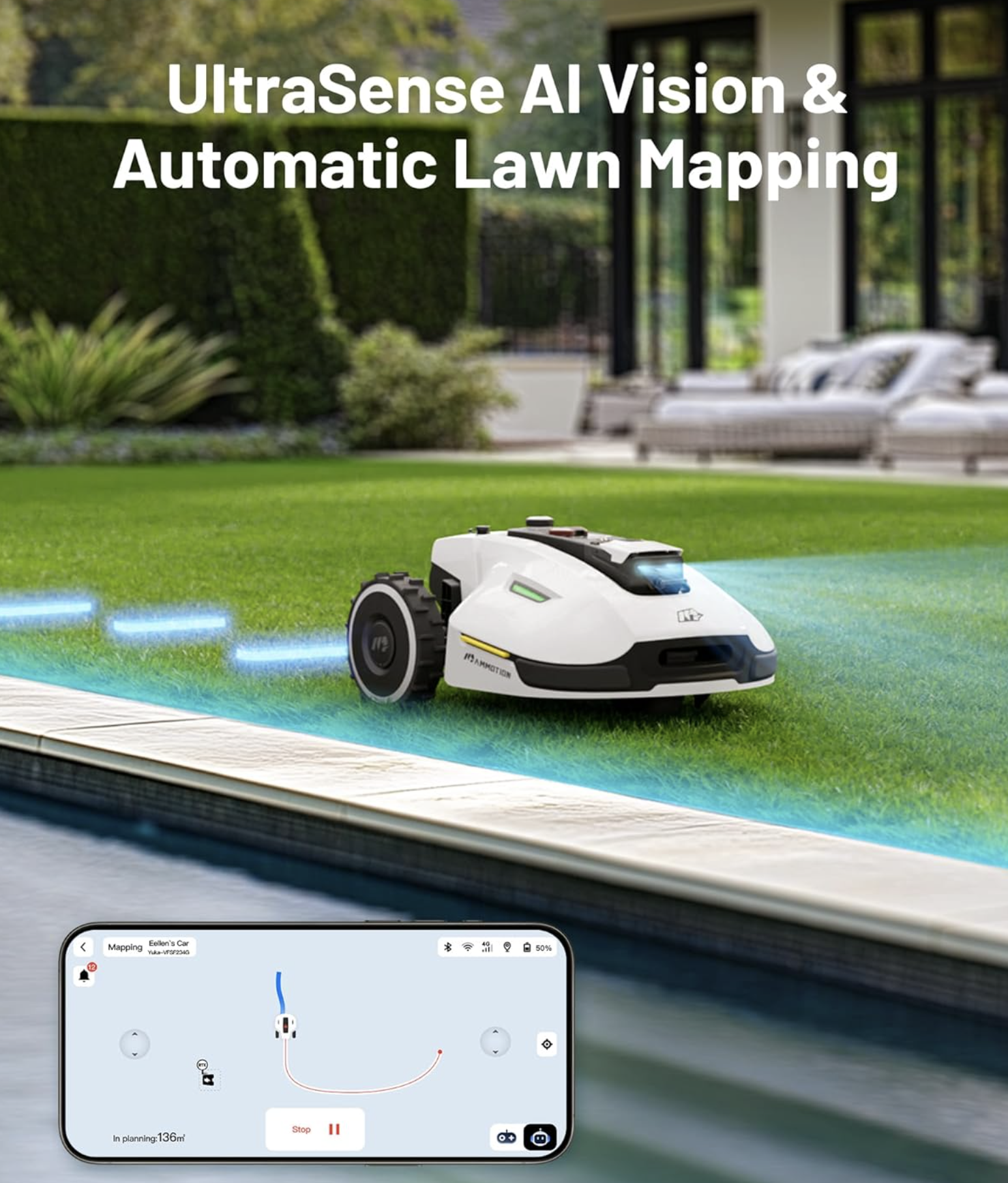
See robotic mowers designed for precision turf maintenance →
The Problem With Traditional Mowers for Golf Turf
Even high-quality push or riding mowers struggle with golf-style turf care:
- Inconsistent walking speed leads to uneven cutting
- Missed mowing days cause grass to get too long
- Heavy wheels compact turf and leave wear patterns
- Manual edging disrupts clean turf borders
- Every mow produces slightly different results
On a normal lawn, this might not matter.
On a practice green or fairway strip, it shows immediately — especially in ball roll.
Golfers don’t need to mow faster.
They need predictable turf conditions.
Why Robotic Mowers Match Golf Course Maintenance Logic
1. Frequent, Light Cuts
Robotic mowers trim daily or near-daily, removing only a small amount of grass each pass.
This mirrors professional turf management and helps:
- Maintain consistent height
- Encourage thicker turf density
- Reduce scalping and stress
View mowers built for daily precision cutting →
2. Fixed, Repeatable Cut Height
Once set, a robotic mower cuts at the same height every time.
No guesswork. No drift. No rushed adjustments.
For golfers, this is ideal for:
- Practice greens
- Fairway-style hitting zones
- Dedicated chipping areas
Compare robotic mowers with precise height control →
3. Lightweight, Low-Impact Design
Unlike riding mowers, robotic units are lightweight and consistent in movement.
That means:
- Less turf compaction
- No ruts or worn turning spots
- Better long-term turf health
This is especially important for golfers maintaining premium turf surfaces.
Perfect for Defined Golf Zones at Home
Most golfers don’t want their entire yard treated the same way.
They maintain specific zones, such as:
- Putting greens
- Chipping areas
- Fairway strips
- Practice turf near nets or simulators
Robotic mowers excel at maintaining defined areas with consistent schedules,
making them ideal for home golf setups.
See robotic mowers that support multiple mowing zones →
More Practice Time — Without Sacrificing Turf Quality
Golfers already spend time practicing, training, and playing.
The last thing they want is to:
- Schedule mowing sessions
- Redo cuts after rain
- Fix uneven turf before practice
A robotic mower removes the chore without lowering standards.
Your turf stays practice-ready even if you don’t touch it for weeks.
Explore set-and-forget robotic mowers for golfers →
Is a Robotic Mower Worth It for Golfers?
For golfers, the comparison isn’t:
robot mower vs cheap mower
It’s:
manual turf maintenance vs course-style consistency
When you factor in:
- Time saved
- Improved turf quality
- Reduced wear and mistakes
- Long-term turf health
A robotic mower becomes an equipment upgrade — not a convenience purchase.
Choosing the Right Robotic Mower for Golf Turf
When choosing a robotic mower for a golf-focused setup, prioritize:
- Precise cut height control
- Consistent scheduling
- Support for defined mowing zones
- Lightweight, turf-friendly design
- Clean, even cutting patterns
Recommended robotic mowers for golfers:
- Best robotic mower for putting greens
- Best robotic mower for fairway strips
- Best robotic mower for mixed-use yards + turf zones
Final Thoughts
If you’ve invested in practicing at home, your turf deserves the same level of care.
A robotic mower isn’t about mowing less —
it’s about maintaining golf-quality turf automatically.
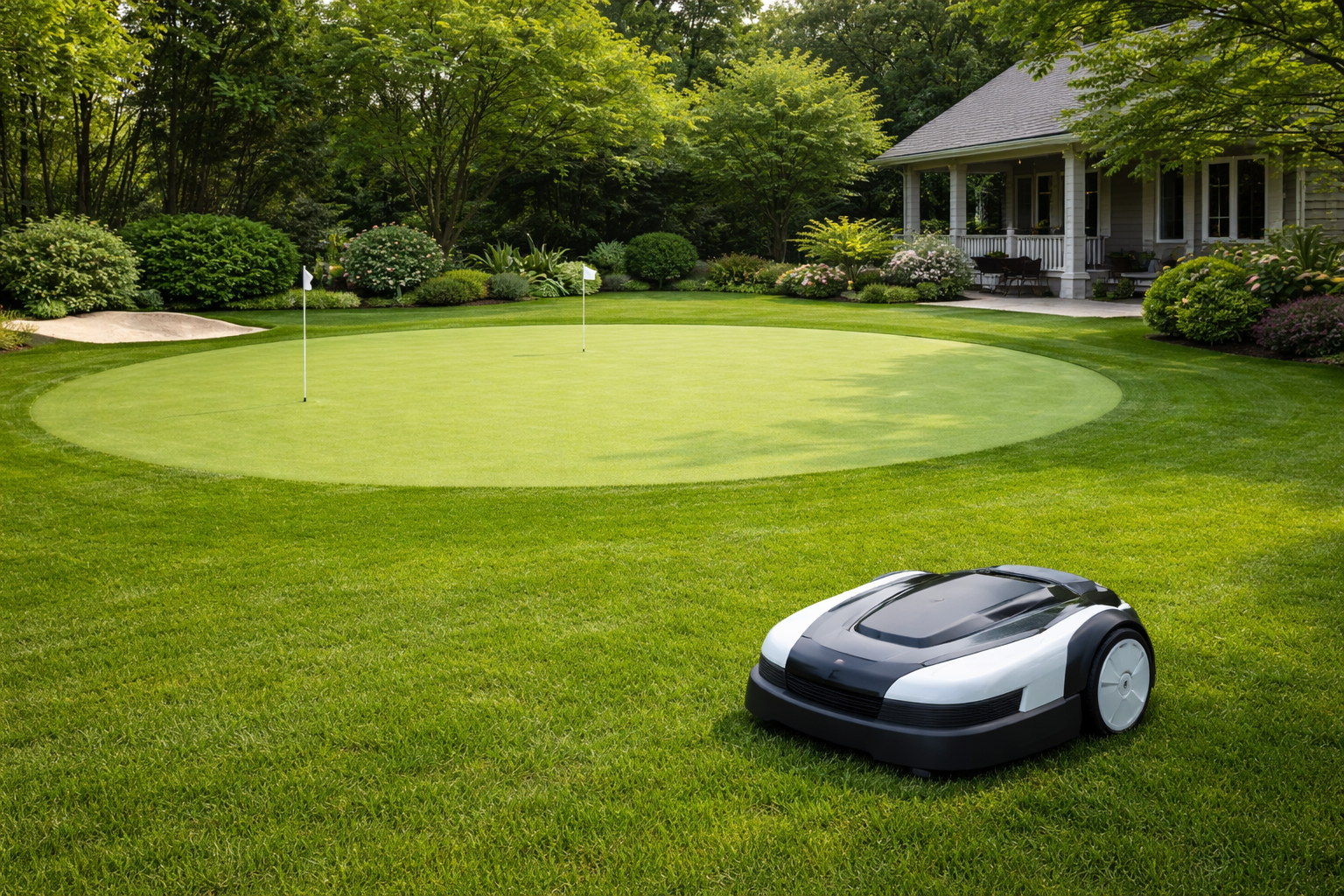
Explore robotic mowers built for serious golfers →
How to Sharpen Mower Blades Like a Pro: Safe, Simple Steps for a Cleaner Cut
If you care about how your lawn looks, there’s one thing you can’t ignore: sharp mower blades.
They make or break that deep-green, velvety, professional look that separates a good lawn from a great one.
After years of experimenting with fertilizers, irrigation schedules, and mower settings, I discovered that blade sharpness has the biggest visual impact for the least effort. So here’s how I do it — safely, efficiently, and with results you’ll notice on the very next mow.
Why Sharp Blades Make All the Difference
When blades are dull, they don’t slice — they rip.
That ripping causes the grass tips to fray and brown within a day or two, ruining the clean, uniform look every lawn nut wants.
Sharp blades, though? They give you that perfect, even, “carpet cut” finish — like a putting green in your backyard.
Here’s what I’ve noticed firsthand since making blade sharpening part of my lawn routine:
-
My mower glides instead of fighting through thick turf.
-
The color stays rich and consistent for days after mowing.
-
I mow faster and use less fuel (seriously noticeable).
-
My stripes pop because the grass blades are uniform in height and color.
I used to think dull blades were fine because “the mower still cuts.”
Wrong. The difference between a dull blade and a sharp one is like trimming your hair with scissors versus tearing it with pliers.
How Often I Sharpen (and Why Timing Matters)
I sharpen my mower blades twice a season without fail — once in spring before the first cut and again around mid-summer.
If I scalp a hidden rock or notice brown grass tips after mowing, I sharpen sooner.
For most homeowners, sharpening every 20–25 mowing hours is ideal. If you mow weekly, that’s about every 6–8 weeks.
If you’ve got sandy soil or mow over rough terrain, you might need to touch up more often.
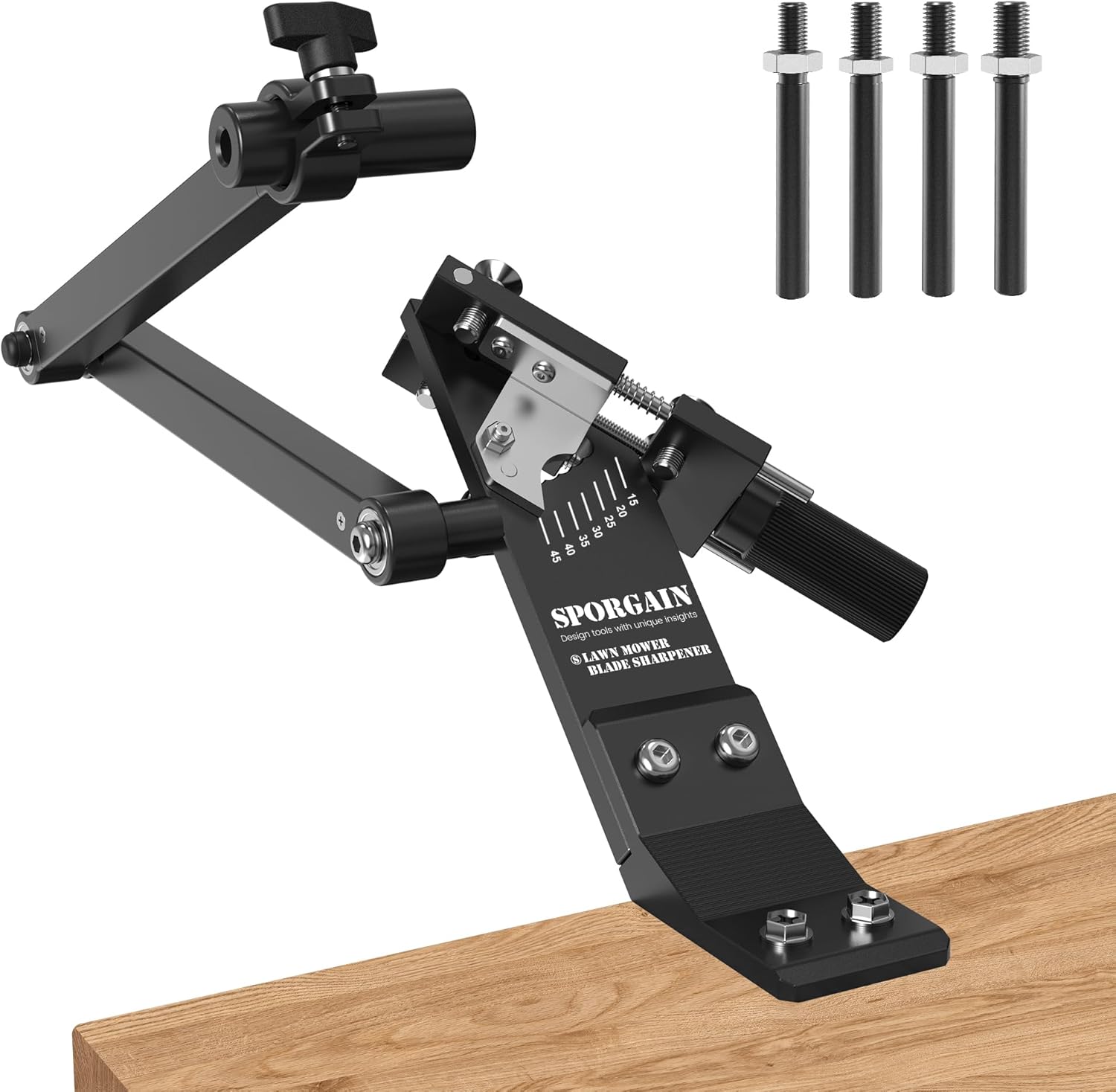
Click Here for Blade Sharpeners
My Go-To Tools for a Perfect Edge
Over the years, I’ve tried everything from hand files to bench grinders. Here’s what’s worked best for me:
| Tool | Why I Use It |
|---|---|
| Socket wrench | For quick blade removal |
| Bench vise | Holds the blade steady and safe |
| Flat metal file | Great control for fine sharpening |
| Angle grinder (optional) | Speeds up heavy touch-ups |
| Blade balancer | Ensures smooth, vibration-free mowing |
| Work gloves & safety glasses | Non-negotiable for safety |
Pro tip: I keep a spare blade handy. That way, I can swap them mid-season and sharpen the other at my leisure.
My Step-By-Step Sharpening Process
1. Disconnect Power
First rule of mower maintenance: no surprises.
I always pull the spark plug wire (gas mower) or remove the battery (electric). I’ve seen enough close calls online to never skip this.
2. Remove the Blade
I tip the mower on its side — carburetor facing up to prevent leaks — and mark the underside of the blade with a Sharpie. This little trick prevents reinstalling it upside down (we’ve all been there).
3. Clean and Inspect
I scrape off caked grass and rust, then check for cracks or bends. If a blade looks warped or thin at the edges, I replace it. You can’t fix metal fatigue.
4. Sharpen Along the Bevel
This part’s oddly satisfying.
I clamp the blade in the vise, grab my file, and stroke in one direction only, following the original bevel (usually around 30–45°). I like to think of it like honing a knife — smooth and controlled.
If I’m using the angle grinder, I go slow to avoid overheating. Overheating changes the metal’s hardness and shortens its life. You want a clean, silvery edge that’s sharp but not paper-thin.
5. Balance the Blade
Most people skip this. Don’t.
I hang the blade on a nail through its center hole. If one side dips lower, I grind a bit more off that side until it hangs level. This small step keeps your mower from vibrating like crazy and makes the cut perfectly even.
6. Reinstall and Tighten
I mount the blade back in the correct direction (marking helps!), torque it down firmly, and reconnect the spark plug wire.
Then I mow a small section to test. When the mower hums smoothly and the grass cuts clean — that’s when I know it’s right.
The Payoff: A Lawn That Looks Professionally Cut
After sharpening, the difference is instant.
My mower glides like it’s brand new, the lawn stripes line up cleanly, and the color is uniform across the yard.
I’ve had neighbors ask if I switched mowers — nope, just sharpened the blades.
Here’s what I’ve learned:
-
Sharp blades make mowing effortless.
-
They reduce engine strain, so you burn less gas and the mower lasts longer.
-
They improve turf health, which means greener, thicker grass over time.
I used to spend hours on fertilizers and irrigation schedules, but blade maintenance is the easiest upgrade of them all.
Mistakes I’ve Made (So You Don’t Have To)
-
Over-sharpening: Don’t aim for a knife edge — it dulls fast and chips easily.
-
Skipping balance: The first time I ignored it, my mower vibrated like a jackhammer.
-
Grinding too hot: Overheating weakens the steel. Take breaks if using power tools.
-
Wrong angle: Always follow the factory bevel — you’re refreshing the edge, not redesigning it.
-
Installing upside down: Trust me, it happens. Mark your blade first.
When It’s Time to Replace, Not Sharpen
If your blade is cracked, bent, or worn down to a thin edge, sharpening won’t save it.
I replace mine about every 2–3 years depending on wear. OEM blades (Toro, Honda, or your mower’s brand) always fit better and cut cleaner than cheap replacements.
My Routine for the Sharpest Blades Year-Round
-
Sharpen twice a season: Spring and mid-summer.
-
Clean after every mow: Prevents rust and buildup.
-
Rotate blades: Always have one sharp spare.
-
Keep tools handy: The fewer excuses, the better.
It’s a simple ritual now — I clean, sharpen, and balance while listening to music in the garage. The smell of fresh-cut grass afterward? Worth every minute.
Final Thoughts
You can have the best fertilizer, the perfect mowing height, and an irrigation timer set to the second — but if your blades are dull, your lawn will always look average.
Sharpening is the hidden secret behind that “golf course” finish.
It’s easy, satisfying, and one of those little homeowner rituals that pays off immediately.
So next weekend, skip the new gadget and grab a file instead. Your grass will thank you — and your neighbors might start asking what you’re doing differently.
Centipede Grass: The Low-Maintenance Lawn for Warm Climates
If you’ve ever dreamed of a lawn that stays green without demanding constant mowing, fertilizing, or watering, Centipede grass might be your new favorite turf. Often nicknamed “the lazy man’s grass”, it’s beloved across the Southeast for its slow growth and easy care — though it comes with its own quirks.
As someone who’s tested everything from Bermuda to Fescue, I’ve found Centipede to be one of the most forgiving options when planted in the right soil and climate. Let’s dig into what makes it unique, how to care for it, and when it’s the perfect fit for your yard.
🌿 What Is Centipede Grass?
Centipede grass (Eremochloa ophiuroides) is a warm-season turfgrass native to China and Southeast Asia, now common across the southern U.S. — particularly the Carolinas, Georgia, Alabama, and Florida Panhandle.
It forms a dense, light-green turf through stolons (above-ground runners), not underground rhizomes. Unlike fast-spreading Bermuda or Zoysia, it grows slowly and stays relatively short, making it one of the lowest-maintenance grasses you can grow.

Fill Dead Spots + Regrow Centipede Grass
Ideal Conditions
- USDA Zones: 7–10
- Soil Type: Sandy or low-fertility soils
- Soil pH: 4.5–6.0 (acidic)
- Sun Exposure: Full sun to partial shade
- Climate: Warm, humid, with mild winters
Centipede is happiest in acidic, sandy soils where other grasses struggle — but it won’t tolerate cold snaps or heavy foot traffic.
⚖️ How Centipede Grass Differs from Other Lawns
| Grass Type | Growth Speed | Fertilizer Needs | Cold Tolerance | Traffic Tolerance | Color |
|---|---|---|---|---|---|
| Centipede | Slow | Very low | Poor | Low | Light green |
| Bermudagrass | Fast | High | Moderate | High | Medium green |
| Zoysiagrass | Moderate | Moderate | Good | Moderate | Deep green |
| St. Augustine | Moderate | Moderate-High | Fair | Moderate | Blue-green |
| Tall Fescue | Cool-season | Moderate | Excellent | Moderate | Dark green |
Centipede thrives where others burn out or go hungry, especially in sandy or acidic soils. But it won’t recover quickly from wear, so it’s not ideal for sports or play areas.
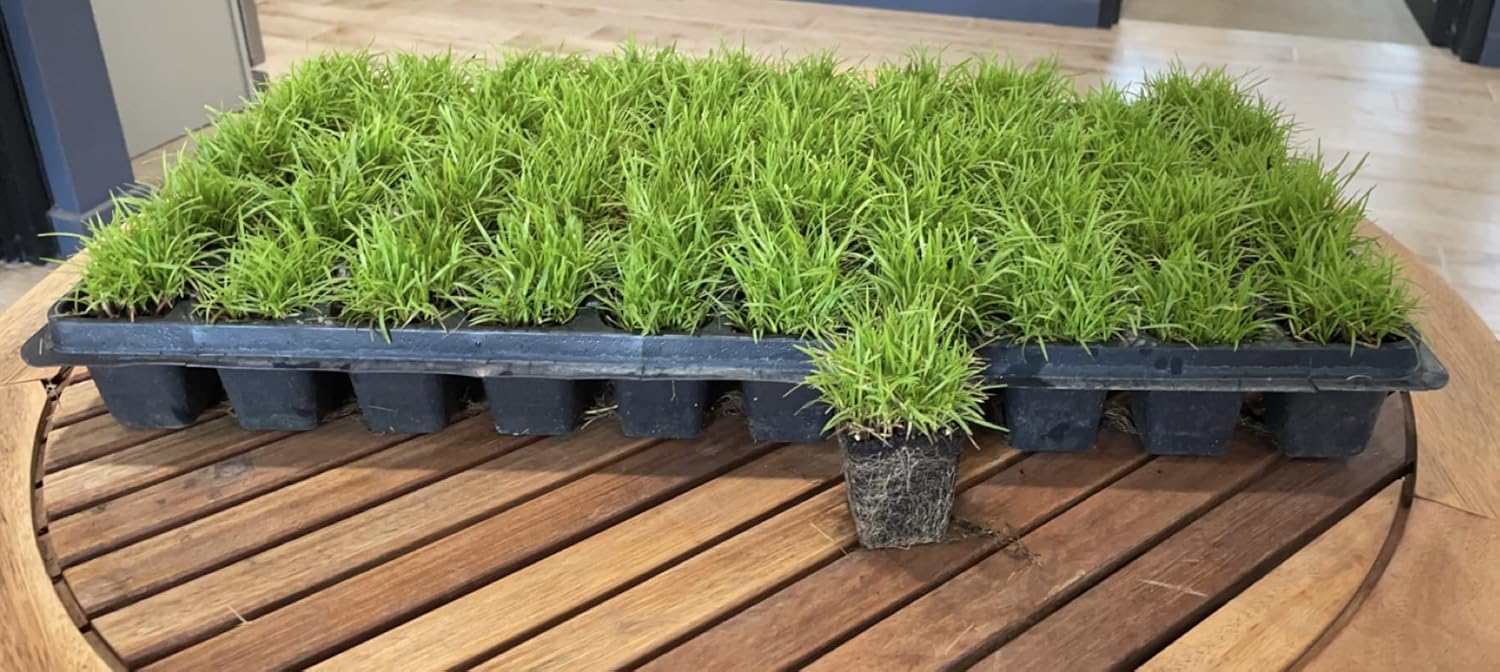
Click for our favorite Centipede grass plugs
✅ Pros of Centipede Grass
-
Low Maintenance: Requires less mowing and fertilizer than most warm-season lawns.
-
Thrives in Poor Soils: Performs well in sandy, nutrient-poor conditions.
-
Moderate Drought Resistance: Once established, it handles dry spells fairly well.
-
Few Pest Problems: Dense stolons help choke out many weeds naturally.
-
Minimal Thatch: Its slow growth means you rarely need to dethatch.
❌ Cons of Centipede Grass
-
Cold Sensitivity: Prone to winter injury in areas with hard freezes.
-
Iron Deficiency Risk: Tends to yellow (chlorosis) in alkaline or compacted soils.
-
Slow Recovery: Damage or bare spots take time to fill in.
-
Limited Wear Tolerance: Not ideal for kids, dogs, or high-traffic lawns.
-
Winter Browning: Goes dormant and turns brown when temperatures drop.
🧑🌾 How to Care for Centipede Grass
Centipede is often described as “low maintenance, not no maintenance.” It still needs the right care — just less of it.
1. Mowing
-
Height: Keep it between 1.0–2.0 inches (1.5″ is ideal).
-
Frequency: Mow when it exceeds 2 inches; don’t scalp.
-
Blade Care: Always mow with a sharp blade to prevent tearing.
Pro Tip: Centipede’s stolons sit on the soil surface — scalping can kill them. Raise your mower during dry or hot spells.
2. Watering
-
Aim for 1 inch of water per week (rain + irrigation).
-
Water deeply and infrequently to promote deep roots (best times to water grass).
-
In sandy soil, short but more frequent watering may help prevent drought stress.
3. Fertilizing
-
Centipede has very low nitrogen needs — about 0.5–1 lb of nitrogen per 1,000 sq ft per year (how often to fertilize).
-
Apply once in late spring or early summer when growth begins.
-
Avoid over-fertilizing; it causes thatch buildup and weakens the grass.
-
If you notice yellowing, apply a chelated iron supplement rather than more nitrogen.
4. Weed & Pest Management
-
Maintain soil pH between 5.0–6.0.
-
Use pre-emergent herbicide in early spring if crabgrass or spurge is common.
-
Watch for mole crickets or nematodes in sandy soils.
-
Encourage healthy turf density to outcompete weeds naturally.
5. Seasonal Care Calendar
| Season | Maintenance Tasks |
|---|---|
| Spring | Test soil pH; apply light fertilizer; treat pre-emergent weeds |
| Summer | Deep watering; mow at 1.5–2″; spot-treat weeds |
| Fall | Reduce mowing; avoid late nitrogen; apply iron if yellowing |
| Winter | Allow dormancy; avoid foot traffic on brown turf |
🧩 Common Problems and Solutions
| Problem | Likely Cause | Fix |
|---|---|---|
| Yellowing leaves | High soil pH or iron deficiency | Apply chelated iron; lower soil pH |
| Bare spots | Drought or traffic damage | Patch with plugs in late spring |
| Thatch buildup | Too much fertilizer | Reduce nitrogen; dethatch if spongy |
| Patchy growth | Shade or compacted soil | Thin trees; aerate lightly |
🌤️ When Centipede Grass Is the Right Choice
Choose Centipede if:
-
You live in a warm, humid climate (Zones 7–10).
-
Your soil is acidic and sandy.
-
You want a low-input, easy-care lawn that doesn’t demand constant feeding.
Avoid Centipede if:
-
You have alkaline clay soil or frequent frost.
-
You need a lawn for kids, dogs, or sports.
-
You expect instant recovery from damage.
🧠 Expert Takeaway
Centipede grass shines where others fail — in low-fertility, sandy soils where homeowners want a simple, slow-growing lawn. But it’s not a universal solution. It needs the right pH, sunlight, and climate to look its best.
According to Clemson University’s Turfgrass Extension, Centipede is among the few grasses that can maintain decent color and coverage on nutrient-poor soils — but it must be kept acidic to stay green.
If you’re starting from scratch, test your soil first and confirm your region’s suitability. When conditions align, Centipede offers one of the easiest and most sustainable lawns you can grow.
🧾 Quick Reference Summary
| Category | Details |
|---|---|
| Scientific Name | Eremochloa ophiuroides |
| Type | Warm-season, stoloniferous |
| Soil pH | 4.5–6.0 |
| Sunlight | Full sun to partial shade |
| Mowing Height | 1.0–2.0 inches |
| Watering | 1 inch per week |
| Fertilizer | 0.5–1 lb N/1,000 sq ft yearly |
| Best For | Low-maintenance, acidic soils |
| Avoid If | Cold winters, alkaline soil, high traffic |
Bermudagrass: The Tough, Sun-Loving Lawn That Thrives in the Heat
If your goal is a lawn that can handle kids, pets, and blazing summer sun without missing a beat, Bermudagrass may be the grass for you. Known for its toughness, dense coverage, and quick recovery, Bermuda is the go-to turf for golf courses, athletic fields, and homeowners across the southern United States.
But this isn’t a set-it-and-forget-it grass. While it rewards regular care with thick, beautiful turf, it can also become a problem if neglected — or if it spreads where it’s not wanted.
This guide explains everything you need to know about Bermudagrass, including its characteristics, advantages, drawbacks, and expert care tips to keep it looking its best.
🌿 What Is Bermudagrass?
Bermudagrass (Cynodon dactylon) is a warm-season grass native to Africa and India that thrives in hot, sunny climates. It’s most common across the southern half of the United States — from California to the Carolinas — great for high temperatures, drought, and heavy use.
It grows through both stolons (above-ground runners) and rhizomes (underground stems), which helps it spread rapidly and recover from damage. That same growth habit, however, makes it aggressive and sometimes invasive if left unchecked.
Ideal Growing Conditions
| Factor | Ideal Range |
|---|---|
| USDA Zones | 7–10 |
| Soil pH | 5.8–7.0 |
| Sunlight | Full sun (6–8+ hours daily) |
| Soil Type | Well-drained sandy or loamy soil |
| Climate | Warm, humid to semi-arid regions |
⚖️ How Bermudagrass Differs from Other Lawns
| Grass Type | Growth Speed | Fertilizer Needs | Shade Tolerance | Cold Tolerance | Traffic Tolerance |
|---|---|---|---|---|---|
| Bermudagrass | Fast | High | Poor | Moderate | Excellent |
| Centipede | Slow | Low | Moderate | Poor | Low |
| Zoysiagrass | Moderate | Moderate | Good | Good | Moderate |
| St. Augustine | Moderate | Moderate | Excellent | Fair | Moderate |
| Tall Fescue | Cool-season | Moderate | Good | Excellent | Moderate |
Bermuda grows aggressively and loves heat, making it ideal for full-sun lawns that get frequent use. Unlike Centipede or Zoysia, it requires more mowing, fertilizing, and attention — but it rewards the effort with lush, uniform turf.
✅ Pros of Bermudagrass
-
Exceptional heat tolerance: Stays vibrant during the hottest months.
-
Durability: Handles heavy foot traffic and recovers quickly from damage.
-
Fast establishment: Spreads rapidly from seed, sod, or plugs.
-
Drought resistance: Can go dormant during dry periods and green up quickly with rain.
-
Weed resistance: Forms a dense canopy that naturally suppresses many weeds.
❌ Cons of Bermudagrass
-
Poor shade performance: Needs full sunlight to thrive.
-
High maintenance: Requires frequent mowing and fertilizing.
-
Aggressive spread: Can invade gardens, driveways, and neighboring lawns.
-
Cold dormancy: Turns brown in winter when temperatures drop.
-
Disease susceptibility: Prone to fungal issues like spring dead spot in cooler zones.
🧑🌾 How to Care for Bermudagrass
Bermuda is a “high-performance” grass — it looks best when you stay consistent with mowing, watering, and feeding.
1. Mowing
-
Height: Keep between 1–2 inches for common Bermuda; 0.5–1 inch for hybrid varieties.
-
Frequency: Mow every 5–7 days during peak growing season.
-
Tip: Use a reel mower if you want that professional golf-course finish.
Pro Tip: Frequent mowing encourages horizontal growth and a thicker, more uniform lawn.
2. Watering
-
Needs 1 inch of water per week.
-
Water deeply and infrequently.
-
During dormancy (winter), watering can be reduced significantly.
3. Fertilizing
-
High nutrient demand: Apply 3–5 lbs of nitrogen per 1,000 sq ft per year, divided into 3–5 feedings from late spring through early fall.
-
Use a balanced fertilizer with micronutrients, especially iron and potassium.
-
Stop fertilizing 6–8 weeks before the first frost to prevent cold damage.
4. Weed & Pest Management
-
Apply pre-emergent herbicide in early spring and early fall.
-
Spot-treat broadleaf weeds as needed.
-
Watch for armyworms, mole crickets, and grubs during summer.
-
Maintain dense turf through proper mowing and feeding — a thick lawn is your best defense.
5. Aeration & Thatch Control
-
Bermuda can develop thatch quickly due to its rapid growth.
-
Core aerate annually in late spring or early summer.
-
Dethatch every 2–3 years or when the layer exceeds ½ inch.
6. Overseeding (Optional)
In cooler areas or if you want winter color:
-
Overseed with perennial ryegrass in early fall (5–10 lbs per 1,000 sq ft).
-
Gradually reduce watering and mowing in spring as Bermuda greens up again.
🗓️ Seasonal Care Calendar
| Season | Key Tasks |
|---|---|
| Spring | Aerate, fertilize, apply pre-emergent, begin mowing |
| Summer | Mow frequently, irrigate deeply, fertilize monthly |
| Fall | Apply final fertilizer, overseed if desired, reduce watering |
| Winter | Allow dormancy, limit traffic, clear debris |
🧩 Common Problems & Solutions
| Problem | Likely Cause | Solution |
|---|---|---|
| Yellowing grass | Iron deficiency or high soil pH | Apply chelated iron or acidify soil |
| Thinning under trees | Too much shade | Prune branches or plant shade-tolerant grass |
| Spring dead spot | Fungal disease | Avoid late-fall nitrogen; use fungicide if severe |
| Weed resurgence | Missed pre-emergent timing | Maintain feeding and mowing schedule |
🌎 When Bermudagrass Is (and Isn’t) the Right Choice
Choose Bermudagrass if:
-
You live in a warm, sunny region (USDA zones 7–10).
-
You want a durable, resilient lawn for kids, pets, or sports.
-
You’re comfortable with regular maintenance and mowing.
Avoid Bermudagrass if:
-
You have heavy shade or alkaline, compacted soil.
-
You live in an area with cold winters or frequent frost.
-
You prefer a low-maintenance or rarely-mowed lawn.
🧠 Expert Takeaway
Bermudagrass is the powerhouse of warm-season lawns — fast-growing, durable, and beautiful when cared for properly. It thrives in sunlight and heat, making it ideal for southern homeowners who don’t mind regular upkeep.
According to Texas A&M AgriLife Extension, Bermudagrass remains one of the most widely used turf species in warm climates because of its “exceptional resilience, drought tolerance, and quick recovery from damage.”
When properly maintained, a Bermuda lawn delivers the look and performance of a professional sports field — right in your backyard.
🧾 Quick Reference Summary
| Category | Details |
|---|---|
| Scientific Name | Cynodon dactylon |
| Grass Type | Warm-season, stolon & rhizome spread |
| Soil pH Range | 5.8–7.0 |
| Sunlight Needs | Full sun (6–8+ hours) |
| Mowing Height | 1–2 inches (common), 0.5–1 inch (hybrid) |
| Fertilizer Rate | 3–5 lbs N/1,000 sq ft annually |
| Watering | 1 inch per week |
| Best For | Hot, sunny, high-traffic lawns |
| Avoid If | Shady or cool climates |
Zoysiagrass: The Elegant, Durable Lawn for Warm and Transitional Climates
If you’re looking for a dense, soft, and foot-friendly lawn that handles both summer heat and occasional cold snaps, Zoysiagrass may be your best option. Known for its fine texture, carpet-like appearance, and strong resilience, Zoysia bridges the gap between low-maintenance grasses like Centipede and high-performance types like Bermuda.
While it’s not the fastest to establish, homeowners love Zoysia for its beauty, density, and versatility — making it one of the most sought-after warm-season grasses for lawns across the southern and transitional United States.
What Is Zoysiagrass?
Zoysiagrass (Zoysia spp.) is a warm-season turfgrass native to East Asia. It’s often found in southern and transition-zone states — from Florida to Virginia, across Texas, and into parts of the Midwest.
Zoysia is slower to grow and spread than Bermuda, but once established, it forms an exceptionally thick, lush turf that resists weeds, tolerates drought, and feels wonderful underfoot.
Ideal Growing Conditions
| Factor | Ideal Range |
|---|---|
| USDA Zones | 6–10 |
| Soil pH | 6.0–7.0 |
| Sunlight | Full sun to partial shade |
| Soil Type | Well-drained, fertile soil |
| Climate | Warm, humid, and transitional zones |
How Zoysiagrass Differs from Other Lawns
| Grass Type | Growth Speed | Shade Tolerance | Fertilizer Needs | Cold Tolerance | Traffic Tolerance |
|---|---|---|---|---|---|
| Zoysiagrass | Slow | Good | Moderate | Good | Moderate |
| Bermudagrass | Fast | Poor | High | Moderate | Excellent |
| Centipede | Slow | Moderate | Low | Poor | Low |
| St. Augustine | Moderate | Excellent | Moderate | Fair | Moderate |
| Tall Fescue | Cool-season | Good | Moderate | Excellent | Moderate |
Zoysia stands out for being dense yet soft, durable yet elegant. It requires more patience during establishment but rewards homeowners with one of the most uniform and weed-resistant lawns available.
Pros of Zoysiagrass
-
Fine-to-medium blades create a soft, carpet-like feel.
-
Dense growth suppresses weeds naturally.
-
Deep roots improve drought tolerance.
-
Tolerates moderate shade better than Bermuda.
-
Cold-hardy enough for transitional zones.
-
Slower growth means less frequent mowing.
Cons of Zoysiagrass
-
Establishes slowly, taking time to fill in bare areas.
-
Dense growth can lead to thatch buildup if overfertilized.
-
Turns brown during winter dormancy.
-
Difficult to overseed due to its dense canopy.
-
Requires periodic aeration and dethatching.
How to Care for Zoysiagrass
Zoysia is forgiving once established. It doesn’t need constant attention but benefits from consistent mowing, soil management, and light feeding.
1. Mowing
-
Maintain a height of 1–2 inches, depending on the variety.
-
Mow every 7–10 days during active growth.
-
Never remove more than one-third of the blade at a time.
Tip: Keep mower blades sharp. Zoysia’s dense texture dulls blades faster than most grasses.
2. Watering
-
Water deeply but infrequently, about 1 inch per week during dry spells.
-
Zoysia tolerates drought but stays greener with consistent moisture.
-
Reduce watering during dormancy.
3. Fertilizing
-
Apply 2–3 lbs of nitrogen per 1,000 sq ft per year, divided into 2–3 feedings.
-
Feed in late spring and mid-summer.
-
Avoid heavy fertilization in late fall to prevent thatch and cold injury.
-
Apply iron supplements in summer if the lawn appears pale.
4. Weed and Pest Management
-
Apply pre-emergent herbicide in early spring.
-
Spot-treat weeds before the dense canopy closes.
-
Watch for billbugs, mole crickets, and nematodes in sandy soils.
-
Avoid overwatering to prevent fungal issues.
5. Aeration and Thatch Control
-
Zoysia can build thatch quickly.
-
Core aerate annually or biannually in late spring or early summer.
-
Dethatch when the thatch layer exceeds ½ inch to improve airflow and root health.
Seasonal Care Calendar
| Season | Key Tasks |
|---|---|
| Spring | Aerate, fertilize lightly, apply pre-emergent herbicide |
| Summer | Mow regularly, water deeply, apply mid-season fertilizer |
| Fall | Reduce fertilization, manage thatch, prepare for dormancy |
| Winter | Allow rest; avoid heavy traffic or overseeding |
Common Problems and Fixes
| Problem | Likely Cause | Solution |
|---|---|---|
| Patchy or slow fill-in | Newly planted or shaded area | Allow time for spreading; Zoysia fills in gradually via stolons and rhizomes |
| Thatch buildup | Overfertilization or infrequent mowing | Dethatch and reduce nitrogen applications |
| Yellowing leaves | Iron deficiency or poor drainage | Apply iron; improve aeration and soil health |
| Brown patches | Fungal disease from overwatering | Reduce moisture and apply fungicide if necessary |
When Zoysiagrass Is the Right Choice
Choose Zoysiagrass if:
-
You live in a warm or transitional climate (USDA zones 6–10).
-
You want a luxurious, soft lawn that looks uniform and elegant.
-
Your yard receives a mix of sun and partial shade.
-
You’re patient enough to allow time for full establishment.
Avoid Zoysiagrass if:
-
You need quick coverage or frequent overseeding.
-
You live in cold northern climates with harsh winters.
-
You don’t plan to aerate or dethatch periodically.
Expert Takeaway
Zoysiagrass is often called the “luxury turf” of warm-season lawns — refined in appearance, soft underfoot, and resilient in diverse conditions. It combines the durability of Bermuda with a slower growth rate and superior texture.
According to the University of Georgia Turfgrass Extension, Zoysia is one of the most adaptable warm-season grasses, valued for its drought tolerance, low nutrient requirements, and ability to thrive in both sun and partial shade.
For homeowners who value comfort, density, and beauty, a Zoysia lawn is an investment that pays off year after year.
Quick Reference Summary
| Category | Details |
|---|---|
| Scientific Name | Zoysia spp. |
| Grass Type | Warm-season, stolon and rhizome spread |
| Soil pH Range | 6.0–7.0 |
| Sunlight Needs | Full sun to partial shade |
| Mowing Height | 1–2 inches |
| Fertilizer Rate | 2–3 lbs N/1,000 sq ft annually |
| Watering | 1 inch per week |
| Best For | Warm or transitional climates with moderate shade |
| Avoid If | You prefer instant results or live in cold regions |