The Best Grasses for Backyard Putting Greens
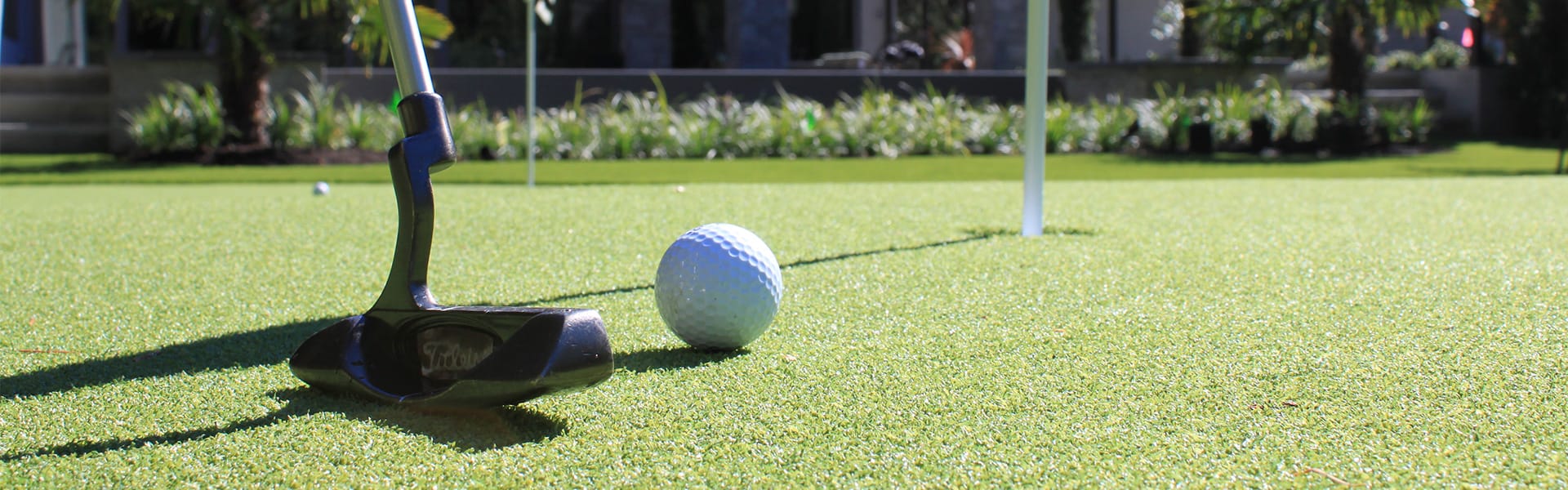 Building a backyard putting green is one of the most rewarding projects a homeowner-golfer can take on. But the difference between a surface that putts true and one that frustrates you every time comes down to one thing: the grass seed you choose.
After researching the top varieties used on professional courses and by serious DIY green builders, here are the best grass seeds for a home putting green — plus every essential product you’ll need to build and maintain one.
Quick Answer: Which Grass Is Best for a Putting Green?
For most homeowners in cool-season climates (USDA zones 4–7), creeping bentgrass is the gold standard. It’s the same species used on the vast majority of professional golf course greens. For warm-season climates (zones 7–10), hybrid bermudagrass varieties like Yukon and Monaco deliver excellent putting surfaces with better heat tolerance. If you want something lower-maintenance with decent shade tolerance, True Putt creeping bluegrass is a newer option worth considering.
Best Grass Seeds for a Home Putting Green
1. Outsidepride PC2.0 (Penncross) Creeping Bentgrass — Best Overall
Penncross has been the benchmark bentgrass variety since 1955, and the PC2.0 version is its modern evolution. This is the seed most DIY green builders should start with. It produces an extremely fine-textured, dense turf that can be mowed as low as 3/16 inch — right in the sweet spot for a true putting surface.
PC2.0 adapts to a surprisingly wide range of climates (USDA zones 4–10), performs well in sandy and well-drained clay soils, and competes aggressively against Poa annua — the weed that plagues greens worldwide. It requires only 1–2 pounds of nitrogen per 1,000 square feet annually, which is modest for a greens-grade grass. Sow at 1–2 pounds per 1,000 square feet and expect emergence in 3–5 days under optimal conditions (soil temps of 68–86°F).
Best for: DIY homeowners in most climates who want the closest thing to a professional putting surface.
Check price on Amazon (2 lb bag) | 1 lb bag also available
2. Outsidepride Crystal BlueLinks Creeping Bentgrass — Best for Shade
If your planned green gets some shade during the day — from a house, fence, or mature trees — Crystal BlueLinks is the better bentgrass pick. It’s rated as the most shade-tolerant creeping bentgrass available and earned the highest turf quality scores across all locations in NTEP (National Turfgrass Evaluation Program) fairway and tee trials.
It has a distinctive blue-green color that looks stunning at putting-green height, and it shows good resistance to both brown patch and dollar spot — two fungal diseases that commonly plague bentgrass greens. The tradeoff is that it’s slightly less widely tested for home green use than Penncross, but experienced green builders regularly recommend it.
Best for: Greens that receive 5–7 hours of sun (rather than the ideal 8+) or have partial afternoon shade.

Click to learn more about this dense turf grass
3. Outsidepride Pure Select Creeping Bentgrass — Best Premium Bentgrass
Pure Select is a newer-generation bentgrass that descends from the legendary Penn A and Penn G lines — the varieties used on many of the world’s top-ranked courses. It has a dense, upright, and aggressive growth habit that produces an exceptionally uniform surface.
This is the pick for homeowners who want to go a step beyond Penncross and are willing to invest more time in maintenance for a noticeably faster, tighter putting surface. It’s more expensive per pound but covers the same area.
Best for: Experienced turf enthusiasts who want tournament-level green quality at home.
4. True Putt Creeping Bluegrass — Best Low-Maintenance Option
True Putt is a relatively new variety that’s generating a lot of interest among home green builders. It’s a creeping bluegrass (not a bentgrass) that forms an extremely dense turf at greens height — as low as 1/8 inch, with an optimum of 5/32 inch. What makes it stand out is the combination of drought tolerance, shade tolerance, and wear recovery that bentgrass can’t match.
It germinates faster than most bluegrasses when kept consistently moist, crowds out Poa annua even better than bentgrass, and develops deep roots that help it survive water stress. You can also blend it 50/50 with creeping bentgrass for a more resilient mixed green. The downside: ball roll won’t be quite as fast or smooth as a pure bentgrass surface.
Best for: Homeowners who want a playable backyard green without the intense daily maintenance schedule bentgrass demands.
5. Yukon Bermudagrass — Best for Warm Climates
If you live in the southern half of the U.S. (or the transition zone), bentgrass will struggle through summer heat and humidity. Yukon bermudagrass was developed by the Oklahoma State University Turfgrass Research Team in partnership with the USGA, and it’s one of the few seeded bermudas that can produce genuine putting-green quality turf.

Yukon is the most cold-tolerant bermudagrass available — it can be planted as far north as zone 6 — and uses up to 25% less water than other bermuda varieties. It thrives in full sun, handles heavy foot traffic, and offers excellent spring green-up and late fall color retention. For greens, mow it at 1/4 inch or lower.
Best for: Homeowners in zones 6–10 who need a heat-tolerant, drought-resistant putting surface.
6. Monaco Bermudagrass — Best for Southern Putting Greens
Monaco is a premium seeded bermudagrass bred specifically for golf course use. It has a genetically darker green color than most bermudas, excellent density, and strong wear tolerance. It green-ups earlier in spring than competing varieties and holds its color deeper into fall.

Monaco is a solid choice for dedicated southern putting greens where you want that deep green look without the expense and complexity of installing sod-only hybrids like TifEagle or Tifdwarf. It’s best in full sun, USDA zones 7–10.
Best for: Southern homeowners who want a dark, dense bermuda green from seed.
Quick Comparison: Putting Green Grass Seeds at a Glance
| Variety | Type | Best Zones | Mow Height | Shade Tolerance | Maintenance |
|---|---|---|---|---|---|
| PC2.0 Penncross | Creeping Bentgrass | 4–10 | 3/16″–5/16″ | Low | High |
| Crystal BlueLinks | Creeping Bentgrass | 4–9 | 3/16″–5/16″ | Best in class | High |
| Pure Select | Creeping Bentgrass | 4–9 | 3/16″–5/16″ | Low | Very High |
| True Putt | Creeping Bluegrass | 3–8 | 1/8″–1/2″ | Good | Moderate |
| Yukon Bermuda | Bermudagrass | 6–10 | 1/4″ or lower | None | Moderate–High |
| Monaco Bermuda | Bermudagrass | 7–10 | 1/4″ or lower | None | Moderate–High |
How to Choose the Right Seed for Your Green
The most important factor is your climate. If summer temperatures regularly exceed 90°F and you experience high humidity, go with a bermudagrass. If you’re in the northern half of the U.S. or at elevation, bentgrass is the clear winner.
The second factor is how much time you’re willing to invest. A bentgrass putting green is essentially a small, high-maintenance garden. You’ll be mowing 4–6 times per week during the growing season, monitoring for fungal disease, and topdressing with sand at least twice a year. If that sounds like more than you bargained for, True Putt creeping bluegrass gives you a functional green at a fraction of the upkeep.
Sun exposure matters too. Putting greens need at least 8 hours of direct sun for bentgrass or bermuda. If your yard falls short, Crystal BlueLinks bentgrass or a True Putt/bentgrass blend gives you the best shot at success in partial shade.
For a deeper look at how different grass species grow, spread, and perform, see our guides to bermudagrass, cool-season grasses, and how grass spreads.
How to Build a Backyard Putting Green From Seed
Building a natural grass green isn’t as complicated as you might think, but it does require careful planning. Here’s the process in broad strokes.
Step 1: Choose Your Location
Pick a spot with at least 8 hours of direct sunlight, good air circulation, and natural drainage away from the site. Avoid low-lying areas where water pools. A south-facing slope is ideal in most of the U.S.
Step 2: Prepare the Foundation
Remove existing turf and grade the area so surface water drains in at least two directions. Most home greens work well on native soil (as long as it’s not heavy clay). Sandy loam is ideal. For serious builders, USGA guidelines recommend subsurface drainage tiles, though many successful home greens skip this step.
Compact the base thoroughly and test it by rolling a ball — if it bounces or veers unpredictably, you need more grading and compaction.
Step 3: Install Cups and Seed
Set regulation putting cups into the compacted base before seeding. Sow your chosen seed at the recommended rate (1–2 lbs per 1,000 sq ft for bentgrass), keep the surface consistently moist, and expect germination in 3–14 days depending on soil temperature.
Step 4: Establish and Maintain
Begin mowing once the grass reaches about 1/2 inch — roughly 21 days after emergence. Gradually lower your mowing height over several weeks until you reach your target (5/32″–1/4″). Use a reel mower designed for greens — standard lawn mowers can’t cut low enough.
For more on getting your mowing height right, keeping blades sharp, and watering best practices, we’ve got detailed guides.
Essential Amazon Products for Your Putting Green
The seed is just the beginning. Here’s everything else you’ll need to build and maintain a home putting green — all available on Amazon.
Greens Reel Mower
This is the single most important piece of equipment after the seed itself. Standard rotary lawn mowers — and even most push reel mowers — cannot cut low enough for a putting green. You need a dedicated greens mower with 11+ blades that can cut at 1/8″ to 3/4″. The Hudson Star Classic-Cut is one of the most popular options for home greens, and several motorized greens mowers are available on Amazon in the $300–$1,500 range.
If you’re also looking for a mower for the rest of your yard, check out our guides to the best zero-turn mowers and best robotic lawn mowers.
Regulation Golf Cups and Flagsticks
You’ll need regulation 4.25-inch cups sunk into your green, plus flagsticks so you can actually see the hole from a distance. KINGTOP makes a popular cup-and-flagstick set on Amazon that fits PGA/USGA specifications and works perfectly for backyard greens.
Shop golf cups and flagsticks on Amazon
Golf Hole Cutter
A hole cutter lets you create new cup positions so you can change the layout and practice different putts. Look for one with an adjustable depth stop, foot ejector, and a resharpenable blade. Professional-style cutters are available on Amazon for $30–$80.
Shop golf hole cutters on Amazon
Stimpmeter
A stimpmeter is the tool used to measure green speed on every professional golf course. It’s a simple aluminum bar that releases a ball at a consistent angle — you measure how far the ball rolls and that gives you a numerical speed reading. Home greens typically target a stimpmeter reading of 8–10 (tournament greens run 11–13). It’s not essential, but it’s the best way to track how your maintenance is affecting playability.
Topdressing Sand
Topdressing with fine sand improves green speed, smooths the surface, and helps control thatch buildup. Professional courses topdress every few weeks, but home greens only need it at least twice per year — once in early May and again in late September. Look for kiln-dried topdressing sand on Amazon in 50-lb bags.
Shop topdressing sand on Amazon
Fungicide for Greens
Bentgrass in particular is susceptible to dollar spot, brown patch, and pythium. A preventive fungicide program is critical for keeping a natural putting green healthy. Scotts DiseaseEx and BioAdvanced Fungus Control are two widely available options on Amazon that work well for home greens.

Shop lawn fungicides on Amazon
Lawn Fertilizer (Low-Nitrogen)
Putting greens need lighter, more frequent fertilization than a regular lawn. Look for a fertilizer with a ratio in the 16-0-8 or similar range — moderate nitrogen, low phosphorus. Liquid fertilizers like Simple Lawn Solutions work well because they allow precise, even application on a small area. For a full breakdown of how often to fertilize, see our guide.
Shop lawn fertilizers on Amazon
Core Aerator
Putting greens should be core-aerated at least twice per year to relieve compaction and promote healthy root growth. A manual step-on core aerator works fine for a small home green. For more on the process, see our guide to aerating and dethatching your lawn.
Sprayer for Liquid Applications
A small pump sprayer (1–2 gallon) is essential for applying liquid fertilizer, fungicides, and wetting agents evenly across your green. This is one area where precision matters — a broadcast spreader won’t give you the coverage control you need on such a small, high-value area.
What About Synthetic Putting Greens?
Artificial turf is a legitimate alternative — especially for homeowners who want zero maintenance. Synthetic greens cost roughly $1,800–$9,000 installed (depending on size) and require no mowing, watering, or fertilizing. The tradeoff is that they don’t replicate the feel, speed variability, and satisfaction of a real grass surface. They also heat up significantly in direct sun, which can be uncomfortable in warm climates.
If you’re considering synthetic turf, you might also want to look into our guide on backyard ideas without grass for additional inspiration.
Maintenance Schedule at a Glance
| Task | Frequency | Notes |
|---|---|---|
| Mowing | 4–6x per week | Use a greens reel mower at 5/32″–1/4″ |
| Watering | As needed | Deep and infrequent; early morning only |
| Fertilizing | Every 2–4 weeks | Light apps; 1–2 lbs N per 1,000 sq ft/year |
| Topdressing | 2x per year minimum | Fine sand in May and September |
| Core Aeration | 2x per year | Spring and fall |
| Fungicide | Preventive schedule | Critical for bentgrass; less for bermuda |
| Cup Relocation | Weekly | Prevents wear patterns around the hole |
Is a Natural Putting Green Worth It?
Honestly, it depends on your commitment level. A natural grass green is a labor of love — think of it more like tending a garden than maintaining a lawn. If you enjoy the process and love golf, there’s nothing like stepping into your backyard and sinking putts on real grass you grew yourself. The total cost for a modest 500-square-foot green (seed, drainage materials, soil amendments, and a used greens mower) can come in under $2,000 — a fraction of what a synthetic installation costs.
The payoff is a putting surface that improves your short game, adds genuine curb appeal, and gives you one of the most unique backyard features in any neighborhood.
For more lawn projects and landscaping ideas, explore our guides to budget-friendly front yard landscaping and small backyard garden ideas.